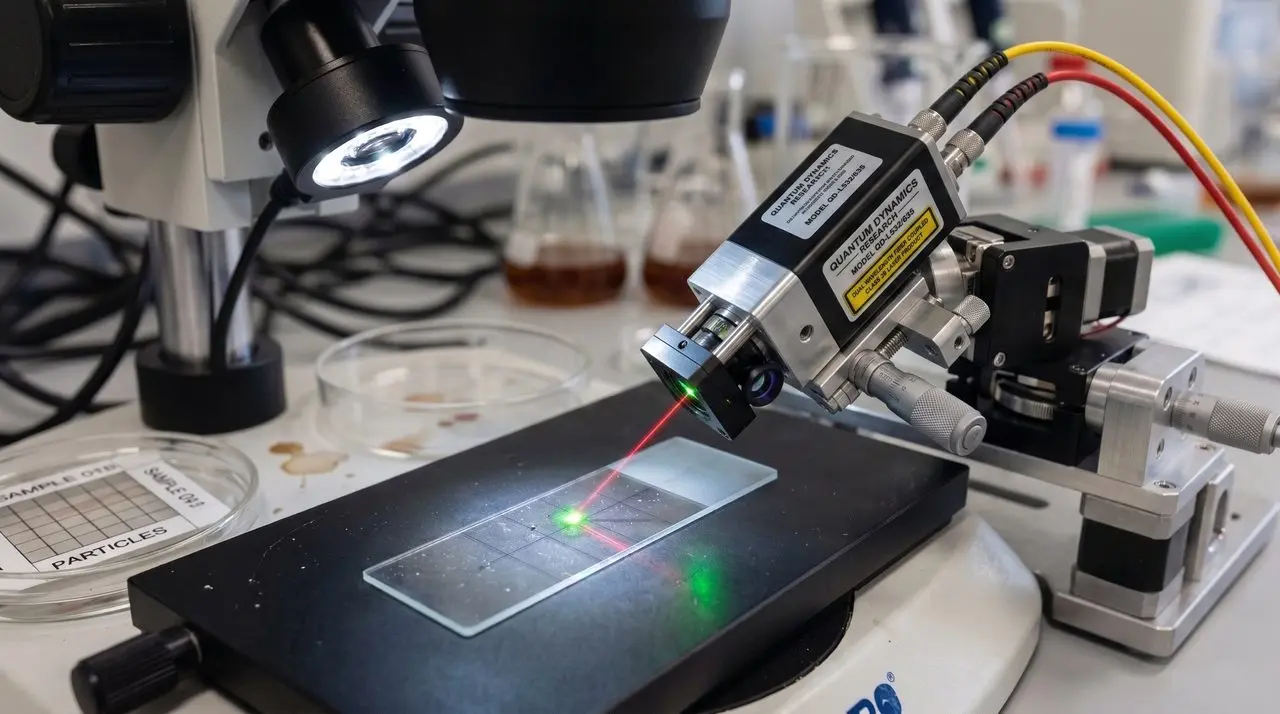
The transition rates of multiphoton dissipative processes directly depend on high-order field correlations, distinguishing them from simpler, linear channels and revealing a unique sensitivity to quantum fluctuations. This work explores how engineered dissipation, exploiting loss, emission and relaxation, can improve parameter estimation in quantum systems, even when dissipation is unavoidable. Researchers demonstrate that independently squeezed optical modes create local fluctuations, while jointly squeezed fields produce intermode correlations directly linking absorption and emission. The study establishes two distinct scaling structures for dissipative multiphoton sensing determined by the architecture of the squeezing applied to driving fields.
Multiphoton Processes Define Dissipative Quantum Sensing
Multiphoton absorption and emission processes offer a unique pathway to enhanced quantum sensing by directly using the correlations within light fields, unlike traditional linear methods. This sensitivity allows for parameter estimation in open quantum systems where energy loss is an exploitable resource. The ability to engineer dissipation, to control loss, emission and relaxation, is central to this approach, offering a new paradigm for quantum metrology.
The scaling of sensitivity in these sensors is dictated by how the driving fields are squeezed, revealing two distinct behaviors. Independently squeezed pump and signal modes result in factorized scaling, where absorption and emission contribute to sensitivity as separate events.
Conversely, jointly squeezed fields generate collective scaling, governed by the total number of photons involved in the dissipative interaction. This coupling amplifies the effective squeezing resource by reducing the number of independent fluctuation channels. The study demonstrates that the achievable precision scales exponentially with this effective nonlinear order, establishing a design principle for dissipative quantum sensors. The total photon number participating in the interaction ultimately sets the attainable scaling, but accessing that scaling depends on both the entanglement structure of the fields and the measurement technique used to extract the signal.
Researchers modeled optical fields as two independent bosonic modes, using annihilation operators to satisfy canonical commutation relations. The analysis revealed that the derivative of a normally ordered observable involves field correlations one order lower than the fluctuations generated by the full multiphoton interaction.
This reduction in order is not a limitation, but rather a fundamental aspect of the nonlinear dissipative interferometer created by these processes. The implications of these findings extend to the design of optimal sensing protocols. These predicted factorized and collective scaling regimes, and the associated observable hierarchy, can, in principle, be tested by varying the squeezing gain and measuring the resulting photon-number statistics.
This research provides a deeper understanding of how to harness dissipation as a metrological resource. The ability to control and engineer these multiphoton processes promises to allow for probing weak physical parameters in open quantum systems, where dissipation is an inherent part of the environment.
Squeezed Fields Amplify Nonlinear Fluctuations
Jointly squeezed optical fields directly couple absorption and emission processes, creating a distinction from independently squeezed fields which generate fluctuations localized to each field, according to a new analysis of nonlinear optical interactions. This coupling alters how enhanced fluctuations translate into metrological advantage during quantum sensing, a finding that challenges conventional assumptions about squeezing’s benefits. The work details a universal reduction in the order of scaling for experimentally accessible observables, meaning the precision achievable in sensing is fundamentally limited by the structure of the measurement itself, not just the strength of the squeezing.
The researchers demonstrated this by mathematically modeling the effect of applying squeezing either independently to each mode or jointly as a two-mode operation, using the notation where denotes the squeezing operation. This one-order reduction manifests as a hierarchy of observable performance, differing between independently and jointly squeezed fields.
Independently squeezed fields exhibit a regime-dependent hierarchy with no single globally optimal observable, while jointly squeezed fields lead to a constrained, asymmetry-dependent hierarchy. This asymmetry results in algebraic scaling laws characteristic of a perturbative regime, with exponential factors appearing in high-gain scenarios, their decay rates determined by the nonlinear absorption and emission orders. The team’s simulations show that for independently squeezed fields, high-gain scaling factorizes into contributions from each mode, reflecting separate dissipative channels.
The researchers found that this interplay between entanglement and measurement is important for maximizing sensitivity. The study’s findings suggest that careful consideration of observable selection is paramount when designing optimal sensing protocols. This means that simply increasing the squeezing strength isn’t enough. The measurement must be tailored to the specific type of squeezed field used to fully realize the potential for enhanced sensitivity.
The work establishes a universal framework for understanding sensitivity limits in dissipative quantum sensing, where loss, emission, and relaxation are not merely detrimental effects, but actively exploited metrological resources. The team’s analysis provides a roadmap for harnessing dissipation as a tool for improving measurement accuracy.
Independent vs Joint Squeezing Impacts Scaling Laws
This distinction highlights how squeezing correlation structure and measurement structure jointly constrain nonlinear quantum scaling in sensing, with direct implications for designing optimal sensing protocols. The study demonstrates that independently squeezed fields allow for probing absorption and emission pathways separately, revealing their individual nonlinear characteristics. This separation occurs because the exponential contributions from absorption and emission processes appear independently when using independently squeezed modes. However, nonlinear thresholds emerge, causing the exponential scaling to disappear when either the absorption or emission process becomes linear, such as in photon-number measurement.
In contrast, jointly squeezed illumination reorganizes scaling into a collective form governed by a single squeezing parameter, as intermode correlations restructure photon statistics and activate the collective structure of the multiphoton jump operator. Analysis of regimes with varying pump and signal squeezing parameters reveals detailed behaviors.
In low-gain regimes, the dynamics are pump-dominated, as multiphoton absorption requires pump photons while emission can originate from vacuum fluctuations. This results in leading scaling governed by pump field statistics, with the signal contributing only minor corrections. Figures presented in the work illustrate how these scaling behaviors shift with different (m,n) parameters, primarily affecting the boundaries between regimes. For jointly squeezed fields, the ratio of signal to noise exhibits mixed behavior determined by both the gain parameter and the order parameter of the interaction.
Correlation-based measurements provide a robust metrological advantage over photon counting across the entire parameter space for all nonlinear orders when employing independent squeezing. This advantage is particularly pronounced for m−n≥2, where the correlation observable remains beneficial across all gain regimes. However, the observable hierarchy in jointly squeezed dissipative sensing depends nontrivially on both the magnitude and direction of nonlinear asymmetry.
At high gain, ratios for n≠m saturate, signaling the onset of the asymptotic scaling regime. These results show that while independent squeezing admits a broadly flexible observable hierarchy, jointly squeezed fields produce a more constrained, asymmetry-dependent structure governed by collective multiphoton correlations and measurement accessibility.
Lindblad Master Equation Models Absorption-Emission Dynamics
The scaling of sensitivity in multiphoton absorption-emission experiments is dictated by the correlation structure of squeezed fields, according to new work modeling the dynamics with a Lindblad master equation. This approach moves beyond characterizing entanglement to focus on how light’s quantum properties influence the precision of sensing through absorption and emission. Researchers established a hierarchy governing asymptotic scaling, revealing how different squeezing configurations impact achievable sensitivity in these processes.
The study distinguishes itself from previous work by focusing on dissipative metrological sensitivity rather than entanglement characterization or optimal measurements. The team assumed weak coupling between a sample and optical fields, allowing for the adiabatic elimination of internal sample dynamics and a simplified Lindblad master equation describing the process. This simplification facilitates analysis of how the absorption-emission coefficient, related to the total cross section of the interaction, influences observable scaling.
Effective Lindblad operators, derived by eliminating rapidly relaxing microscopic degrees of freedom, further refine the model, mirroring processes like stimulated Raman scattering where optical fields exchange energy with material vibrations. Exponential scaling is generally observed at high gain, but correlation measurements in specific symmetric linear cases exhibit saturation, a departure from typical behavior. Focusing on the weak-interaction limit, where the absorption-emission coefficient is small, researchers linearized the Lindblad evolution, yielding input-output relations that describe how optical fields are modified during the interaction.
These relations are important because the resulting observables are directly measurable using standard photon-counting and coincidence-detection schemes, providing a practical benchmark for assessing sensitivity in experiments. Sensitivity, defined as the estimated uncertainty in the absorption-emission coefficient, is minimized for higher precision. Analysis reveals two distinct behaviors depending on the gain regime.
This behavior aligns with a universal one-order-reduction theorem, suggesting the system acts as a single nonlinear dissipative channel where the combined absorption-emission process dictates metrological enhancement. Subleading terms and observable-dependent prefactors, however, still reflect the underlying squeezing configuration. The work quantifies this by analyzing the relative performance of experimentally accessible measurements, emphasizing that this reduction in complexity is specific to the asymptotic error-propagation sensitivities under nonlinear Lindblad dynamics.
It differs from Fisher-information analyses of unitary multiphoton metrology, where different detection operators extract varying amounts of information, and instead arises from the operator structure of the dissipative multiphoton process itself. Regimes of interest are delineated based on the pump and signal squeezing parameters, revealing how the scaling changes with different configurations. For instance, the analysis shows that independently squeezed fields exhibit different behaviors depending on whether the pump or signal squeezing is dominant.
Observable Structure Constrains Quantum Scaling in Sensing
Unlike linear channels, these processes directly probe the nonlinear fluctuations of light, revealing quantum characteristics and non-equilibrium photon statistics. The way experimentally accessible measurements sample underlying fluctuations determines the observable scaling of nonlinear dissipative quantum sensors, a nuance revealed by recent work. Previous studies highlighted the value of squeezed states and higher-order correlations in quantum metrology, demonstrating that the choice of measurement dictates the accessible information.
A key finding concerns the behavior of multiphoton absorption and emission; the dynamics function as a single cooperative channel. In high-gain regimes, observables like photon-counting and correlation measurements typically exhibit scaling governed by the total nonlinear order of the interaction, specifically (m+n−1), where ‘m’ represents absorbed pump photons and ‘n’ emitted signal photons. However, this collective behavior isn’t universally accessible, as it depends on the specific observable used to sample the quantum fluctuations.
For scenarios where the number of absorbed pump photons exceeds the emitted signal photons by two or more (m−n≥2), the correlation observable remains advantageous across all gain regimes. Relative performance of measurement strategies for jointly squeezed illumination was also quantified, revealing a complex interplay between squeezing parameters and observable choices. This provides a pathway for validating the theoretical predictions and refining the design of future quantum sensors, using the unique properties of squeezed light to enhance sensitivity and precision in open quantum systems.
👉 More information
🗞 Observable scaling hierarchies in multiphoton dissipative quantum sensing
✍️ Shahram Panahiyan
🧠 DOI: http://link.aps.org/doi/10.1103/p5d3-l7mt


See today’s quantum computing news on Quantum Zeitgeist for the latest breakthroughs in qubits, hardware, algorithms, and industry deals.