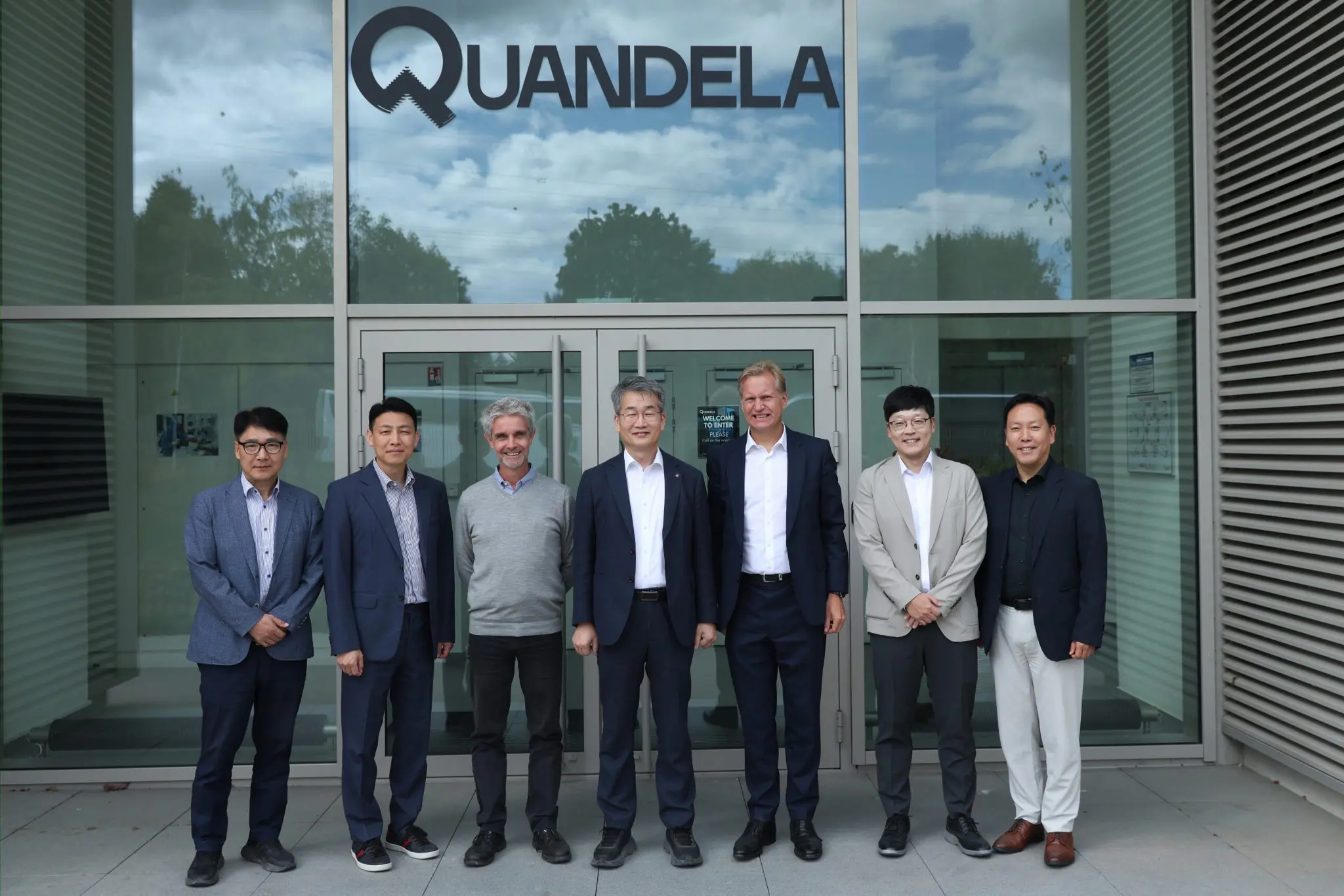
Quandela and the Korea Research Institute of Bioscience and Biotechnology (KRIBB) formalized their collaboration on September 8, 2026, with a Memorandum of Understanding signed during South Korean President Lee Jae-myung’s state visit to Paris. The partnership will combine Quandela’s photonic quantum computing with KRIBB’s bioscience expertise to accelerate drug discovery and biotechnology research. “Our goal is to give researchers new tools for understanding the complexity of biological systems,” says Suk-Yoon Kwon, President at KRIBB, as the two organizations pioneer research models integrating artificial intelligence, classical computing and quantum technologies.
Photonic Quantum Computing Applied to Biotechnology Research
KRIBB researchers have already shared initial findings generated on Quandela’s photonic quantum computing platform, providing a foundation for an upcoming scientific publication detailing the collaborative work. The focus is on refining how researchers prioritize experimental validation, specifically within the complex processes of drug discovery, cell therapy design, and identifying genetic targets. The collaboration extends beyond simply applying quantum computing as a standalone solution. Both organizations are developing hybrid workflows integrating artificial intelligence, classical computing and Quandela’s photonic quantum computing technology.
“Quantum computing becomes meaningful when it helps researchers solve real-world problems. This many-sided approach aims to address biological problems characterized by vast search spaces and complex interactions, areas where conventional computational methods often struggle.
Quandela’s commitment to industrial deployment, with systems operational since 2023, underpins the practical focus of this partnership, differentiating it from purely theoretical quantum computing initiatives. The company is simultaneously developing future generations of fault-tolerant quantum computers designed to scale through the integration of thousands of photonic components.
KRIBB, as South Korea’s national reference institute for biosciences and biotechnology, brings established expertise in life sciences to the project, intending to accelerate the translation of computational insights into validated experimental results. Suk-Yoon Kwon, President at KRIBB, stated, “By combining KRIBB’s bioscience expertise with Quandela’s photonic quantum technology, we aim to accelerate the path from computational insight to experimental validation.” The partners will analyze the initial findings as a potential breakthrough use case for photonic quantum computing within biotechnology, assessing reproducibility and scalability for broader applications in drug discovery.
Quantum computing becomes meaningful when it helps researchers solve real-world problems. With KRIBB, we are developing hybrid workflows that combine AI, classical computing and photonic quantum computing to create practical, reproducible applications for biotechnology and drug discovery.
Sam Yoosuk Kim, General Manager of South Korea at Quandela
Hybrid Computing Workflows for Drug Discovery & Analysis
This agreement transcends a simple technology transfer, aiming to integrate photonic quantum computing directly into KRIBB’s established bioscience workflows for projects including targeted protein degradation and rare disease therapeutics. A core principle of this collaboration is a hybrid computing model that uses the strengths of multiple computational approaches, rather than relying solely on quantum processing. Artificial intelligence algorithms will initially analyze large biological datasets, narrowing the field of potential candidates before classical computers handle simulations suited to their architecture.
Photonic quantum processors will then tackle the most computationally intensive optimization problems, such as designing PROTAC candidates for targeted protein degradation, a promising area of cancer research. The collaboration also extends to cellular therapy optimization and identifying new therapeutic targets for infectious diseases, demonstrating a broad scope of application for this integrated approach.
Our goal is to give researchers new tools for navigating the complexity of biological systems. By combining KRIBB’s bioscience expertise with Quandela’s photonic quantum technology, we aim to accelerate the path from computational insight to experimental validation.
Suk-Yoon Kwon, President at KRIBB



See today’s quantum computing news on Quantum Zeitgeist for the latest breakthroughs in qubits, hardware, algorithms, and industry deals.