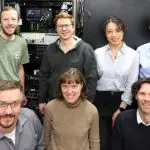
Yongtao Cui, an associate professor of physics and astronomy at the University of California, Riverside, will receive $1.35 million over five years as a newly named Experimental Physics Investigator by the Gordon and Betty Moore Foundation. The grant, awarded to 21 mid-career researchers, provides “flexible, sustained support that federal grants rarely can,” according to Theodore Hodapp, program director for the initiative.
Cui’s research focuses on excitonic phases, states where energy moves through semiconductors without electrical charge, and benefits from recent advances allowing electron interactions to dominate in 2D materials. “This grant provides the crucial support needed to pursue ambitious, high-risk, high-reward research avenues,” Cui said.
Moore Foundation Funds Nanoscale Spectroscopy of 2D Materials
Recent advances in two-dimensional materials device engineering have created conditions where electron interactions dominate, a critical development for Yongtao Cui’s research at the University of California, Riverside. The ability to fabricate devices exhibiting this behavior has historically been difficult to achieve, making Cui’s work significant in the field.
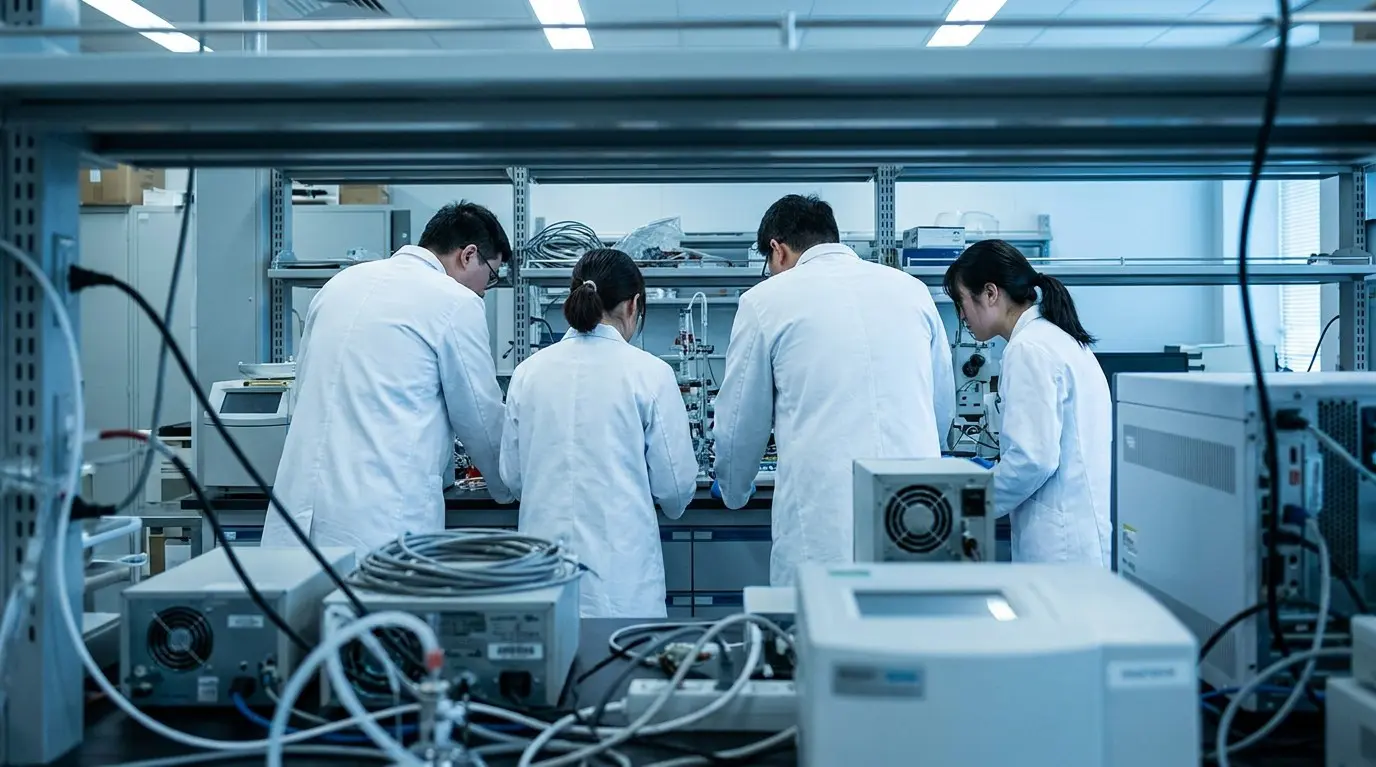
His project, titled “Nanoscale microwave spectroscopy of collective modes in two-dimensional many-body electronic and excitonic systems,” will use advanced techniques to examine how electrons organize into coordinated states, including phases like electron crystals and excitonic phases. Cui’s group has established expertise in fabricating these specialized devices and developing experimental methods to probe collective modes at relevant scales.
By studying these modes, the team intends to understand the fundamental principles governing the emergence of novel electronic phases from strong interactions, a pursuit enabled by $1.35 million. That freedom lets them take on risky, high-reward experiments and follow ideas when research results lead them down new pathways,” Hodapp said. Cui anticipates that the discoveries made through this research could ultimately guide the development of high-performance quantum technologies and electronic devices. The grant will also support the training of graduate students and postdoctoral researchers, and the acquisition of instrumentation necessary for the research.
From the start, our aim has been to accelerate progress at the frontier of experimental physics by giving brilliant mid-career scientists the kind of flexible, sustained support that federal grants rarely can.
Theodore Hodapp, program director for the Experimental Physics Investigators Initiative

See today’s quantum computing news on Quantum Zeitgeist for the latest breakthroughs in qubits, hardware, algorithms, and industry deals.