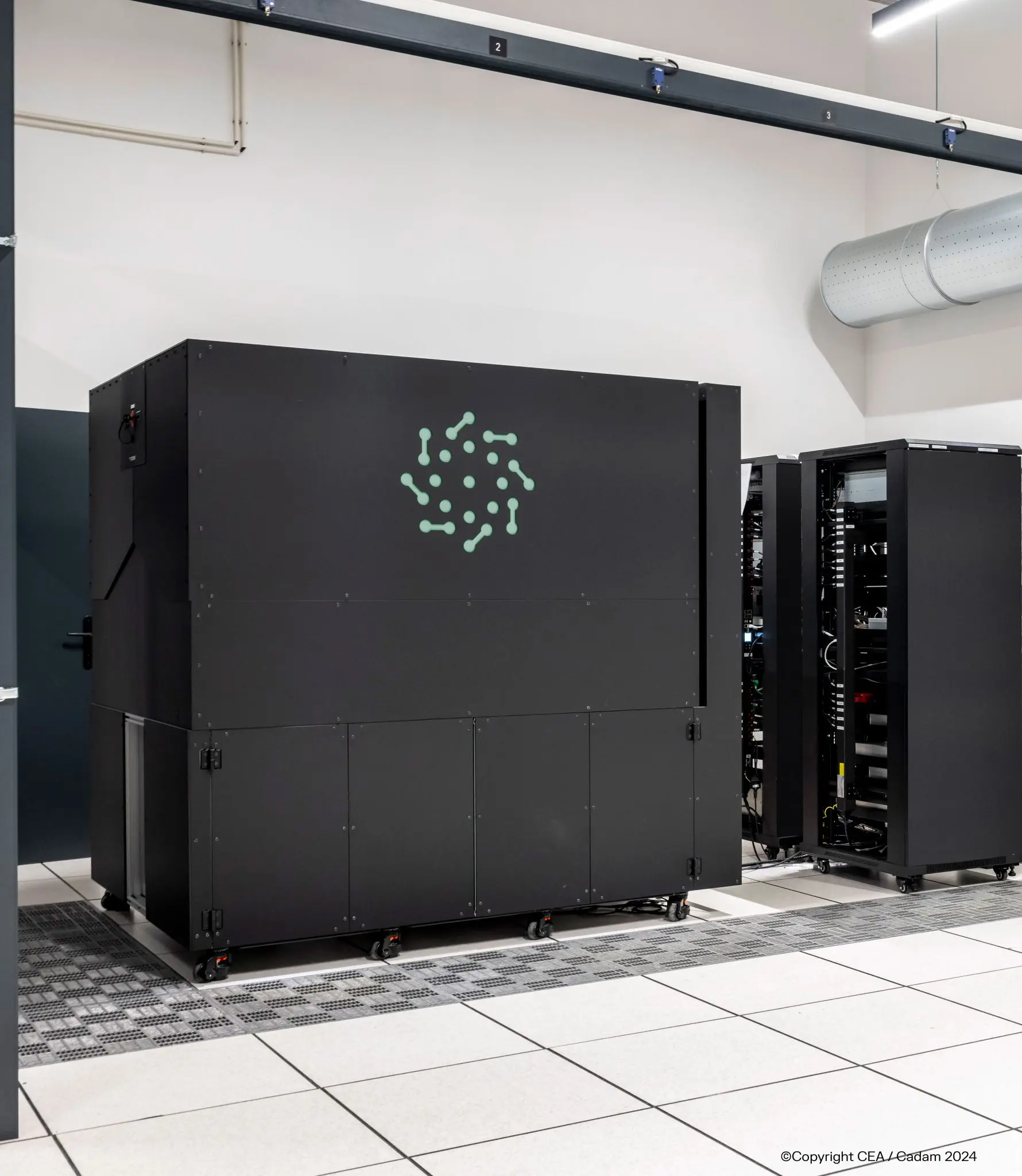
Pasqal is offering 100 hours of free quantum processing unit (QPU) time on its 100-qubit neutral atom computer, Orion, hosted at TGCC, GENCI, for open research projects. The opportunity is open to researchers and students within the European Union, as well as research and development teams, regardless of French affiliation. This access is valuable for areas like quantum materials simulation, QUBO optimization problems, quantum machine learning, and algorithm development, as the Orion computer is well-suited for these tasks. Interested parties can request access by filling out a form to receive a step-by-step guide; this initiative aims to broaden participation in quantum computing research across Europe.
Pasqal Orion QPU: Access for EU Research & Industry
Pasqal is extending access to its 100-qubit neutral atom quantum computer, Orion, by offering up to 100 hours of free processing time to qualifying researchers and industry teams across the European Union. This initiative, hosted at the TGCC, GENCI facility, differs from typical restricted-access models for quantum processing units, potentially accelerating innovation beyond national boundaries. The availability of substantial, freely accessible QPU time is significant, as demand for quantum computing resources currently exceeds supply, and significant allocations are rarely offered without cost. Eligibility for the program is broad, encompassing academic researchers, students, and research and development teams within industry; a French affiliation is not required for application. This focus suggests an effort to target areas where neutral atom quantum computers are predicted to offer an advantage over other quantum computing modalities.
Prospective applicants are directed to a form to request a step-by-step guide to the application process, indicating Pasqal’s intention to streamline access for interested parties. The application form indicates required fields, underscoring the company’s need for complete information from applicants. Pasqal’s ambitions extend beyond simply providing access.
Up to 100 hours of free QPU time for open research Open to EU researchers and students (academia) and R&D teams (industry).
Pasqal
Eligibility extends beyond France’s borders, opening participation to both academic researchers and industrial R&D teams, a departure from programs often prioritizing national access. The Pasqal Orion computer’s architecture is particularly suited to computationally intensive tasks including quantum materials simulation, a field seeking to design and discover novel materials with tailored properties, and QUBO optimization problems, relevant to fields like finance and logistics. Quantum machine learning and the development of new quantum algorithms are also targeted applications, reflecting a strategic focus on areas where neutral atom quantum computers demonstrate potential advantages. The application process collects details on applicant position, company, and country, with a comprehensive list of European nations available for selection. Beyond simply providing access, Pasqal is also seeking to gather feedback and foster collaboration within the quantum computing community; applicants are also asked for SMS consent to receive updates on Pasqal products, services, and events, with an option to unsubscribe at any time.
See today’s quantum computing news on Quantum Zeitgeist for the latest breakthroughs in qubits, hardware, algorithms, and industry deals.