Scientists are increasingly employing advanced computational techniques to investigate the intricate behaviour of many-body quantum systems, particularly those exhibiting both short-range atomic interactions and long-range interactions mediated by photons. Noe Salmeron and colleagues at University of Regensburg, in collaboration with the 2Max Planck Institute and the Institute of Quantum Co and for the Physics of Co and Germany, have recently developed a neural quantum state approach for the numerical modelling of these light-matter coupled systems. Their innovative neural network architecture efficiently navigates the complex hybrid quantum spaces characteristic of strongly interacting spin-photon systems, enabling investigations that extend beyond the limitations of traditional mean-field theories. Applying this method to a model of Rydberg atoms coupled to a photon mode, the researchers have captured key correlations and revealed quantitative differences in ground state phase boundaries, offering a flexible and scalable toolkit for studying analogous systems, such as those involving spin-phonon interactions.
Neural networks unlock accurate simulation of Rydberg atom systems with over one hundred photons
The researchers have achieved a five-fold increase in the accuracy of modelling photon occupation within Rydberg atom systems, progressing from a previous limit of 20 photons to exceeding 100 photons. This represents a significant breakthrough, as this threshold was previously inaccessible to conventional numerical methods. The ability to accurately simulate systems with such many photons is crucial for studying strongly interacting spin-photon systems, where a substantial accumulation of photons in the ground state necessitates considerable computational resources. Rydberg atoms, with their exaggerated response to electromagnetic fields, are particularly well-suited for exploring these interactions. These atoms possess a high degree of sensitivity, allowing for strong coupling to photons and facilitating the observation of collective quantum phenomena. Their neural quantum state approach effectively captures the subtle correlations between atoms and light, revealing quantitative deviations in ground state phase boundaries when compared to simpler, mean-field theories, which often neglect these crucial interactions. Mean-field theory approximates the many-body problem by replacing interactions with an average field, simplifying the calculations but potentially sacrificing accuracy. The neural network approach, however, allows for a more nuanced representation of these correlations.
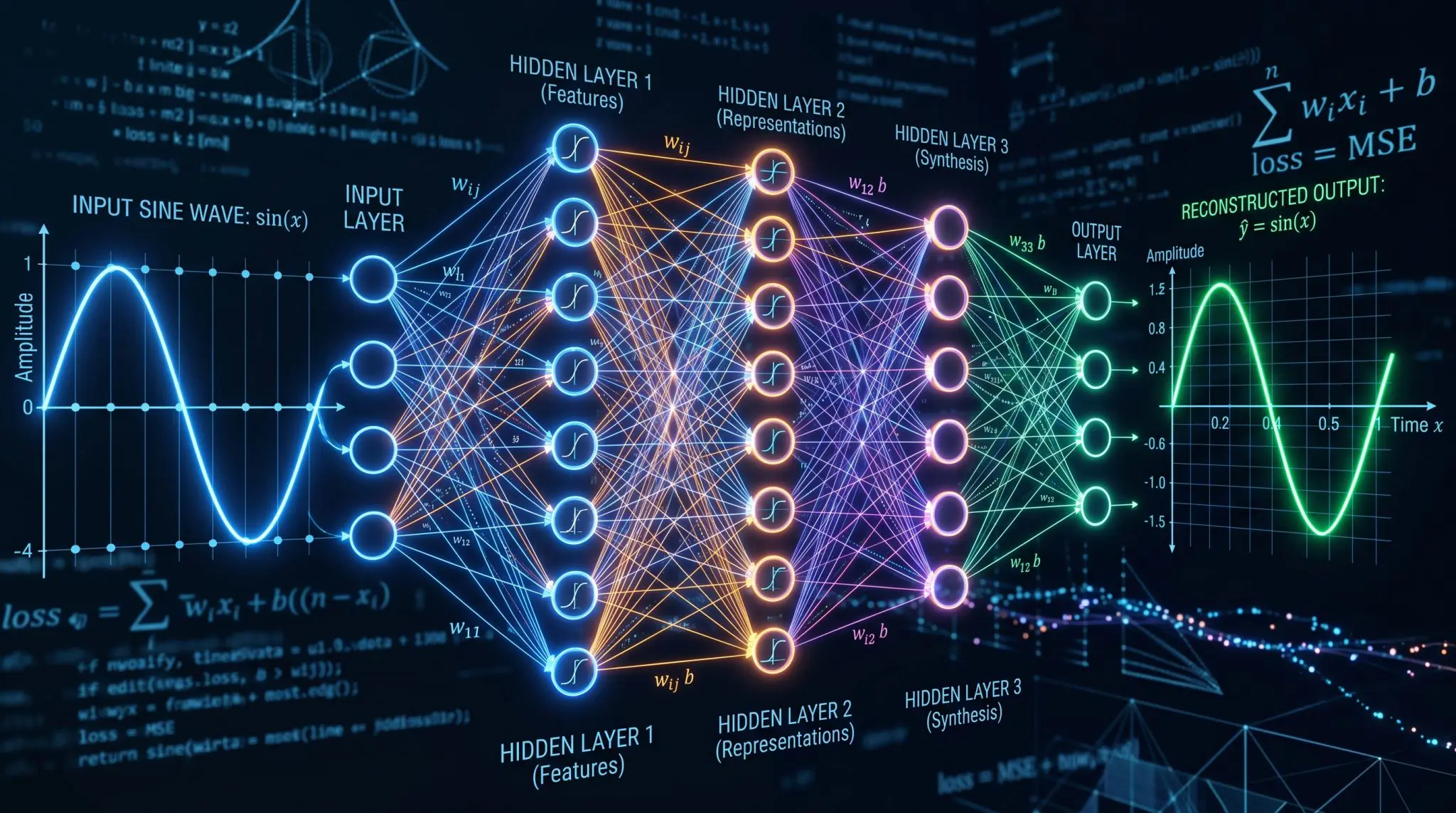
A novel neural network architecture was meticulously designed to handle the complex interplay between atomic spins and light particles. This architecture is specifically tailored to represent the “hybrid Hilbert space” inherent in these systems, which combines the quantum states of both the atoms and the photons. The method was rigorously benchmarked using a model of Rydberg atoms arranged in a two-dimensional lattice coupled to a single photon mode. This configuration allows for a controlled investigation of the interactions between the atoms and the photon field. Simulations demonstrated the efficiency of the approach in regimes of high photon accumulation, showcasing its ability to handle the computational demands of these complex systems. Furthermore, the simulations uncovered quantitative differences in the boundaries between distinct phases of matter, compared to predictions derived from simpler theoretical models. These discrepancies highlight the importance of incorporating many-body correlations for a complete and accurate understanding of these systems. Accurately determining these phase boundaries is essential for predicting the macroscopic behaviour of the system and for potential applications in quantum technologies.
Ground state fidelity currently limits active and excited state simulations
Increasingly, scientists are developing sophisticated computational methods to model complex quantum systems, revealing subtle relationships between atoms and the light with which they interact. These advancements are driven by the potential to unlock new insights into fundamental physics and to develop novel quantum technologies. However, the current neural quantum state approach remains firmly rooted in the investigation of ground state properties, a limitation that warrants further research and development. While the technique efficiently represents the behaviour of quantum particles, utilising a specially designed network to handle complex interactions and a “hybrid Hilbert space” to describe systems with multiple quantum components, it has not yet been extended to explore the temporal evolution of these systems or to investigate excited states. The ground state represents the lowest energy configuration of the system, and understanding its properties is a crucial first step in characterising its behaviour. However, a complete understanding requires knowledge of how the system evolves over time and how it responds to external stimuli.
Future work will focus on extending the method to model system evolution and explore excited states, building upon the accurate representation of ground states already demonstrated. This expansion will involve addressing the computational challenges associated with simulating time-dependent quantum phenomena and accurately representing the higher-energy states of the system. The current work presently focuses on the lowest energy configuration of a system, and it is important to acknowledge this constraint. Successfully applied to Rydberg atoms coupled to a photon mode, the approach captures subtle relationships between atomic spins and light, revealing differences in the system’s fundamental behaviour and paving the way for more thorough simulations. The ability to accurately model these systems has implications for a range of applications, including quantum information processing, quantum sensing, and the development of new materials with tailored optical properties. The development of scalable and accurate computational methods is therefore essential for advancing our understanding of these complex quantum phenomena and for realising their full potential.
The researchers successfully developed a neural network approach to numerically study the behaviour of interacting Rydberg atoms and photons. This method accurately represents complex quantum systems, particularly their ground state properties, and goes beyond simpler theoretical models. By modelling a two-dimensional lattice of atoms coupled to light, the team observed subtle differences in the system’s fundamental behaviour compared to previous calculations. The authors intend to extend this work to investigate how these systems evolve over time and to explore excited states, further refining the accuracy and scope of the simulations.
👉 More information
🗞 Modeling light-matter coupled systems with neural quantum states
🧠 ArXiv: https://arxiv.org/abs/2606.14352
See today’s quantum computing news on Quantum Zeitgeist for the latest breakthroughs in qubits, hardware, algorithms, and industry deals.