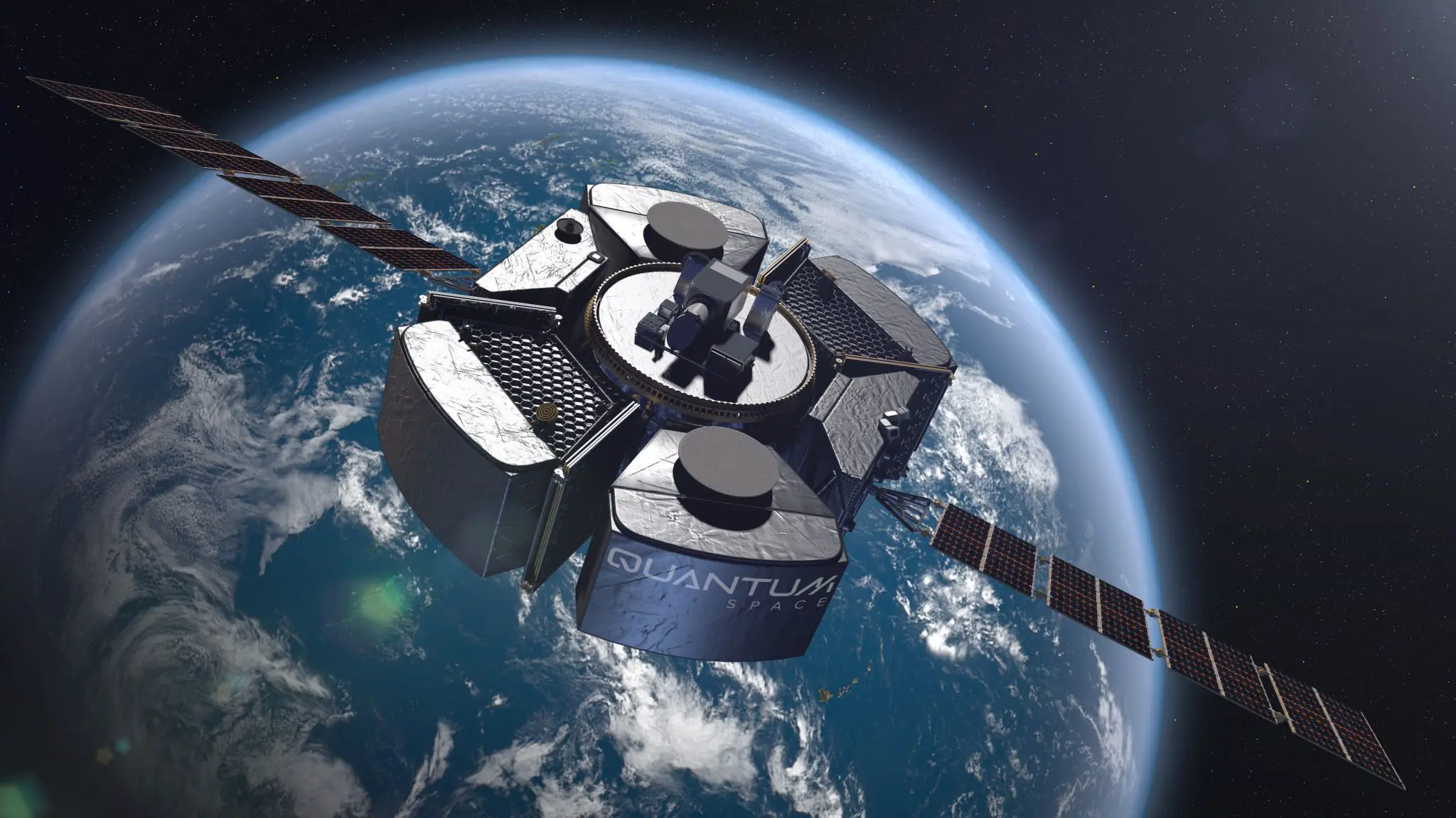
Quantum Space will create up to 50 high-skill jobs in Tulsa, Oklahoma, with the establishment of a new 25,000 to 40,000 square foot manufacturing facility focused on building maneuverable spacecraft. The expansion, announced following Jim Bridenstine’s appointment as Chief Executive Officer on May 5, will support production of the Ranger spacecraft, designed to meet the Space Force’s “Theory of Competitive Endurance.” Bridenstine stated that Quantum Space is building satellites to meet the needs of the Space Force’s Theory of Competitive Endurance, and sustained maneuver for Dynamic Space Operations is a key enabler of those needs. This facility joins existing operations in California and Maryland, forming a distributed U.S. manufacturing network intended to scale production for both national security and emerging commercial space markets.
Ranger Spacecraft Production Scales with Tulsa Manufacturing Facility
The Tulsa location, projected to occupy between 25,000 and 40,000 square feet, will focus on critical components like large propulsion tanks and precision spacecraft parts, utilizing advanced techniques including CNC machining, friction stir welding, and comprehensive non-destructive testing. This expansion is about establishing a distributed manufacturing network alongside existing operations in California and Maryland, designed to support the Ranger fleet and a growing mission pipeline. The timing of this announcement coincides with a strategic shift at Quantum Space, marked by the May 5 appointment of Jim Bridenstine as Chief Executive Officer, signaling a focus on both national security applications and emerging commercial space markets.
Kam Ghaffarian, Executive Chairman of Quantum Space, underscored the importance of this facility in scaling production, explaining that the selection of Tulsa leverages the region’s established aerospace ecosystem, including Tinker Air Force Base and the FAA Mike Monroney Aeronautical Center. This provides access to a workforce experienced in precision manufacturing, welding, and quality assurance, disciplines essential for building high-performance spacecraft structures and propulsion systems at scale. Initial operational capability is targeted for the first quarter of next year, with hiring expected to begin this month.
Oklahoma Aerospace Workforce Supports Ranger Maneuverability & Endurance
The company anticipates initially creating up to 50 high-skill jobs, focusing on the fabrication of large propulsion tanks and precision spacecraft components; this immediate influx of specialized positions signals a tangible economic impact for the region. This new site complements existing Quantum Space operations in Hawthorne, California, and Rockville, Maryland, forming a distributed network intended to support the Ranger spacecraft fleet. Bridenstine stated that with its new and existing infrastructure, deep aerospace heritage, and skilled workforce, expanding manufacturing to Oklahoma was an obvious choice.
Tulsa gives us the workforce, infrastructure, and aerospace heritage to build at scale, complementing our propulsion integration and testing in Hawthorne and our engineering base in Rockville, as we accelerate production to meet a broader shift in space operations where maneuverability is becoming a foundational capability across a complex, multi-orbital domain.
Kam Ghaffarian, Executive Chairman of Quantum Space




See today’s quantum computing news on Quantum Zeitgeist for the latest breakthroughs in qubits, hardware, algorithms, and industry deals.