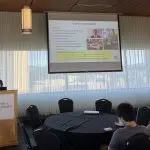
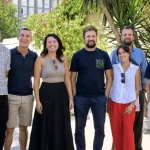
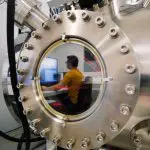
IonQ (NYSE: IONQ) has opened a new research and development laboratory in Boulder, Colorado, dedicated to advancing quantum computing and semiconductor chip testing for future systems. The expansion increases the company’s presence in Colorado, adding to existing teams focused on Space Missions in Louisville and Optical Communications in Broomfield. Colorado Governor Jared Polis and Boulder Mayor Aaron Brockett presided over the ribbon-cutting, highlighting the public-private partnership supporting IonQ’s growth and the state’s position as a quantum hub. IonQ Chairman and CEO Niccolo de Masi emphasized the company’s commitment to solving complex problems with advanced quantum technologies and leveraging Colorado’s skilled workforce.
IonQ Expands Quantum R&D with Boulder, Colorado Facility
IonQ is pursuing a new approach to quantum computer construction, shifting from laser-based systems to electronics-based manufacturing. This strategic move, combined with a significant expansion of its research and development capabilities, was demonstrated by the opening of a new laboratory suite in Boulder, Colorado. The facility will focus on developing and testing semiconductor chip technologies critical to future generations of IonQ’s quantum computing systems, indicating a commitment to scalable production techniques. Beyond Boulder, IonQ maintains teams dedicated to specialized areas; Louisville houses the Space Missions division, while Broomfield focuses on Optical Communications, demonstrating a growing network of expertise within Colorado. Governor Polis stated that Colorado is a quantum hub and is continuing to grow, emphasizing the economic benefits of attracting high-paying skilled jobs and businesses to the state.
The new 22,000 square foot laboratory, located within the Breakthrough Properties’ Boulder 38 campus, will enable IonQ to design, test, and refine its semiconductor ion trap chips under the direction of VP Science David Allcock. This expansion is about accelerating IonQ’s roadmap toward fault-tolerant quantum computing. IonQ, traded on the NYSE as IONQ, anticipates the first quantum computer will be fully installed in the Boulder lab later this year, continuing a history of innovation and technological advancement in trapped-ion chip development.
Trapped-Ion Technology Enables Scalable Quantum Chip Manufacturing
The pursuit of scalable quantum computing has long faced manufacturing hurdles, but a growing focus on trapped-ion technology offers a potential pathway toward viable chip production. Unlike superconducting or photonic approaches, IonQ is building quantum computers using individual ions held in place by electromagnetic fields, and importantly, employing standard semiconductor manufacturing techniques. Chris Ballance, IonQ’s President of Quantum Computing, highlighted the company’s approach at the Boulder facility’s opening ceremony, stating the company is building trapped-ion quantum computers using electronics instead of lasers, enabling mass manufacturability via the standard semiconductor supply chain. This reliance on existing infrastructure is a key difference, potentially lowering costs and accelerating production timelines compared to methods requiring entirely new fabrication facilities. IonQ has already demonstrated results, achieving world record quantum performance at a fraction of the cost and complexity of competing approaches, according to the company.
The expansion into Boulder is about integrating a growing network of specialized divisions. IonQ’s existing teams in Louisville (Space Missions) and Broomfield (Optical Communications) complement the new Boulder lab, solidifying a significant Colorado presence. This work is expected to continue IonQ’s history of innovating and increasing the technological sophistication of its trapped-ion chips as the company scales. The 22,000 square feet of new laboratories that IonQ is outfitting will enable the company to design, test, and iterate on new generations of its semiconductor ion trap chips, and IonQ expects to have a first quantum computer fully installed later this year. In an unspecified year, the company achieved 99.9% two-qubit gate fidelity, setting a world record in quantum computing performance.
Through this innovation, IonQ has achieved world record quantum performance at a fraction of the cost and complexity of competing approaches, enabling a scalable production technique that will empower the company to accelerate through the milestones on its development roadmap to fault-tolerant quantum computing.
IonQ Tempo Achieves Record Two-Qubit Gate Fidelity
IonQ is advancing quantum processing with developments originating from its expanding Colorado presence. Beyond the recently announced research and development laboratory in Boulder, the company maintains existing teams focused on specialized areas; IonQ Space Missions operates out of Louisville, while IonQ Optical Communications is based in Broomfield, demonstrating a significant investment in the state’s quantum ecosystem. A key achievement supporting IonQ’s growth is the performance of its latest quantum computer, the IonQ Tempo. In an unspecified year, the company reported attaining 99.9% two-qubit gate fidelity, a world record in quantum computing performance. This improvement, according to IonQ, is not simply a marginal gain, but a critical step toward scalable production techniques for fault-tolerant quantum computing.
He further stated, “IonQ is proud to partner with Governor Polis, the Colorado Office of Economic Development & International Trade, and the city of Boulder to continue to drive Colorado’s reputation as a leader in quantum innovation.” The company anticipates a fully installed quantum computer within the new laboratories in the coming months, signaling continued progress toward commercial applications in fields like drug discovery and materials science.
“Colorado is a quantum hub, and we are only growing.
Governor Polis
Colorado’s Quantum Economy Drives IonQ’s North American Expansion
IonQ’s recent expansion into Boulder, Colorado, is a strategic alignment with a growing quantum ecosystem poised to reshape industries from pharmaceuticals to finance. IonQ’s choice of Boulder was also influenced by access to a deep tech workforce, crucial for developing and refining the next generation of quantum systems. Executives envision a future where quantum computers are not just theoretical possibilities, but practical tools for solving real-world challenges. IonQ is building trapped-ion quantum computers using standard semiconductor manufacturing techniques instead of relying on lasers. This innovation, according to President of Quantum Computing Dr. Chris Ballance, enables mass manufacturability and has already yielded world-record quantum performance at a reduced cost and complexity. IonQ, traded publicly as NYSE: IONQ, anticipates installing a fully functional quantum computer within the new labs in the coming months, further solidifying its position as a leading quantum platform and merchant supplier. In an unspecified year, the company achieved 99.9% two-qubit gate fidelity, setting a world record in quantum computing performance.
“IonQ’s decision to locate this facility in Boulder reflects the city’s commitment to building the infrastructure and innovation ecosystem needed to support emerging industries like quantum technology,”
City of Boulder Mayor Aaron Brockett


See today’s quantum computing news on Quantum Zeitgeist for the latest breakthroughs in qubits, hardware, algorithms, and industry deals.