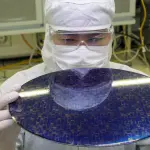
Montana State University’s quantum research capabilities have received a major boost with a $31.5 million contract from the Air Force Research Laboratory in Rome, New York. The funding will fuel novel research at QCORE, MSU’s Quantum Collaborative Research and Education facility, focusing on quantum applications, materials, sensors, devices and network systems. This contract builds upon an initial $26.7 million grant awarded to QCORE in December 2023 to acquire specialized testing equipment. “The quantum infrastructure being developed under this contract will provide researchers at all levels and locations access to cutting-edge resources, thereby transforming the research landscape in the region,” says QCORE’s chief technology officer Krishna Rupavatharam, signaling a significant leap forward for quantum innovation and talent development in Montana and beyond.
QCORE Receives $31.5 Million AFRL Contract for Quantum Research
According to facility CEO Jayne Morrow, “more than 50 MSU faculty and staff are affiliated with QCORE,” actively mentoring students spanning disciplines from physics and engineering to art and philosophy. This contract builds on QCORE’s existing infrastructure, originally established with a $26.7 million AFRL grant, which includes test beds for quantum computing, sensing, and networking, alongside cryogenic facilities essential for operating quantum components. The initiative isn’t solely academic; it’s designed to accelerate commercialization, creating “career paths with diverse emerging and established industry sectors,” including photonics and materials industries within Montana, according to Rupavatharam.
Alison Harmon, MSU’s vice president for research and economic development, emphasized the importance of this sponsored research model, noting that “The QCORE has become a hive of research activity for high school-aged to advanced researchers.” QCORE is also seeking official recognition as a Montana Board of Regents approved center to ensure long-term program sustainability.
Spectrum Lab & Infrastructure Support Quantum Component Testing
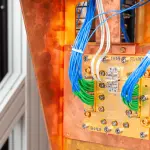
Crucially, the lab also maintains cryogenic facilities essential for operating and evaluating quantum components at extremely low temperatures. This experiential learning is intended to forge career pathways in rapidly developing sectors, including photonics, vacuum technology, and cryogenics within Montana. “It opens doors for them to establish career paths…located in Montana,” Rupavatharam stated. Expanding networking test beds is a key component of the contract, promising to transform the regional research landscape by providing access to cutting-edge resources.
It opens doors for them to establish career paths with diverse emerging and established industry sectors, including the photonics, vacuum technology, cryogenics and materials industries located in Montana.
Krishna Rupavatharam

See today’s quantum computing news on Quantum Zeitgeist for the latest breakthroughs in qubits, hardware, algorithms, and industry deals.