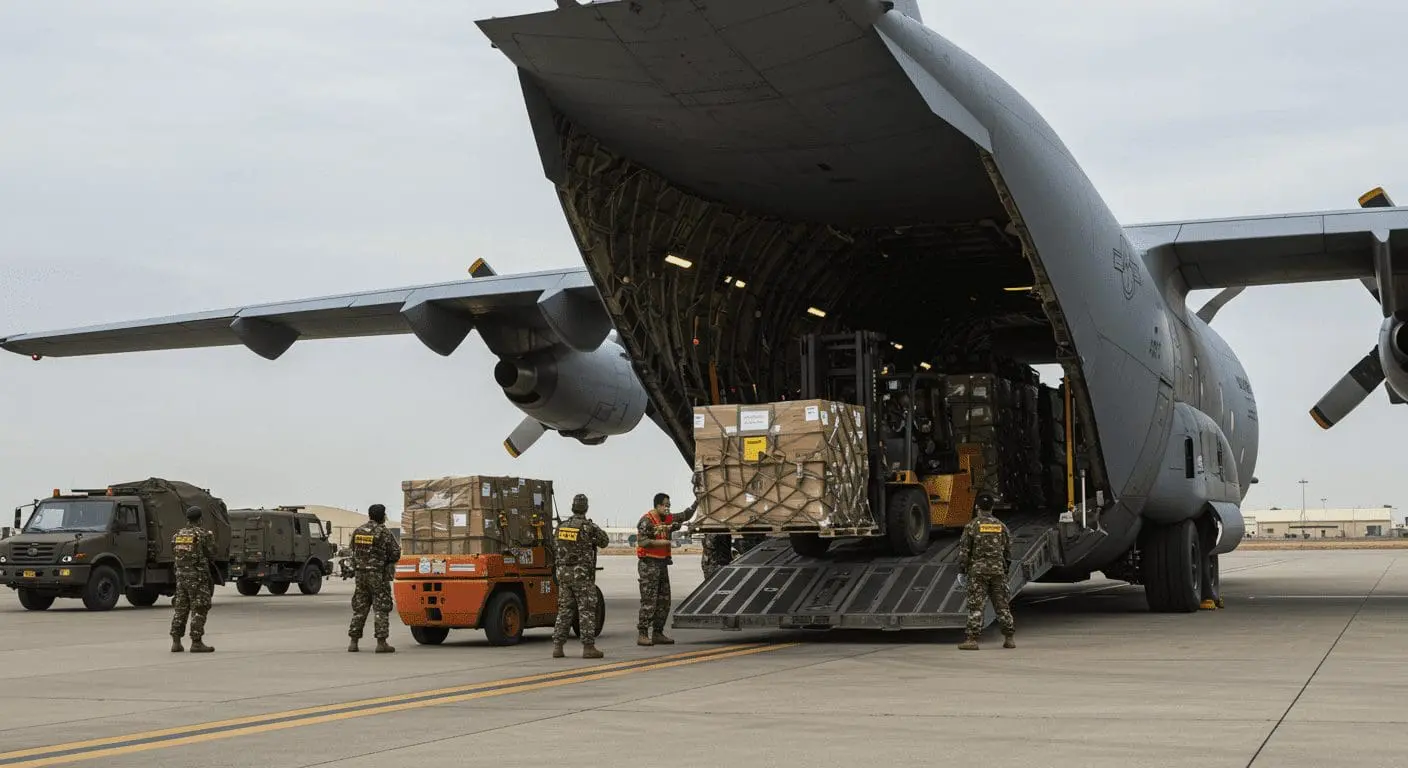
On April 2, 2025, researchers published Quantum Computing for Optimizing Aircraft Loading, detailing how a novel quantum algorithm, the Multi-Angle Layered Variational Quantum Algorithm (MAL-VQA), efficiently solves complex aircraft loading optimization problems on IonQ’s Aria and Forte quantum processing units.
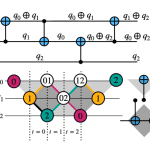
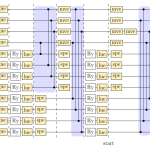
The study introduces a quantum approach using MAL-VQA, a multi-angle variant of QAOA, optimized for near-term ion-trap QPUs with fewer two-qubit gates. It presents a novel cost function that efficiently handles inequality constraints without slack variables, enabling larger problems on low-qubit systems. Experiments on Aria and Forte QPUs demonstrate optimal solutions across 12- to 28-qubit instances of the aircraft loading problem. The results highlight potential scalability with improved hardware and robustness against varying initial conditions and constraints.
Cargo Loading Optimization
In the dynamic world of aviation, optimizing cargo loading is not just a logistical challenge but a critical factor in ensuring efficiency, safety, and cost-effectiveness. This complex task involves determining the best way to load various containers into aircraft cargo holds, balancing weight distribution and maximizing space utilization. Traditionally, this problem has been approached with classical computing methods, but IonQ, a leader in quantum computing, is pioneering a new solution that could transform the industry.
The Complexity of Cargo Loading Optimization
Cargo loading optimization is a classic combinatorial problem, akin to solving a multi-dimensional puzzle where each piece represents a container of varying sizes and weights. The goal is to fit these pieces into available cargo slots in a way that optimizes space while maintaining structural integrity and balance. This challenge becomes exponentially more complex as the number of containers and slots increases, making it difficult for classical computers to find optimal solutions efficiently.
IonQ’s Innovative Approach to Quantum Computing
IonQ has harnessed the power of quantum computing to tackle this intricate problem using a method called Multi-Angle Layered Variational Quantum Algorithm (MAL-VQA). This algorithm leverages quantum mechanics principles to explore multiple potential solutions simultaneously, significantly accelerating the optimization process. In a recent demonstration, IonQ successfully applied MAL-VQA to optimize cargo loading for up to 7 containers across 4 slots, utilizing 28 qubits, a measure of quantum computing power.
The successful implementation of this quantum solution marks a significant milestone in applying quantum computing to real-world problems. By efficiently solving the cargo loading optimization problem, IonQ’s approach could lead to substantial improvements in operational efficiency for airlines. Potential benefits include reduced fuel consumption, lower emissions, and enhanced cargo capacity utilization, all of which contribute to cost savings and environmental sustainability.
Looking ahead, IonQ is exploring strategies to scale this solution further. This includes decomposing larger problems into manageable sub-problems and investigating other quantum algorithms like Quantum Imaginary Time Evolution for broader applicability. The company also emphasizes the importance of advancing quantum hardware to handle increasingly complex optimization tasks.
IonQ’s breakthrough in cargo loading optimization exemplifies the transformative potential of quantum computing in addressing real-world challenges. By demonstrating the practical application of quantum algorithms, IonQ is paving the way for industries beyond aviation to benefit from quantum solutions. This achievement underscores IonQ’s leadership in quantum innovation and its commitment to driving meaningful advancements that impact global operations and efficiency.
🗞 Quantum Computing for Optimizing Aircraft Loading
🧠 DOI: https://doi.org/10.48550/arXiv.2504.01567


See today’s quantum computing news on Quantum Zeitgeist for the latest breakthroughs in qubits, hardware, algorithms, and industry deals.