In 1976 the fastest computer anyone could buy was a single machine shaped like the letter C, with a padded bench around its base and a price near eight million dollars. Twenty years later the company that built it had been sold to a graphics workstation firm. The engineer who designed it had put six million dollars of his own money behind that company’s borrowing and got most of it back only as a creditor in its bankruptcy, and the design house carrying his name had auctioned its entire patent estate, gallium arsenide process included, for two hundred and fifty thousand dollars.
The history of Cray computing is usually told as a story about brilliant machines, and the machines were brilliant. It is more useful as a story about how the most commanding position anyone has held in computing was lost, because it was not lost to a faster supercomputer. It was lost to thousands of ordinary microprocessors, and the customer who named the weapon was Cray’s own.
What follows traces the history of Cray computing through the audited record rather than the folklore, from Control Data in the 1960s to Hewlett Packard Enterprise today. Some of the best known claims about Cray do not survive that check, and they are corrected here rather than repeated. Readers wanting the museum view can also follow the museum’s own account of the history of Cray computing, which holds several of the machines described below.
Before Cray Research, the Control Data years
Seymour Cray was a co-founder of Control Data Corporation, and the point is worth stating from a hard source rather than from legend. Cray Computer Corporation’s 1994 annual report to the Securities and Exchange Commission puts it plainly. He was a co-founder of Control Data and of Cray Research, and he designed the large-scale scientific machines that let Control Data dominate the supercomputer industry in the mid 1970s. That filing is signed, which most retellings of this story are not.
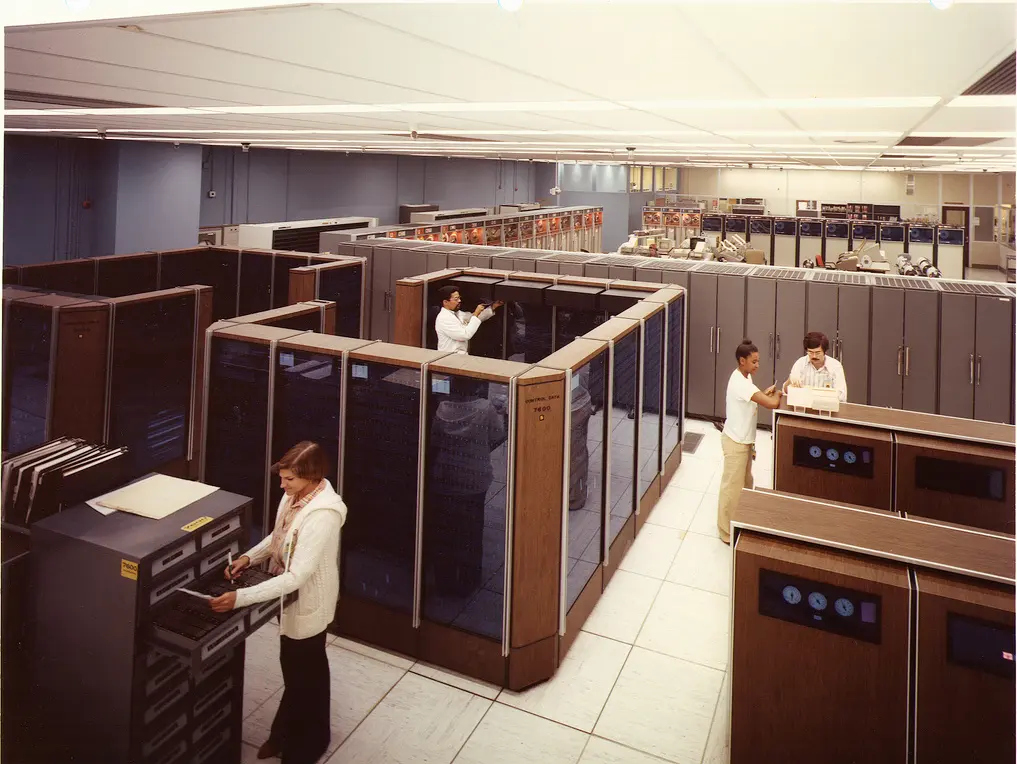
The history of Cray computing really begins with the CDC 6600 in 1964, which established the pattern. The Computer History Museum records it running around three million instructions a second, built from roughly 400,000 transistors and more than a hundred miles of wiring. Ten small peripheral processors handled input and output, so the central processor could stay lean and fast. Control Data sold about a hundred of them.
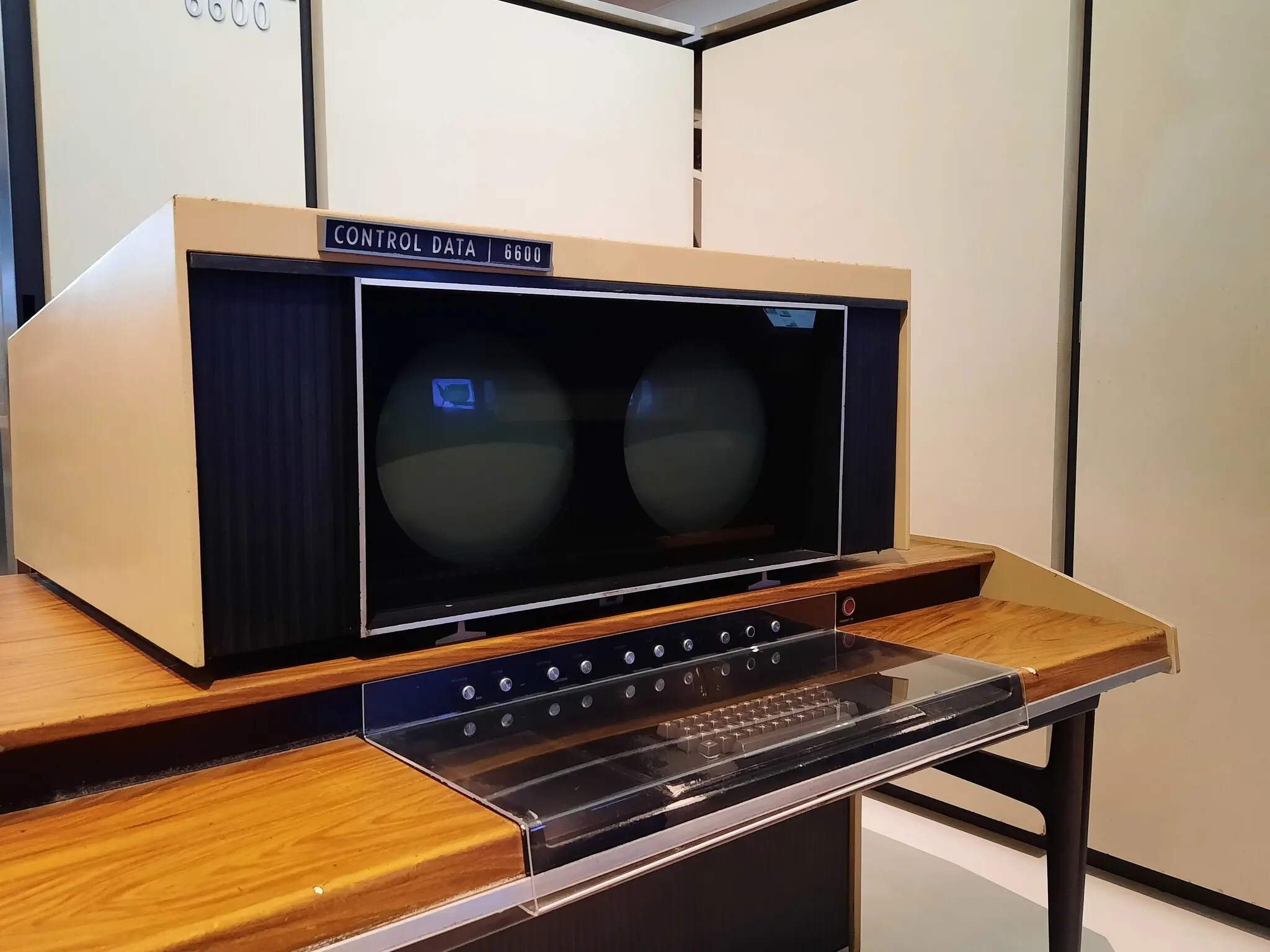
How Control Data beat IBM
IBM’s response tells you how much the 6600 stung. IBM pre-announced faster System/360 models and then never shipped the machine it had promised, on the museum’s account. Watson’s internal memo asked how IBM had lost its industry leadership to a company with a fraction of its staff. William Norris, Control Data’s president, answered with an antitrust suit. IBM settled it in 1973, handing over cash and a computer services company that the museum puts at more than $600 million between them.
Cray followed the 6600 with the CDC 7600 in 1969, which the museum records only as the machine that finally surpassed its predecessor. Then he left, and in 1972 founded Cray Research. We cover the man himself separately in our profile of Seymour Cray. The reasons usually given, that Control Data would not fund his next design, are plausible and universally repeated. We could not find a primary source for them, so they are left as folklore here rather than presented as record.
The Cray-1 and the machine that named a category
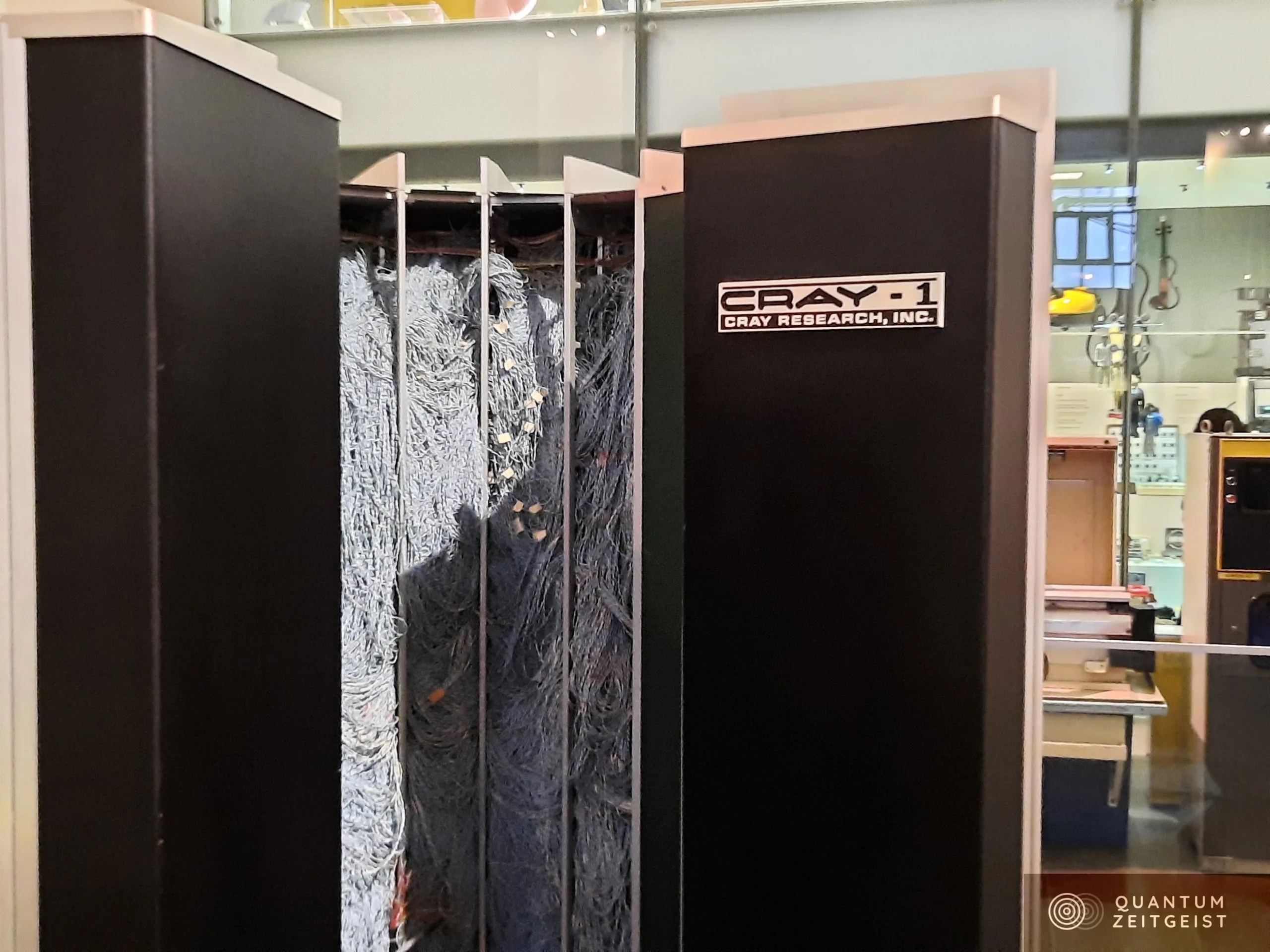
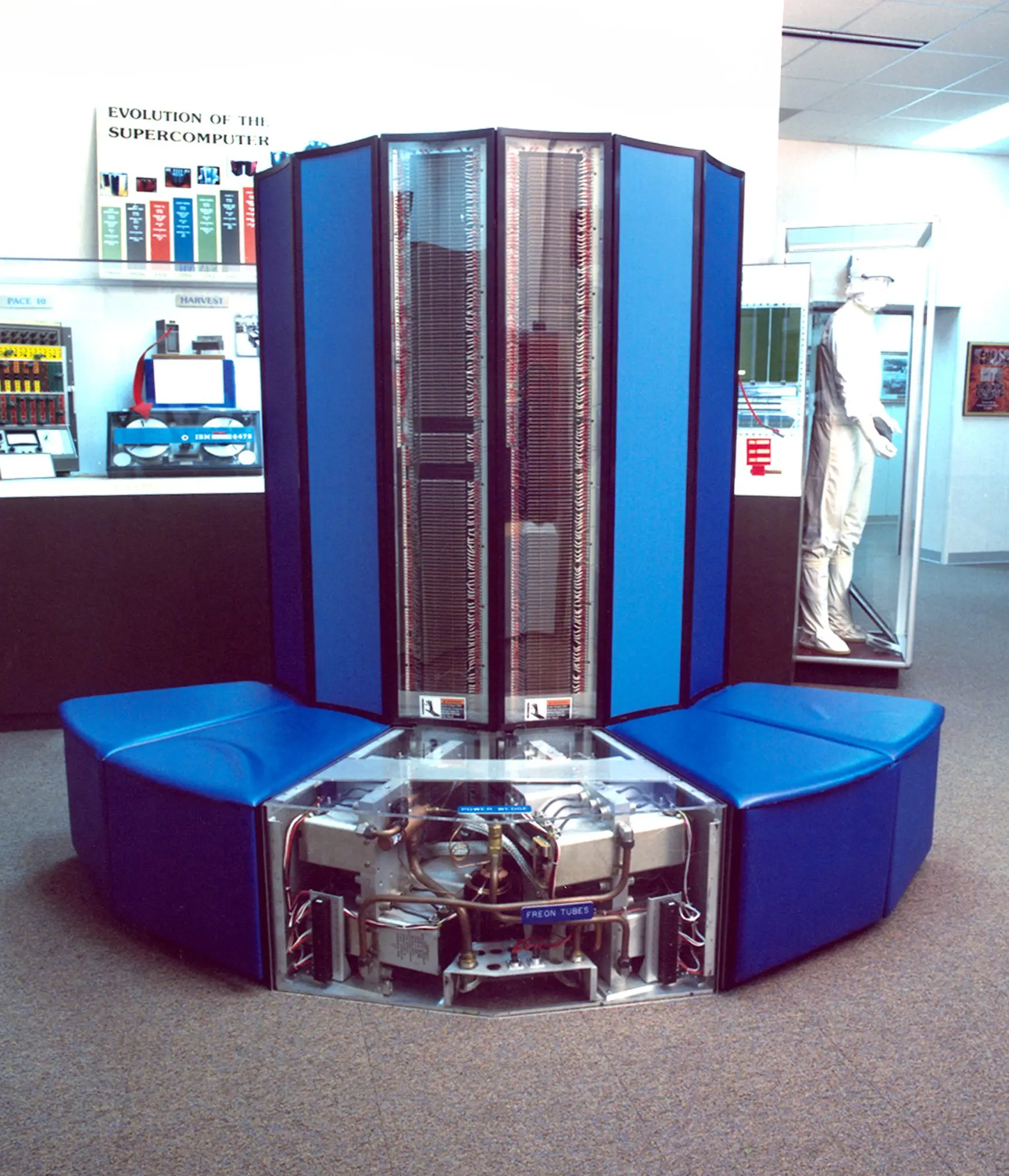
The Cray-1 is the machine most people picture when they picture a supercomputer, and the reason is that it looks like nothing else. Cray Research’s own hardware reference manual describes twenty-four logic chassis arranged two to a column across twelve columns. They are bent into a 270 degree arc about five feet across and six and a half feet tall, standing on a base roughly nine feet in diameter.
The shape was not styling. Bending the chassis put the speed-critical parts on the inside of the arc, where the runs between them are shortest, and the machine carried tens of miles of wire in total. Signals travel at a finite speed, so in a computer with a 12.5 nanosecond clock the physical distance between two parts is a design constraint rather than a detail.
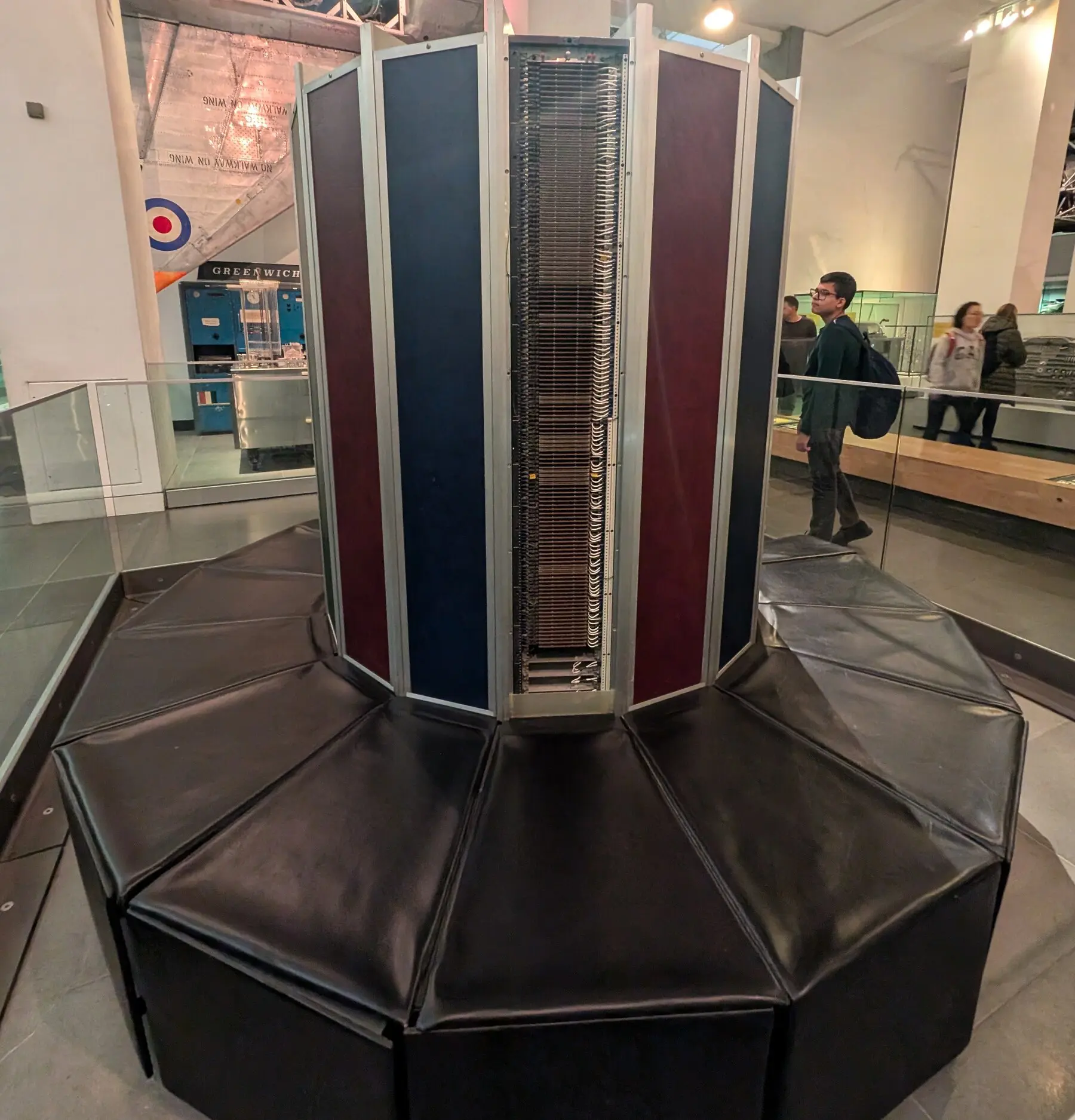
The specification, taken from Cray’s 1982 hardware reference manual rather than from later summaries, is a 12.5 nanosecond clock period, which is 80 megahertz, and memory expandable from a quarter of a million to a full million 64-bit words. Each word is physically 72 bits, the extra eight being check bits for error detection. The manual gives the weight at maximum memory as 10,500 pounds and the power draw as roughly 118 kilowatts.
Cooling was by refrigerant piped through the columns, and the manual’s own term is Refrigerant-22 with a refrigerant to water heat exchange. Freon is a trade name for that class of coolant, so the familiar description is fair, but the machine was cooled through pipework rather than immersed. That distinction matters when the Cray-2 arrives, because the Cray-2 was a genuinely different proposition.
Where the 160 megaflops figure comes from
Almost every account of the Cray-1 quotes 160 million floating-point operations per second, and it is worth knowing that the number does not appear anywhere in Cray’s own manual. What the manual does say is that the floating-point add and multiply units are independent and fully segmented. Vector instructions produce one result per clock period, and chaining lets the machine produce more than one result per clock period.
Chain a multiply to an add and you get two results every 12.5 nanoseconds, which is 160 million a second. That is a derived theoretical peak available only to code that vectorises and chains cleanly, and it was never a sustained rate on real work. The honest version of the history of Cray computing has to say so, because the gap between peak and sustained performance is exactly the argument that destroyed the company two decades later.
The IEEE Computer Society records that serial number 001 was lent to Los Alamos in 1976, and that the first full system sold went to the National Center for Atmospheric Research for $8.8 million. The terms usually quoted for the loan, a free six-month trial, we could not confirm, so they are left out here.
The peak, and the machines that made it
The commercial history of Cray computing is unusually well documented, because Cray Research filed audited accounts with the SEC for two decades, and those filings contain the single most revealing table in this entire story. They show a company whose revenue kept climbing long after its business had stopped working, which is why the collapse, when it came, surprised so many people who were only watching the top line.
| Year | Revenue | Net earnings | Employees | Installed systems |
|---|---|---|---|---|
| 1983 | $169.7m | $26.1m | 1,551 | 59 |
| 1985 | $380.2m | $75.6m | 3,180 | 108 |
| 1986 | $596.7m | $124.8m | 3,999 | 138 |
| 1988 | $756.3m | $156.6m | 5,237 | 220 |
| 1990 | $804.4m | $113.0m | 4,857 | 263 |
| 1991 | $862.5m | $113.0m | 5,395 | 309 |
| 1992 | $797.6m | -$14.9m | 4,895 | 446 |
| 1993 | $894.9m | $60.9m | 4,960 | 505 |
| 1994 | $921.6m | $55.7m | 4,840 | 638 |
| 1995 | $676.2m | -$226.4m | 4,225 | not stated |
Read the last two columns together and the problem becomes obvious. The installed base more than doubled between 1988 and 1993, from 220 systems to 505, and reached 638 by the end of 1994, while revenue moved from $756 million to $922 million. Cray Research put the mechanism plainly in its 1995 filing, saying it had installed substantially more systems in 1994 than in 1993 but at a lower average selling price.
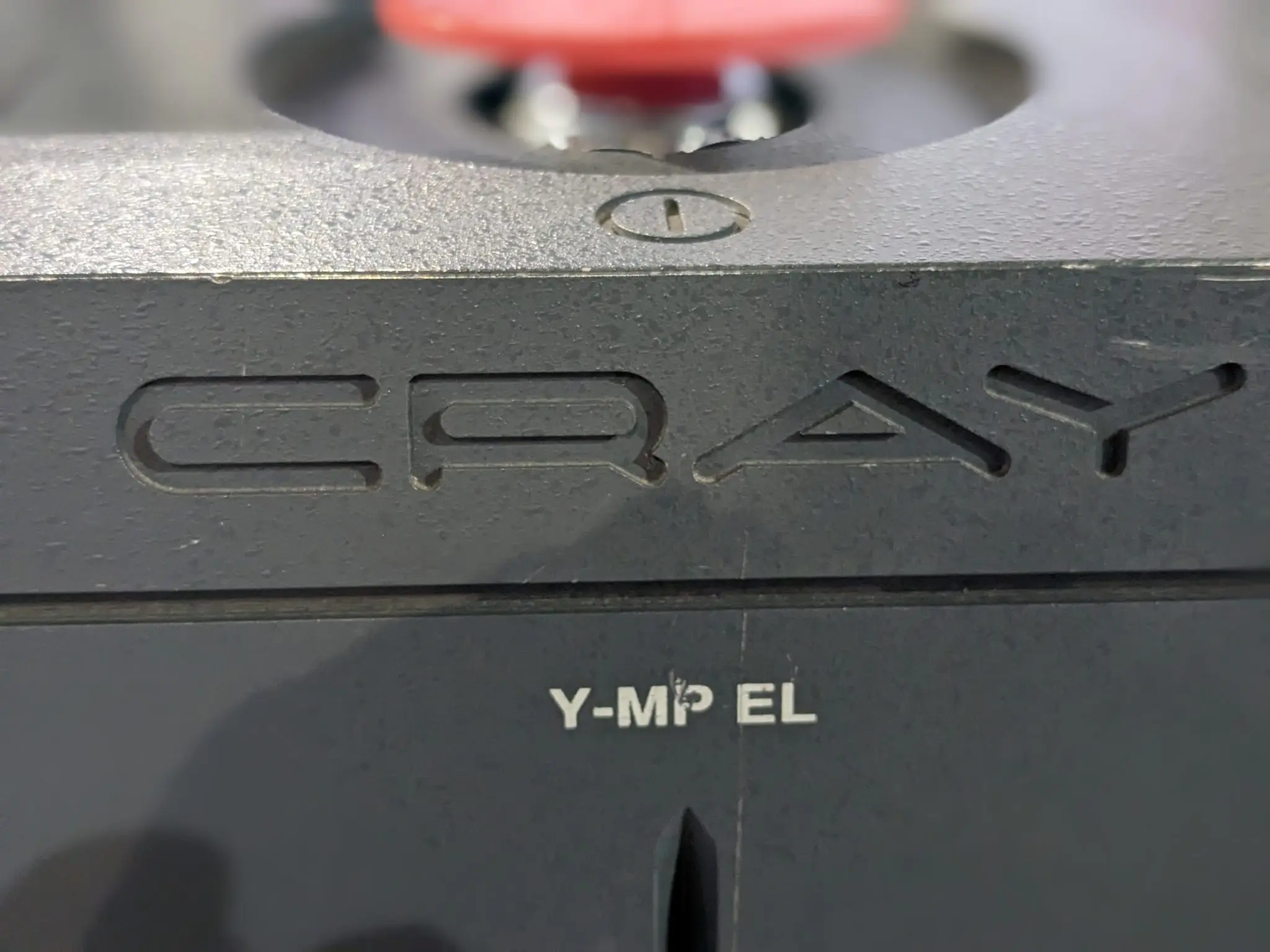
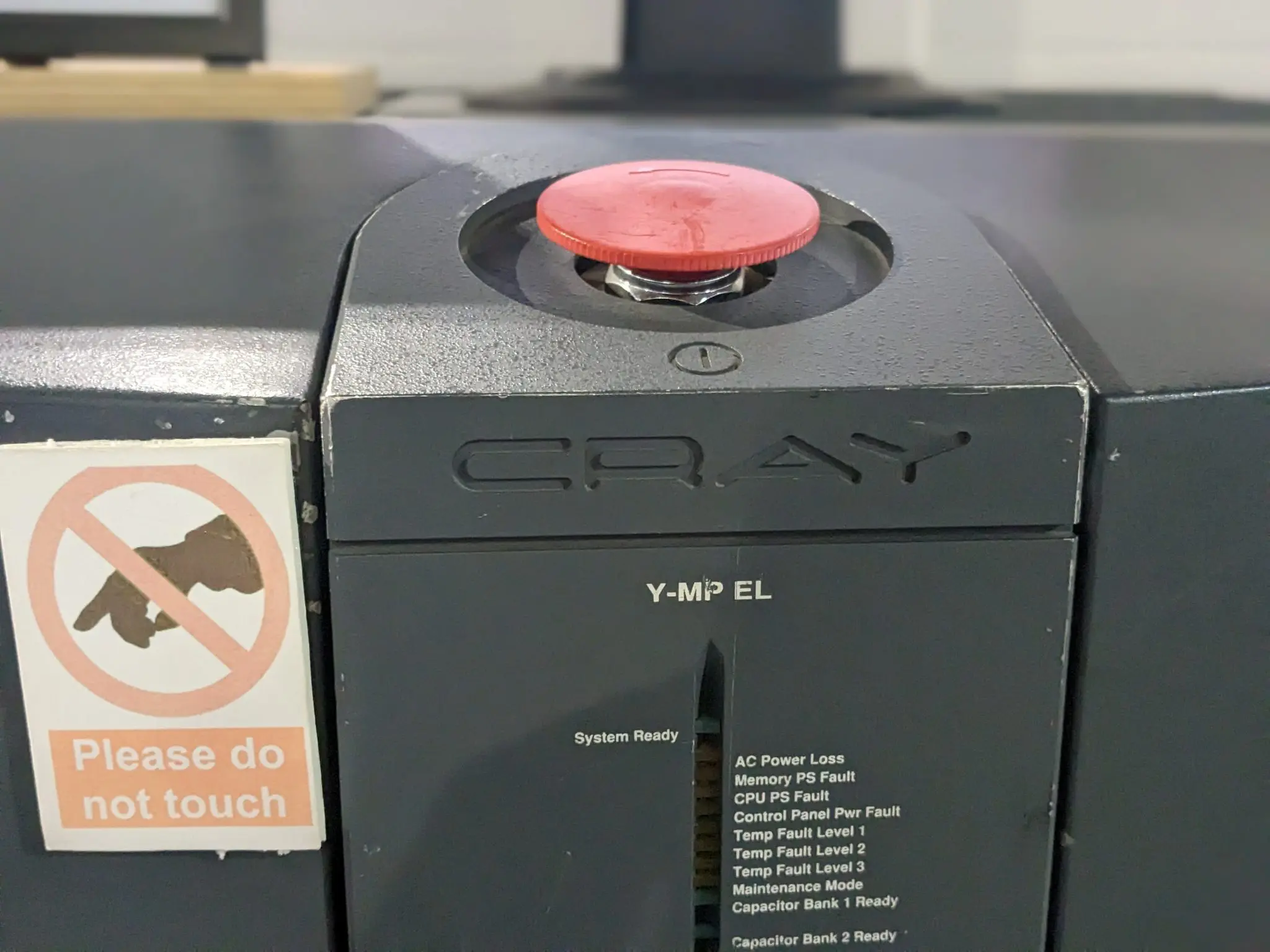
Cray’s own financial review confirms the mechanism. New high-end installations fell from 56 in 1991 to 43 in 1992, and the average selling price fell from $8.4 million to $7.3 million, which the company attributed to market pricing pressure as the Y-MP line matured. Average revenue per new high-end system then jumped back to $15.8 million in 1993, on the strength of twelve C916 sales, and that recovery did not hold. Return on average shareholders’ equity, which had reached 33 per cent in 1986, was 13.3 per cent by 1989 and negative in 1992.
The reckoning arrived in 1995 and it was brutal. Revenue fell 26.6 per cent in twelve months, and on top of that Cray Research booked $187.7 million of restructuring and one-time charges. A $74.5 million operating profit in 1994 became a $238.2 million operating loss, and a $55.7 million net profit became a net loss of $226.4 million.
There was a concentration problem underneath it. Revenue from United States government agencies rose to 43 per cent of the consolidated total in 1993, up from 31 per cent the year before, which Cray Research itself described as running contrary to a shift towards commercial customers that had begun in 1989. The company was trying to reduce its dependence on federal buyers and, in its best year for high-end sales, became more dependent on them instead.
The X-MP, and a correction worth making
The X-MP is routinely described as the first commercially available multiprocessor system, and it was not. The Burroughs D825 was a commercial multiprocessor two decades earlier, and IBM shipped multiprocessor System/360 models in the 1960s. What can be defended is narrower, that the X-MP was the first shared-memory multiprocessor from Cray Research. It is also commonly credited to Seymour Cray, who was working on the Cray-2 at the time, while the X-MP is generally attributed to a team under Steve Chen.
What the X-MP genuinely introduced is more interesting than the false claim. Cray’s 1984 mainframe reference manual describes dedicated hardware for communication between the two processors, including shared address registers, shared scalar registers and semaphore registers. Building synchronisation into the silicon, rather than leaving it to software, is what made parallel vector processing a practical commercial product. Each processor ran at a 9.5 nanosecond clock and managed 105 million floating-point additions and 105 million multiplications a second.
The Cray-2 and the machine that sat in liquid
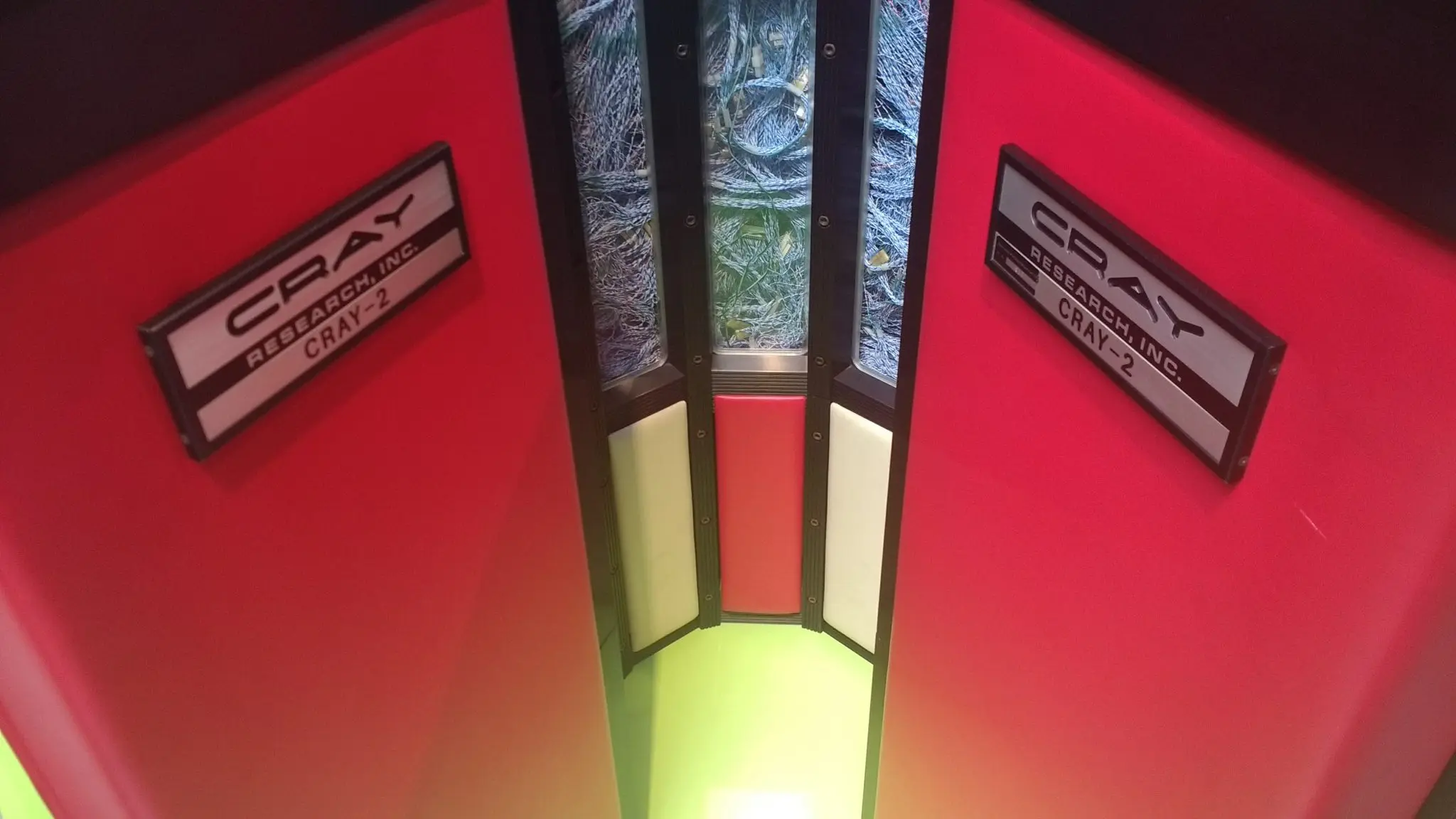
The Cray-2 of 1985 is where this story stops being about clever wiring and starts being about heat. Cray’s functional description manual describes fourteen vertical columns in a 300 degree arc, 45 inches tall and 53 inches across, occupying sixteen square feet of floor. An inert fluorocarbon liquid circulated inside the cabinet in direct contact with the integrated circuit packages.
That is a real difference from the Cray-1 rather than a refinement of it. The Cray-1 was cooled by refrigerant carried through pipework in the columns, while the Cray-2 was fully immersed, with the coolant touching the components themselves. Accounts that describe both machines as freon-cooled flatten a distinction the engineering does not allow.
The memory figure is worth stating carefully, because it is the specification most often mangled. The manual gives 256 or 512 million words of dynamic common memory, and a word on this machine is 64 bits, so 256 million words is two gigabytes. Descriptions putting the Cray-2 at 256 megabytes understate it eightfold, and the secondary cache of a few tens of megabytes often quoted alongside it did not exist.
What did exist was local memory, 16,384 words per background processor, roughly 128 kilobytes, used to stage scalar operands during a computation. Cray Computer Corporation’s own later manual, comparing the Cray-3 against its predecessor, independently confirms the 256 million word figure and a four nanosecond clock. Two manufacturer sources agreeing settles it.
The founder leaves his own company
One fact reframes the rest of the history of Cray computing. Seymour Cray was not running Cray Research when it was sold, and had not been part of it for years. Cray Computer Corporation was incorporated in Delaware on 27 July 1989 as a wholly owned subsidiary of Cray Research, and became a separate public company that November when its shares were distributed to Cray Research shareholders. Cray went with it as chairman and chief executive.
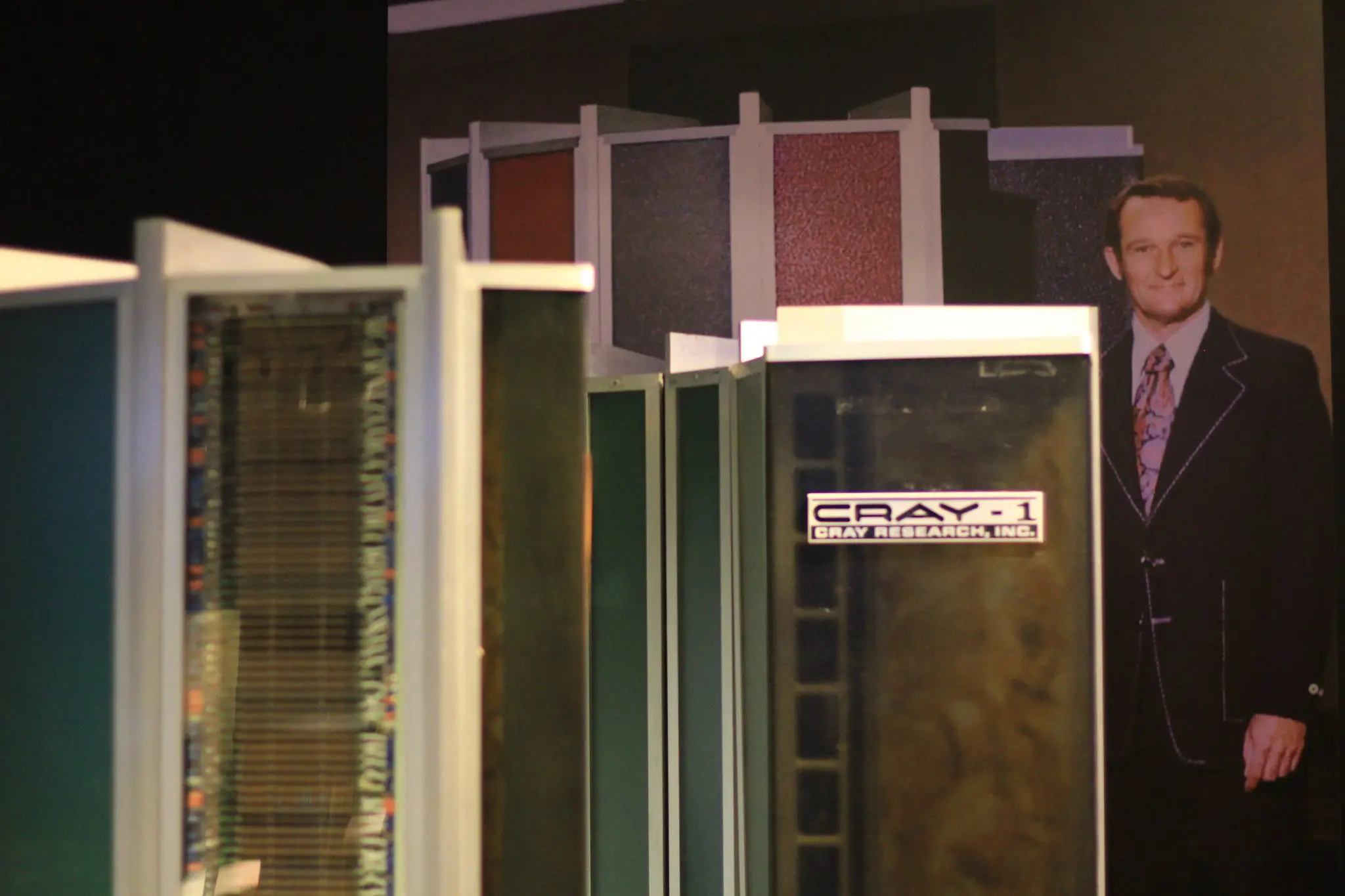
The new company existed to build the Cray-3 out of gallium arsenide, a semiconductor roughly four times faster than silicon by its own filings’ reckoning, and far harder to manufacture. The design was ambitious even by Cray’s standards. The manual describes up to sixteen processors, a two nanosecond clock and a maximum burst rate of sixteen gigaflops, though by 1994 the company was offering four and eight processor machines and told the SEC it did not expect an order for a sixteen-processor system. The money behind it was substantial and it is all documented.
Where the money for the Cray-3 came from
Cray Research put in $98.6 million between October 1989 and October 1991. A public offering raised $61.1 million in July 1991, a further placement $27.8 million in June 1993, and the sale of a single Cray-2 brought in $12.8 million. By the end of 1994 the company had accumulated losses of approximately $363 million, and Seymour Cray had begun putting in his own money.
The critical event came in December 1991, when the National Energy Research Supercomputer Center at Lawrence Livermore cancelled a purchase order for a sixteen-processor Cray-3. The company’s own filings describe the announced loss of that order as causing a major drop in the share price. The episode drew a formal, non-public SEC investigation into trading in the stock over the surrounding period.
That order went further than trading. Commission staff said it had information that the company and others might have made false or misleading statements in SEC filings about the NERSC order and about the Cray-3’s progress, and told the company it intended to recommend injunctions and civil penalties against the company, Seymour Cray and a former officer. The company said it did not believe the investigation had uncovered violations, and the matter was still unresolved when it filed for bankruptcy.
Here is the fact that most accounts get wrong. Cray Computer Corporation never sold a computer. Its 1994 annual filing states that the company had no orders for and no revenues from the sale of its products. The four-processor Cray-3 delivered to the National Center for Atmospheric Research in May 1993 went there for evaluation and demonstration. The only product-related revenue it ever booked was $2.1 million from a development contract with the National Security Agency.
The attack of the killer micros
The phrase that stuck came from inside Lawrence Livermore National Laboratory rather than from a journalist or a rival. It is the title of the laboratory’s own annual report, one of the founding customers of the entire supercomputer industry and about as close to Cray’s home turf as an institution could be.
The 1991 yearly report of Livermore’s Massively Parallel Computing Initiative, edited by Eugene Brooks and Karen Warren, is titled The attack of the killer micros. The following year’s report is titled Harnessing the killer micros. Around the same time, laboratory staff published papers with titles like A killer micro attack on 3D neutron transport and Travel from a supercomputer to killer micros.
Read those two titles in sequence and the story is complete. In 1991 the commodity microprocessor was an attacker; by 1992 it was a resource to be harnessed. Cray Research would not be sold for another five years, but its most important class of customer had already documented the switch, in writing, under a laboratory letterhead. That is the hinge of the history of Cray computing, and it turned in public.
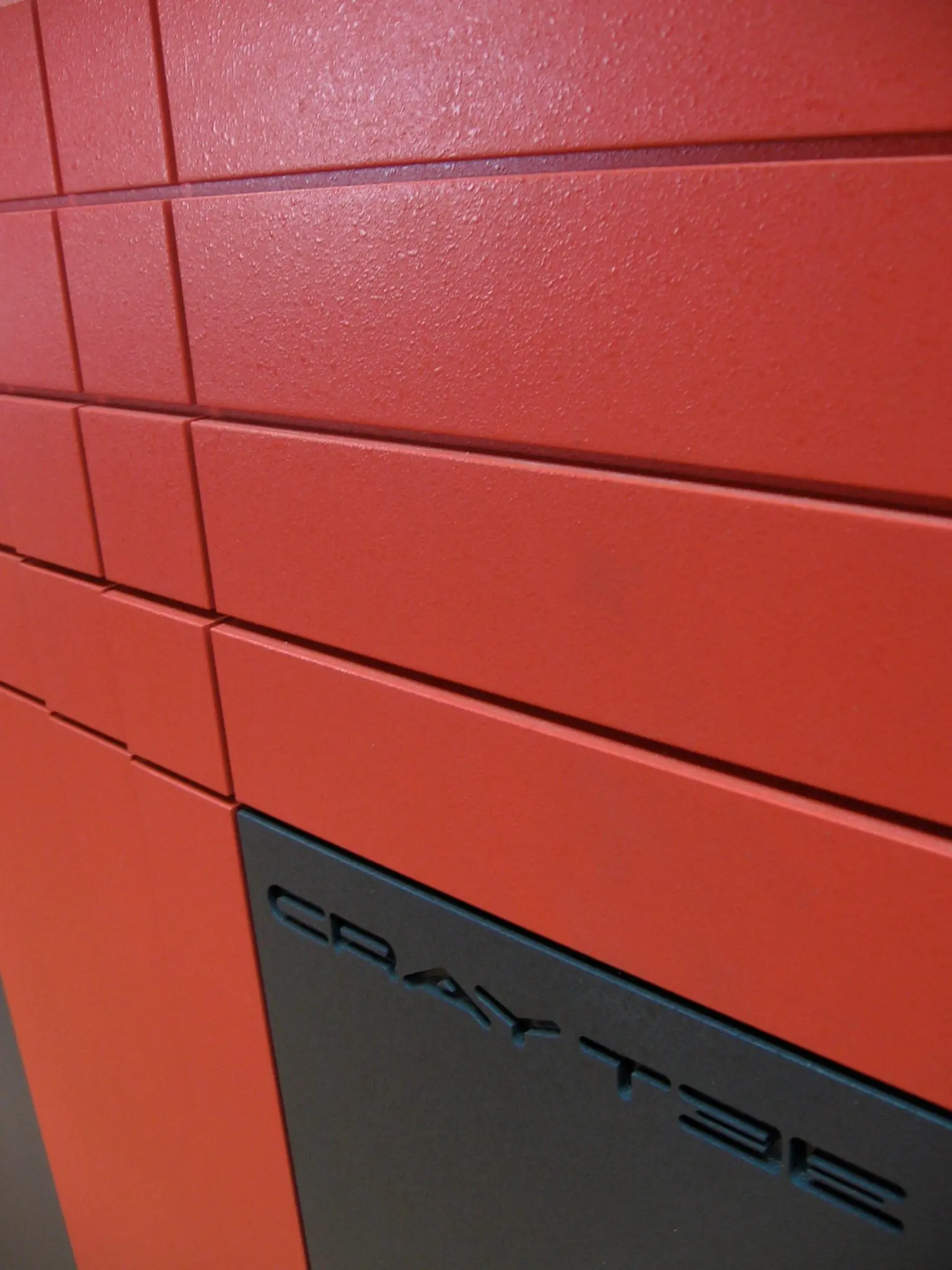
Cray’s own products conceded the argument before its executives did. The T3D of 1993, the company’s first massively parallel machine, was built on Digital’s Alpha microprocessors and needed a Y-MP or C90 in front of it to handle input, output and most system services. The T3E, announced in November 1995 and shipping from 1996, used a later Alpha again. The company that had defined custom silicon was buying its processors from Digital.
The economics are set out, with unusual candour, in Cray Computer Corporation’s own filing. It notes that massively parallel designers link hundreds or thousands of relatively low cost microprocessors to build scalable systems. The benefits it lists are lower cost at a given theoretical peak, and much higher peaks on narrowly defined problems. It then gives the counter-argument the company believed, that such machines are hard to program and achieve poor sustained performance against their peak.
That counter-argument was true, and it did not matter. The same filing explains why. It observes that the built-in costs of supercomputer development had historically required prices in the $10 million to $30 million range, and that the number of potential customers in the market always had been limited. Cray Research was spending between $140 million and $162 million a year on development and engineering in the early 1990s. You cannot spread that across a few hundred institutions while your competitor spreads its chip development across the entire workstation and personal computer market.
The trade case Cray won and then abandoned
Japanese competition produced the one part of this history that was fought in public. Cray Research petitioned the United States Department of Commerce in July 1996. The resulting investigation covered all vector supercomputers, defined as any computer with a vector hardware unit as an integral part of its central processing unit boards. By then Cray Research was already a subsidiary of Silicon Graphics.
Fujitsu’s defence was, precisely, the killer micro argument. The initiation notice records Fujitsu arguing that limiting the domestic like product to vector supercomputers was unreasonable, and that massively parallel processors and networked workstations had to be included in the definition. The central technological question of the decade was being litigated as a trade-law question about the scope of a product category.
Commerce’s final determination in August 1997 set dumping margins of 173.08 per cent for Fujitsu and 454.00 per cent for NEC. Those figures are widely quoted and widely misunderstood. They were not calculated from verified cost data. Commerce applied adverse facts available after Fujitsu declined to answer its supplemental cost questionnaire fully and NEC failed to answer at all, and both rates trace back to margins stated in Cray’s own petition. Cray also had to tell Commerce that one of its allegations against Fujitsu, over a sale to Western Geophysical, was mistaken.
The International Trade Commission found in October 1997 that the imports threatened material injury, which is a narrower finding than actual injury, and the antidumping order took effect that month. It was revoked on 3 May 2001 at the request of Cray Inc, which told Commerce it no longer had an interest in maintaining it. Note who that was. The petitioner in 1996 was Cray Research, by then an SGI subsidiary; the company that gave the protection up in 2001 was the former Tera Computer Company, which had owned the Cray name for a year.
Bankruptcy, breakup and who bought what
The end came for Seymour Cray’s own company first, and it is the bleakest chapter of the lot. Cray Computer Corporation filed a voluntary Chapter 11 petition in the District of Colorado on 24 March 1995, having failed to complete a planned placement of common stock with foreign and institutional investors. Its own press release that day put the failed raise at $20 million, while the annual filing described it as up to $25 million. Work on the machines stopped and the engineering, manufacturing and marketing staff were laid off.
In July the company abandoned any attempt to reorganise and moved to liquidation. What happened next is the detail that ought to be better known than it is. The entire intellectual property portfolio, meaning the Cray-3, the Cray-3/SSS, the Cray-4 and the gallium arsenide technology behind them, was agreed for sale in December 1995 at $100,000. It was then auctioned, and closed at $250,000 on 29 January 1996. Approximately $363 million had gone into creating it.
The manufacturing building fetched $7.3 million, nearly thirty times what the designs did. Seymour Cray had personally posted just over $6 million in standby letters of credit as collateral for the company’s secured financing during 1994, and the lender drew on them after the filing. He settled part of his claim by accepting about thirty-two acres of unimproved land valued near $900,000, and the remaining $4.5 million or so was left as an ordinary unsecured claim.
Unsecured creditors had been paid 80 cents on the dollar by early 1997, with about two million dollars still held in reserve. Shareholders received nothing. Seymour Cray died on 5 October 1996, according to the IEEE Computer Society as a result of a car accident, while designing a massively parallel machine for another new company, SRC Computers. The certificate of dissolution for Cray Computer Corporation was filed in January 1997.
Cray Research changes hands three times
Cray Research itself was sold to Silicon Graphics under a merger agreement dated 25 February 1996, though the deal did not complete until April. Silicon Graphics ran a cash tender offer and accepted 19,218,735 shares at $30.00 each on 2 April 1996. That was an aggregate of $576,562,050 for roughly 75 per cent of the company, and it exchanged one share of its own stock for each remaining Cray share. The deal is usually quoted at around $740 million, which is the total including that paper. Only the $576.6 million was money out of the door.
Four years later Silicon Graphics sold the business on. Tera Computer Company agreed to buy the Cray assets, including the Chippewa Falls property, the intellectual property and the Cray name itself, in an agreement entered on 1 March 2000 and closed that April. The consideration was $15 million in cash, one million shares, and a nine-month non-interest-bearing note of $36.3 million. Tera then renamed itself Cray Inc.
Put those two transactions beside each other and the trajectory is stark. Silicon Graphics paid more than $576 million in cash alone for Cray Research in 1996 and sold the business four years later for roughly $51 million plus a million shares. That is the market repricing custom vector supercomputing in real time.

The Cray Inc years
Cray Inc traded on Nasdaq and had a long, uneven run. Its best year was 2015, at $724.7 million of revenue, which was still below Cray Research’s 1994 peak of $921.6 million in nominal terms and far below it in real ones. Revenue fell to $392.5 million in 2017 before recovering to $455.9 million in 2018.
Those two decades are the quiet part of the story, and they are not a story of failure so much as of a much smaller company. Cray Inc built machines for national laboratories and weather services, moved from vector hardware to clusters of standard processors, and made its money on interconnect and integration rather than on custom silicon. It sold into a market it had once defined.
Hewlett Packard Enterprise agreed to buy Cray Inc on 16 May 2019 and announced the deal the following day. The price was $35.00 a share in cash, which HPE described as valuing the transaction at approximately $1.3 billion net of cash. It completed on 25 September 2019. HPE’s announcement noted that Cray had around 1,300 employees, and that it had recently won an exascale contract worth over $600 million for Oak Ridge National Laboratory.
The Silicon Graphics trap
It is tempting to close the loop by saying HPE eventually bought both Cray and the company that had once owned it, and that is false. The Silicon Graphics that acquired Cray Research in 1996 filed for Chapter 11 in April 2009. It sold substantially all its assets to Rackable Systems the following month for $42.5 million in cash, and its stockholders received nothing. The remaining shell was renamed Graphics Properties Holdings.
Rackable then renamed itself Silicon Graphics International, and it was that company, a different legal entity entirely, that HPE bought in 2016. So HPE owns both famous names, but the original owner of one of them went bankrupt and wiped out its shareholders seven years before HPE arrived. Both names outlived both companies.
What actually survived
The last chapter of the history of Cray computing is more encouraging than the rest, because the Cray name is not a badge on unrelated hardware. The Shasta architecture and Slingshot interconnect named in HPE’s 2019 announcement carried into the HPE Cray EX line, both descending from the engineering organisation HPE acquired. When the United States built its exascale machines, it built them on that lineage.
That continuity is worth being precise about, because company names in this industry outlive the companies. The engineers, the cabinet design and the interconnect passed from Cray Inc to HPE as a going concern in 2019, which is a different thing from a trademark being bought out of an administration. What follows is built by the same organisation, under new ownership.
Frontier, El Capitan and the current list
Frontier at Oak Ridge is built on the HPE Cray EX architecture and Slingshot interconnect, with AMD processors and accelerators across 74 cabinets, and it took the top spot on the TOP500 in 2022. El Capitan at Lawrence Livermore followed, using AMD MI300 accelerators, with a theoretical peak of 2.82 exaflops and a measured Linpack rate of 1.81.
Neither is the fastest machine in the world today. On the June 2026 TOP500 list, the leader is LineShine at the National Supercomputing Centre in Shenzhen, at 2.198 exaflops measured on nearly 13.8 million cores, with El Capitan second on 1.809 and Frontier third. Alps at the Swiss National Supercomputing Centre, also an HPE Cray EX system, sits at number ten. How machines of this class compare with a fundamentally different approach is the subject of our piece on quantum computing against supercomputers.
So the answer to what happened to Cray is layered. The company Seymour Cray founded was sold, the company he left it for went bankrupt and sold its designs for the price of a house, and he died before either story finished. The technology, though, did not die. It stopped being made of custom vector processors and started being made of other people’s chips wired together by Cray’s interconnect, which is exactly what the killer micro argument predicted. The history of Cray computing ends with the machines winning and the company losing.
The history of Cray computing is therefore not a story of a company that fell behind technically. Cray Research was still building the fastest vector machines in the world when its economics collapsed underneath it. It lost because the industry stopped paying a premium for machines that were fast on paper and hard to fill. The customers who had funded the whole category decided that a thousand cheap processors were good enough.
There is a general lesson here that applies well beyond supercomputers. A company can hold an unassailable technical lead, keep shipping the best product in its category, and still lose, if the cost base of the alternative falls faster than its own advantage grows. Cray’s engineering was never the problem. The same squeeze eventually caught the economics that Gordon Moore described, but it caught Cray first.
The warning signs were in the accounts years before they were in the products. Profit peaked in 1988, six years before revenue did, and the installed base nearly tripled while revenue moved barely a fifth. Anyone reading those filings could have seen a company putting far more machines into the field for very little more money, which is what a collapsing price looks like before it becomes a collapsing business.
Questions and answers
What happened to Cray, in one paragraph?
Cray Research was bought by Silicon Graphics in a deal that closed in April 1996, then sold on to Tera Computer Company in 2000 for roughly $51 million. Tera renamed itself Cray Inc, and was acquired by Hewlett Packard Enterprise in September 2019 for about $1.3 billion. Separately, Seymour Cray’s own later firm, Cray Computer Corporation, went into Chapter 11 in March 1995 and was liquidated, and he died in October 1996. The Cray name survives inside HPE on the Cray EX supercomputer line.
Did Cray Computer Corporation ever sell a computer?
No. Its 1994 annual filing states that the company had no orders for and no revenues from the sale of its products. The Cray-3 delivered to the National Center for Atmospheric Research in May 1993 was there for evaluation and demonstration rather than as a sale. The only product-related revenue the company ever booked was $2.1 million from a National Security Agency development contract.
How much memory did the Cray-2 have?
Up to 256 million 64-bit words of common memory, which is two gigabytes, with a 512 million word option, according to Cray’s own functional description manual. Accounts giving 256 megabytes understate it by a factor of eight. There was no large secondary cache either; each background processor had 16,384 words of local memory, about 128 kilobytes, used for staging scalar operands.
Why was the Cray-1 shaped like a C?
To keep the wires short. Bending the chassis into an arc put the speed-critical sections on the inside edge, where the runs between them are shortest. At a 12.5 nanosecond clock, the distance a signal has to travel between two components becomes a hard design constraint rather than an afterthought.
Was the Cray X-MP the first commercial multiprocessor?
No. Commercial multiprocessor systems existed well before the X-MP arrived in 1982, and the defensible claim is that it was the first shared-memory multiprocessor from Cray Research. It is also often credited to Seymour Cray, who was working on the Cray-2 at the time. The X-MP was designed under Steve Chen.
What does “the attack of the killer micros” mean?
It is the title of the 1991 yearly report of the Massively Parallel Computing Initiative at Lawrence Livermore National Laboratory. The phrase describes commodity microprocessors, cheap and produced in enormous volume, being linked in large numbers to outperform custom-built vector supercomputers on cost. The 1992 report was titled “Harnessing the killer micros”, which tells you how quickly the argument was settled.
Were NEC and Fujitsu really found to be dumping at over 400 per cent?
The 1997 final determination set margins of 173.08 per cent for Fujitsu and 454.00 per cent for NEC, but those were not calculated from verified cost data. Commerce applied adverse facts available after Fujitsu declined to respond fully to its cost questionnaire and NEC did not respond at all, and both figures trace back to Cray’s own petition. The order was revoked in 2001 at Cray’s request.
Does HPE still sell Cray supercomputers?
Yes. The HPE Cray EX line descends from the Shasta architecture and Slingshot interconnect that came with the 2019 acquisition, and it is the platform behind Frontier at Oak Ridge and El Capitan at Lawrence Livermore. Alps at the Swiss National Supercomputing Centre is another. These are Cray-lineage systems rather than a name applied to unrelated hardware.
Is El Capitan the fastest supercomputer in the world?
Not any more. On the June 2026 TOP500 list El Capitan is second, behind LineShine at the National Supercomputing Centre in Shenzhen, which reached a measured 2.198 exaflops on nearly 13.8 million cores against El Capitan’s 1.809. Frontier is third and Aurora fourth. El Capitan did hold the top position after its deployment in 2024.
The machines, in order
The table below lists the machines of the history of Cray computing in order, with the specification taken from manufacturer manuals where one was available. Figures marked as derived or as company claims are labelled, because the difference between a measured rate and a marketing peak is the recurring theme of this history.
| Machine | Year | Clock | Performance | What it introduced |
|---|---|---|---|---|
| CDC 6600 | 1964 | not stated | ~3 million instructions/sec | Peripheral processors handling all input and output |
| CDC 7600 | 1969 | not stated | not stated | Deeper pipelining, and the machine that surpassed the 6600 |
| Cray-1 | 1976 | 12.5 ns | 160 MFLOPS, derived peak | Vector registers with automatic chaining |
| Cray X-MP | 1982 | 9.5 ns | 210 MFLOPS per processor, derived from the manual | Shared registers and semaphores in hardware |
| Cray-2 | 1985 | 4.1 ns | 2 GFLOPS burst, company figure | Full liquid immersion cooling, 2 GB memory |
| Cray Y-MP | 1988 | 6.0 ns | not stated in manual | Up to eight processors, 32-bit addressing |
| Cray T3D | 1993 | 6.7 ns | 32 to 2,048 processors | Massively parallel on bought-in microprocessors, 3D torus |
| Cray-3 | 1993 | 2 ns | 16 GFLOPS burst for a 16-processor machine never built, company figure | Gallium arsenide logic. Never sold |
| Cray T3E | announced 1995, shipped 1996 | 3.3 ns | not stated | Self-hosted, no Cray front end required |



See today’s quantum computing news on Quantum Zeitgeist for the latest breakthroughs in qubits, hardware, algorithms, and industry deals.