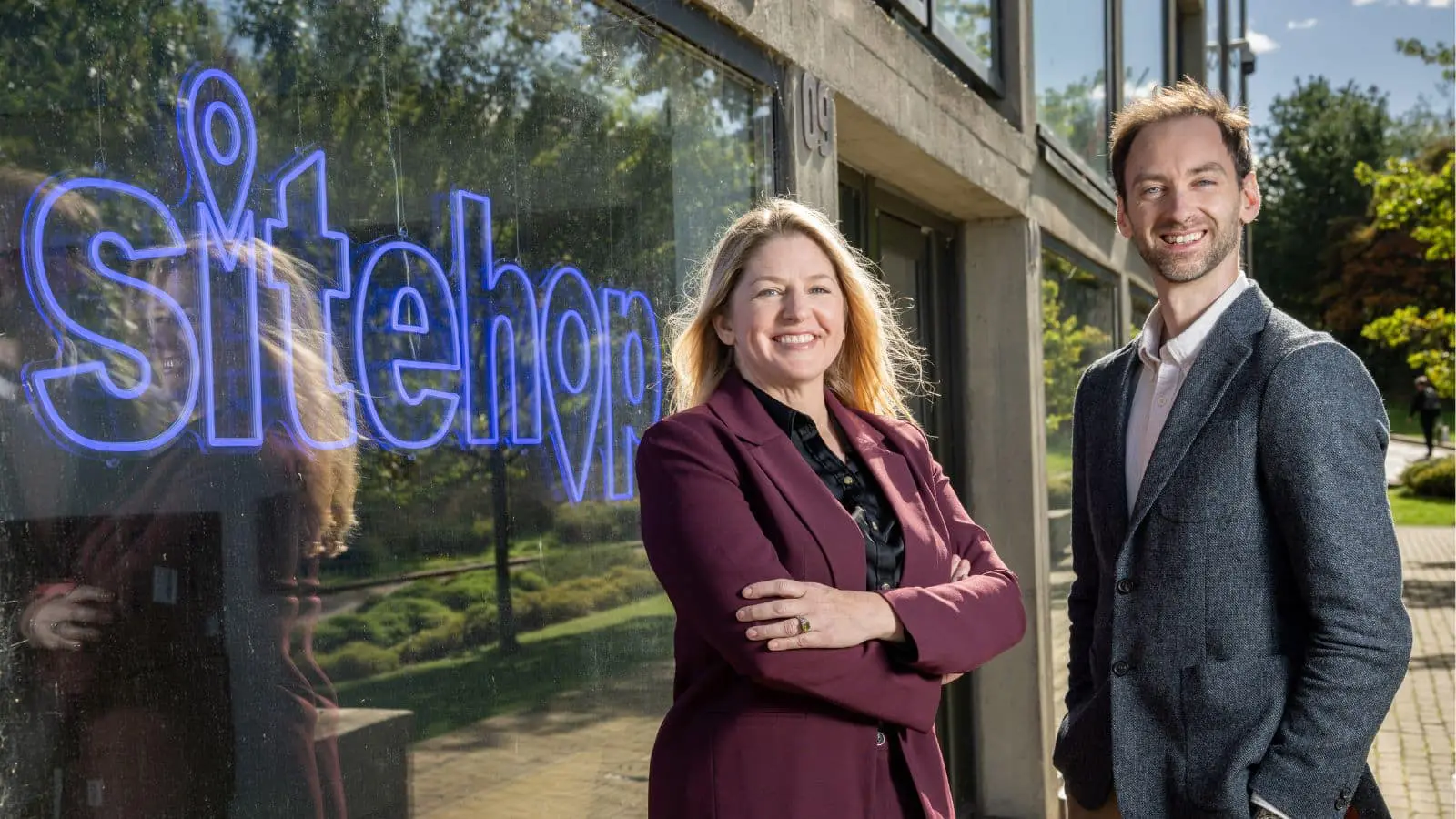
The recent £1.9 billion hack of Jaguar Land Rover highlights a rapidly escalating threat to businesses and critical infrastructure. While companies like JLR and Marks & Spencer grapple with the fallout from current attacks, a future challenge looms: the advent of quantum computing, which could render existing encryption methods obsolete. The UK’s National Cyber Security Centre (NCSC) warns that quantum computers could break the encryption protecting sectors including banking and communications, urging businesses to adopt new methods within the decade. Sheffield-based start-up Sitehop, founded by Melissa Chambers and Ben Harper, is working to future-proof digital networks against this emerging threat; “When we started Sitehop, the general view was that a cryptographically relevant quantum computer was 25 to 30 years away,” explains CEO Melissa Chambers. Some experts even think it might be sooner.
Quantum Computing Threat to Current Encryption Systems
The estimated £1.9 billion economic damage stemming from the Jaguar Land Rover hack illustrates the escalating costs associated with contemporary cyberattacks, but a more insidious threat is emerging: the advent of quantum computing. While current breaches exploit existing vulnerabilities in conventional systems, quantum computers possess the theoretical capacity to dismantle the foundations of modern encryption, jeopardizing sensitive data across critical sectors. The core of the problem lies in the computational power differential; quantum computers, leveraging the principles of quantum mechanics, could potentially solve problems in seconds that would take conventional machines years to process.
This capability directly threatens the asymmetric cryptography currently used to secure most digital communications and data storage. “Current asymmetric cryptography relies on problems that are hard for classical computers to solve,” explains Ben Harper, CTO and co-founder of Sitehop, a Sheffield-based cybersecurity start-up focused on post-quantum solutions. “But quantum computers work differently and can break those systems much more easily.” This is not a distant concern; the timeline for the arrival of cryptographically relevant quantum computers is rapidly shrinking. Initially projected to be decades away, recent research suggests a functional machine could emerge within seven years, with some experts predicting an even sooner arrival. This accelerated timeline is fueling a global race to develop post-quantum cryptography (PQC), new encryption methods designed to resist attacks from quantum computers. The American National Institute of Standards and Technology (NIST) is leading this effort, coordinating input from 25 countries to establish new, quantum-resistant standards.
These new standards are being created to be difficult for a quantum computer to crack, Harper notes. However, simply developing new algorithms isn’t enough. A significant, and often overlooked, risk is the “harvest now, decrypt later” tactic, where malicious actors are already collecting encrypted data with the intention of decrypting it once quantum computers become available. “Bad actors and nefarious states are collecting data now, even if it’s encrypted they are storing it, and as soon as they have access to a quantum computer, they will be able to decrypt it all,” warns Melissa Chambers, CEO and co-founder of Sitehop. The implications for long-term data security are profound, particularly for sectors like finance, where data retention requirements are extensive. Banks, facing regulatory pressures and the potential for catastrophic breaches, are already pushing connectivity providers to adopt PQC standards. Sitehop’s technology tackles a fundamental cybersecurity flaw: encryption isn’t always used everywhere it should be. “Software has a lot of attack factors and has libraries stacked on libraries, meaning each layer is a potential vulnerability where somebody could inject malicious code and get to the data,” Chambers explains, emphasizing the need for a more robust, layered defense. The company is building in adaptability, recognizing that quantum computing will continue to evolve, necessitating ongoing updates to encryption standards. “NIST will likely release new algorithms in the future as quantum computing evolves, so the ability to update and adapt encryption in the future is going to be crucial. We’ve built that updatability into our product, and that’s really at the heart of our story.
Sitehop’s Hardware Solution for Enhanced Encryption Performance
Sheffield-based cybersecurity start-up Sitehop is addressing a looming threat to data security by tackling a fundamental cybersecurity flaw: encryption isn’t always used everywhere it should be. While many organizations are focused on adopting post-quantum cryptography (PQC), new algorithms resistant to quantum attacks, Sitehop is tackling the underlying inefficiencies of current encryption methods, even before considering the quantum challenge. The company’s approach stems from a recognition that existing encryption often compromises performance, creating a trade-off between security and usability. This realization prompted the development of a system that encrypts data at chip level, aiming for speed, security, and efficiency gains over traditional software-based solutions.
This isn’t merely future-proofing; Sitehop identified a present-day problem with widespread implications. “One of the pillars of 5G is ultra-low latency, but encryption is often disabled because it slows networks down,” says CEO and co-founder Melissa Chambers, revealing a common practice where security is sacrificed for performance. Their first customer, a global tier-one telecommunications company, validated this need, requesting a proof of concept before the product was even released, having “been searching for a solution like this for five years.” Sitehop’s hardware-based system directly addresses three core issues: inadequate performance of existing solutions, high total cost of ownership, and significant latency challenges. The company’s co-founders observed that software encryption introduces multiple layers of potential vulnerability, creating attack vectors through stacked libraries and supply chain weaknesses, issues that have already resulted in billions of pounds of damage through cyberattacks.
This is particularly concerning for sectors like finance, where long-term data retention is mandated, and a breach could have catastrophic consequences. “If you think about financial markets and how they must hold data for at least seven years, imagine what would happen if those bad actors had access to that?” Chambers poses. The company’s long-term vision includes adaptability to evolving quantum-resistant standards. While acknowledging competitors like Cisco and Fortinet rely on software encryption, Sitehop believes its hardware approach offers a more robust and secure foundation for future digital networks, positioning the company for growth in critical sectors like data centers, banking, and national infrastructure.
Post-Quantum Cryptography & NIST Standards Development
The estimated £1.9 billion JLR hack was “the most economically damaging cyber event to hit the UK,” according to cybersecurity body. Sitehop’s technology tackles a fundamental cybersecurity flaw: encryption isn’t always used everywhere it should be. Chambers warns that this isn’t a distant concern, but an active risk, particularly for sectors like finance which retain data for extended periods. Banks are now pushing their connectivity providers, the telecommunications companies and hyperscalers, to adopt post-quantum encryption standards sooner than other organizations. The company’s initial focus on the telecommunications sector stemmed from a realization that performance often takes precedence over security. “That’s the dirty little secret: we don’t always turn on encryption everywhere, and we really should.” Sitehop’s hardware-based system aims to resolve this trade-off, offering faster, more secure, and efficient encryption at the chip level. Sitehop’s co-founders, Ben Harper and Melissa Chambers, secured their first customer, a global tier-one telecommunications company, with a proof of concept before the product’s release.
“Harvest Now, Decrypt Later”, The Imminent Data Breach Risk
The escalating frequency of large-scale data breaches at prominent organizations like Jaguar Land Rover and Marks & Spencer underscores a growing vulnerability that extends beyond immediate financial losses; a more insidious threat looms as adversaries adopt a “harvest now, decrypt later” strategy. This proactive collection of encrypted data anticipates a future capability, quantum computing, that could render current encryption standards obsolete, transforming stockpiled information into readily accessible intelligence. The estimated £1.9 billion JLR hack underscores the significant financial impact of these breaches. This shift in tactics is driven by the accelerating development of quantum computers, machines capable of performing calculations that would take conventional systems years to complete in mere seconds. Some experts even think it might be sooner. This compressed timeline is prompting a reassessment of security protocols across sectors reliant on data confidentiality, including banking, communications, and critical national infrastructure.
Sitehop, a Sheffield-based cybersecurity start-up, is addressing this challenge by focusing on the fundamental flaw of inconsistent encryption implementation. Their technology tackles a fundamental cybersecurity flaw: encryption isn’t always used everywhere it should be. Harper emphasizes that the issues Sitehop tackles extend beyond quantum computing, stating, “If you think about the life cycles of financial data for instance, if you want that data to be secure in the long term, you have to start thinking about it today and transition to making your encryption quantum resilient.” The race to secure data isn’t a future concern; it’s an ongoing battle with potentially catastrophic consequences for organizations unprepared for the quantum era.




See today’s quantum computing news on Quantum Zeitgeist for the latest breakthroughs in qubits, hardware, algorithms, and industry deals.