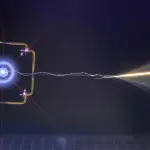
Up to 8% of generated electrical power is lost due to resistance in transmission lines, a loss that researchers at the University of Toronto, L’École Normale Supérieure in Paris and Lehigh University are working to understand. The team simulated electrons in solids using ultracold potassium atoms cooled to near absolute zero, a technique allowing them to isolate the impact of collisions in a way impossible with real materials. Researchers observed atoms, only a few nanometres in size, colliding in a manner suggesting they were much larger, according to Professor Joseph Thywissen of the University of Toronto’s Department of Physics and the Centre for Quantum Information and Quantum Control. This finding, published in Physical Review Letters, reveals a previously unknown upper limit to resistivity and offers a clearer microscopic understanding of how resistance functions in low-density metals.
Ultracold Potassium Atoms Reveal Resistivity Saturation
A fundamental limit to electrical resistance has been identified in a pure metal, offering new insights into energy loss and material properties. This precise control allowed for the isolation of collision impacts on resistivity, revealing a saturation point previously unknown. The experimental setup utilized an optical lattice, a grid of light designed to trap atoms and mimic the behavior of electrons in a solid, enabling the simulation of extreme conditions. This “quantum enhancement of the effective atom size” led to a saturation of resistivity when atomic interactions became strong, suggesting a similar upper limit exists for electron scattering in metals. Thywissen stated that the results provide a clear microscopic understanding of how resistivity works in low-density metals and open the door to new studies of strongly correlated atomic systems and quantum materials, highlighting the potential for future research into advanced materials and energy efficiency. The discovery also underscores that resistivity, beyond being a practical concern, can serve as an indicator of novel physics within materials.
This quantum enhancement of the effective atom size makes collisions on a given lattice site much more likely, increasing the resistivity of the system.
Researchers are refining models of electrical resistance with a novel approach; rather than studying conventional metallic conductors, they simulated electron behavior using ultracold potassium atoms. This precise control was essential to understanding the upper limits of resistivity. Importantly, the researchers discovered that resistivity does not increase indefinitely with collision rates; instead, it plateaus, suggesting an inherent upper limit to resistance even in the purest metals.
Our results provide a clear microscopic understanding of how resistivity works in low‑density metals and open the door to new studies of strongly correlated atomic systems and quantum materials.
Source: https://cqiqc.physics.utoronto.ca/news/recent-news/physicists-upper-limit-resistivity-pure-metal/




See today’s quantum computing news on Quantum Zeitgeist for the latest breakthroughs in qubits, hardware, algorithms, and industry deals.