

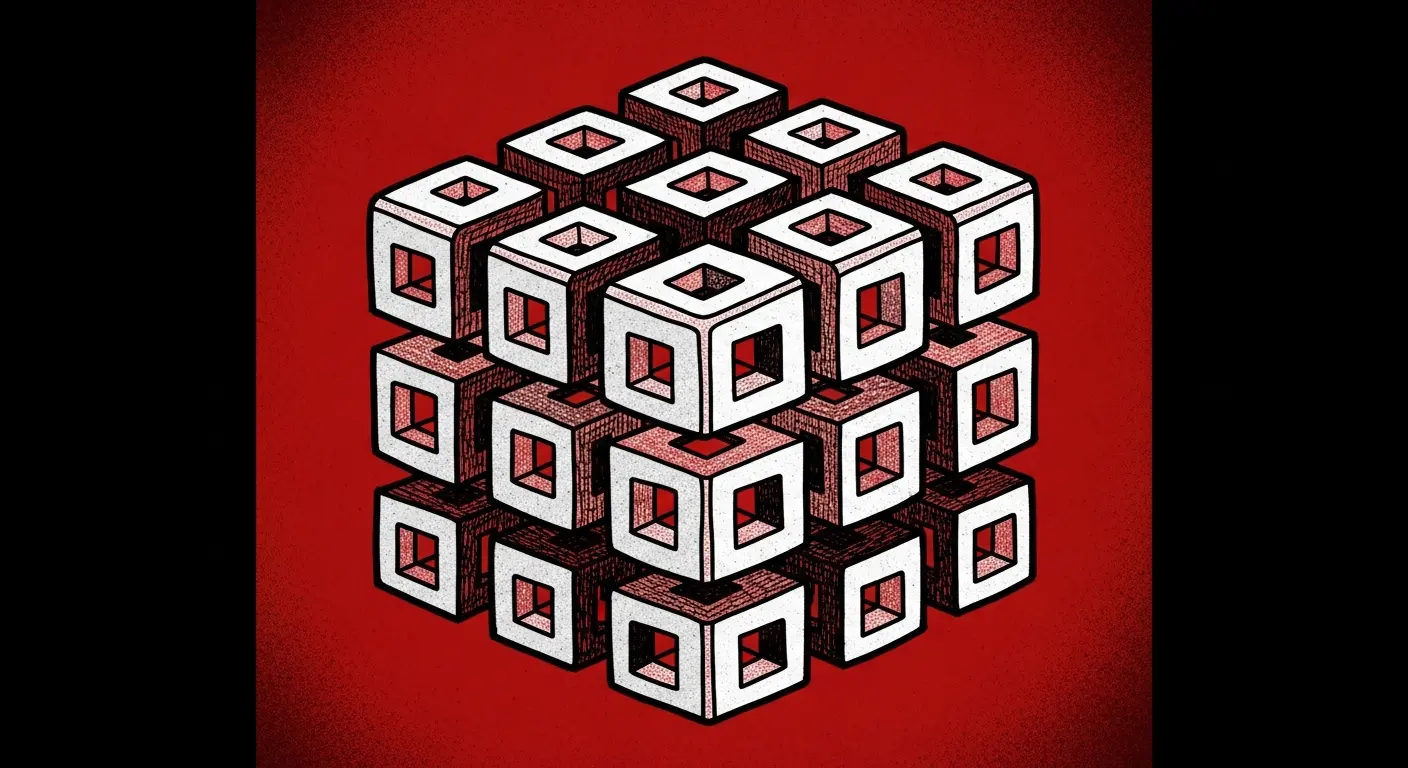
Calvin Hooper, University of Exeter, and colleagues have identified a fundamental symmetry within non-Hermitian operators. The discovery reveals a quantised real part of the Berry phase, differing from typical geometric gain or loss. A topological index with practical applications emerges from this work, demonstrated using a non-Hermitian version of the Su-Schrieffer-Heeger model. These findings offer key insights into understanding topological phenomena in dynamic systems.
Real Berry phase quantisation confirms non-Hermitian topology and Zak phase behaviour
A consistent real component of the Berry phase has been demonstrated, achieving a precise quantisation of π, a value previously unattainable in dynamic systems. This breakthrough enables definitive identification of non-Hermitian topology, overcoming limitations imposed by imperfect symmetry realisations that plagued earlier characterisation attempts. The Berry phase, a geometric phase acquired by a wave function during a cyclic evolution, is typically complex-valued. However, in non-Hermitian systems, the real and imaginary parts can be decoupled, allowing for independent analysis. The consistent quantisation of the real Berry phase to π provides a robust signature of non-trivial topology, unaffected by the geometric gain or loss often associated with these systems. Prior attempts at characterising topology in time-varying media were often obscured by these uncontrolled gains and losses, making definitive identification challenging.
Non-Hermitian operators describing wave propagation in time-varying media possess a fundamental symmetry, imbuing these systems with non-trivial topology. This topology can be measured directly in a wide range of experimental settings as a quantised real part of the Berry phase, contrasting unconstrained geometric gain or loss. The research provides this topological index explicitly for practical examples, including a non-Hermitian analogue of the Su-Schrieffer-Heeger model. The significance of this lies in the ability to characterise topological properties not through static material characteristics, but through the dynamics of wave propagation itself. This opens avenues for designing materials where topology is controlled not by composition, but by temporal modulation.
As a wave propagates through a material, sudden changes in material properties create effects impossible in slowly-varying media, realising temporal reflection, frequency conversion, or amplification. Calculations reveal that topology arises because the real component of the Berry phase consistently quantises, demonstrating the nature of this non-Hermitian topology. Furthermore, the findings provide an alternative proof of Zak phase quantisation within the Su-Schrieffer-Heeger model and verify π phase shifts around Dirac points, features found in materials like graphene. The Su-Schrieffer-Heeger model, originally developed to describe polyacetylene, is a paradigmatic example of a topological insulator, and its non-Hermitian analogue provides a valuable testbed for these new theoretical insights. The verification of π phase shifts around Dirac points is crucial, as these points represent topological defects and are fundamental to understanding the material’s electronic properties. Translating this understanding into practical devices requires overcoming challenges in precisely controlling time-varying media and maintaining necessary symmetry over extended periods. Maintaining this control is vital, as deviations from the required symmetry can disrupt the topological protection and lead to signal degradation.
Operator-valued equations reveal topological properties of dynamic materials
Detailed analysis of wave behaviour, utilising a mathematical framework of “operator-valued” equations, unlocked the topological properties of dynamic materials. Instead of treating wave characteristics like frequency as fixed values, the team represented them as operators, describing how waves couple and transform between different frequencies as they move through the changing material. This approach, while mathematically complex, mirrors techniques used in quantum mechanics, allowing exploration of parallels between wave dynamics and quantum phenomena. The use of operator-valued equations allows for a more complete description of the wave’s evolution, accounting for the interplay between different frequency components. This is particularly important in time-varying media where energy can be exchanged between frequencies, leading to amplification or attenuation.
This mathematical complexity acknowledges the challenges of operator differential equations, but leverages existing intuition from quantum physics. The work focuses on non-Hermitian operators, which naturally exhibit phenomena absent in standard quantum mechanics, specifically examining the real part of the Berry phase as a topological index. Non-Hermitian operators are characterised by complex eigenvalues, representing energy loss or gain. This contrasts with standard Hermitian operators used in quantum mechanics, which have real eigenvalues corresponding to stable energy levels. Modelling wave behaviour in dynamic materials with this approach addresses the limitations of conventional methods when dealing with rapidly changing properties, allowing for the description of frequency coupling as waves traverse these materials. Conventional methods often rely on the assumption of slowly varying parameters, which breaks down in rapidly modulated systems. The operator-valued approach provides a more accurate and versatile framework for analysing these complex scenarios.
Quantifying Berry phase dynamics unlocks new material characterisation techniques
Understanding how waves behave in materials that change over time is receiving increasing focus, a pursuit with implications for designing new optical and acoustic technologies. Accurately measuring the topological properties of these dynamic systems, however, has remained a significant hurdle, often hampered by imperfections in experimental setups and the difficulty of isolating key quantum characteristics. This research offers a new method for quantifying a specific aspect of wave behaviour, though establishing a precise measurement limit requires further investigation. The ability to characterise topology through dynamic measurements, rather than static material properties, represents a paradigm shift in material science.
Acknowledging the complexities inherent in isolating and quantifying these subtle effects remains important for practical application. By focusing on the real component of the Berry phase, a quantum property linked to wave propagation, a strong topological characteristic distinct from simple energy gain or loss has been revealed. Demonstrating this topology, through analysis of models like the Su-Schrieffer-Heeger model, provides a new benchmark for understanding wave dynamics in non-Hermitian systems. This discovery prompts investigation into whether this newly identified topology can be engineered to control wave behaviour in advanced materials and devices. Potential applications include the development of robust wave guides, topological lasers, and novel sensing technologies. Further research will focus on exploring the limits of this approach and developing experimental techniques to reliably measure the real Berry phase in complex systems. The precise measurement limit will be crucial for determining the feasibility of these applications and for advancing our understanding of non-Hermitian topology.
The research successfully quantified a topological characteristic of wave behaviour in time-varying materials by measuring the real part of the Berry phase. This provides a new method for characterising these dynamic systems, moving beyond reliance on static material properties. The findings demonstrate this topology using models such as the Su-Schrieffer-Heeger model, offering a benchmark for understanding wave dynamics in non-Hermitian systems. Authors intend to explore the limits of this approach and develop techniques for reliable measurement in complex systems.
👉 More information
🗞 Partial Quantisation of Non-Hermitian Berry Phases in Time-Varying Media
🧠 ArXiv: https://arxiv.org/abs/2605.10329


See today’s quantum computing news on Quantum Zeitgeist for the latest breakthroughs in qubits, hardware, algorithms, and industry deals.



