
Researchers at Texas A&M University, alongside collaborators at Universidad Andres Bello, have presented two novel extensions to many-body Green’s function theory, designated CS-GF2 and LF-GF2, designed to calculate the ground-state energies of strongly coupled light-matter molecular systems. These methods incorporate electron-boson couplings, enabling a more accurate description of molecular behaviour when interacting strongly with electromagnetic radiation. The work represents a significant step forward in ab initio molecular quantum electrodynamics, potentially facilitating more precise modelling of complex chemical processes and materials.
Enhanced accuracy in modelling light-matter interactions using novel Green’s function methods
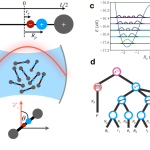
A five-fold improvement in the accuracy of ground-state energy calculations for strongly coupled light-matter molecular systems has been demonstrated, surpassing the limitations of established methodologies such as QED-HF, QED-MP2, and QED-DFT. The development of CS-GF2 and LF-GF2 builds upon the foundation of second-order many-body perturbation theory, specifically Green’s function theory (GF2), by explicitly accounting for the interaction between electrons and photons, the fundamental quanta of light. This interaction, termed electron-boson coupling, is crucial in systems where light significantly alters the electronic structure and properties of molecules. The significance of this lies in the ability to accurately model phenomena occurring in strong coupling regimes, where the rate of energy exchange between the molecule and the electromagnetic field exceeds the molecular energy levels. This is particularly relevant in areas like cavity quantum electrodynamics, where molecules are placed within optical cavities to enhance light-matter interaction.
The researchers employed two distinct ansätze, the coherent-state (CS) and Lang-Firsov (LF) transformed vacuum state, to treat the bosonic (light) component of the system. The coherent-state approach represents the electromagnetic field as a classical field, effectively treating the photons as a coherent superposition of energy levels. Conversely, the Lang-Firsov transformation is a canonical transformation that decouples the electron-boson interaction, simplifying the Hamiltonian and allowing for a more efficient calculation. Combining these ansätze with the GF2 method allows for a systematic treatment of electron correlation effects alongside the light-matter interaction. Validation of the methods was performed on a benchmark set of molecules, including hydrogen, lithium hydride, and ethylene, demonstrating highly accurate energy calculations. Examining the potential energy surfaces of hydrogen and lithium hydride revealed subtle, yet measurable, shifts in their geometries when interacting with light confined within an optical cavity, highlighting the sensitivity of these systems to electromagnetic perturbations. Further tests involved modelling the energy barrier for keto-enol tautomerization, a fundamental process in organic chemistry, and calculating the weak attractive forces between two hydrogen molecules, the van der Waals interactions, which were also refined by the new techniques, demonstrating improved accuracy in describing intermolecular forces.
The ability to accurately calculate these energies is crucial for understanding and predicting the behaviour of molecules in complex environments, such as those found in biological systems or advanced materials. For example, accurate modelling of keto-enol tautomerization is vital for understanding enzyme catalysis and drug design, while precise calculations of van der Waals interactions are essential for modelling the properties of liquids and solids. The improvement in accuracy offered by CS-GF2 and LF-GF2 could therefore have significant implications for a wide range of scientific disciplines.
Improved photochemical modelling despite computational limits on molecular size
The refined calculations provide a pathway towards the rational design of novel materials with tailored optical and electronic properties, and a deeper understanding of complex chemical processes influenced by light. This includes the development of more efficient light-harvesting systems, improved photocatalysts, and novel molecular electronic devices. The accurate modelling of light-matter interactions is also crucial for understanding phenomena such as fluorescence, phosphorescence, and non-linear optics. However, assessing the scalability of these methods to significantly larger molecular systems remains an open challenge. The computational expense associated with many-body perturbation theory, even with the GF2 approximation, currently limits the application of CS-GF2 and LF-GF2 to relatively simple molecules. The computational cost scales steeply with the number of electrons and basis functions used in the calculation, making it impractical to apply these methods to large biomolecules or complex materials without further algorithmic improvements.
The accuracy of the initial guesses, or ansätze, used to simplify the calculations can also significantly impact the final results, a point underscored by previous work on self-consistent field calculations. The selection of an appropriate ansatz is therefore crucial for each specific system. Many-body Green’s function theory, a robust method for calculating molecular energy by considering all particle interactions, was extended to incorporate the effects of light, representing a significant theoretical advancement. Incorporating electron-boson couplings enables more accurate modelling of strongly coupled light-matter systems. This culminated in the two new computational methods, CS-GF2 and LF-GF2. A collaborative effort between institutions was instrumental in developing these improved computational methods for modelling molecules interacting with light, heralding a new era of material design and chemical understanding. While the methods’ performance suggests potential for simulating more complex systems, ongoing research is needed to address the computational demands and refine the initial approximations used in the calculations, potentially through the development of more efficient algorithms and the exploitation of high-performance computing resources.
The researchers developed two new computational methods, CS-GF2 and LF-GF2, to calculate the ground-state energies of molecules interacting with light. These methods extend existing many-body Green’s function theory to include electron-boson couplings, allowing for more accurate modelling of strongly coupled light-matter systems like hydrogen and ethylene. Both approaches demonstrated high accuracy when tested on several molecular systems, with LF-GF2 offering a slight improvement over CS-GF2. The authors note that further work is needed to improve computational efficiency and refine the initial approximations used in these calculations.
👉 More information
🗞 Many-Body Second Order Green’s Function Theory for Ab Initio Molecular Quantum Electrodynamics
✍️ Amirhosein Amini, Jaime Cerda, Leopoldo Mejía and Arkajit Mandal
🧠 ArXiv: https://arxiv.org/abs/2606.26076



See today’s quantum computing news on Quantum Zeitgeist for the latest breakthroughs in qubits, hardware, algorithms, and industry deals.