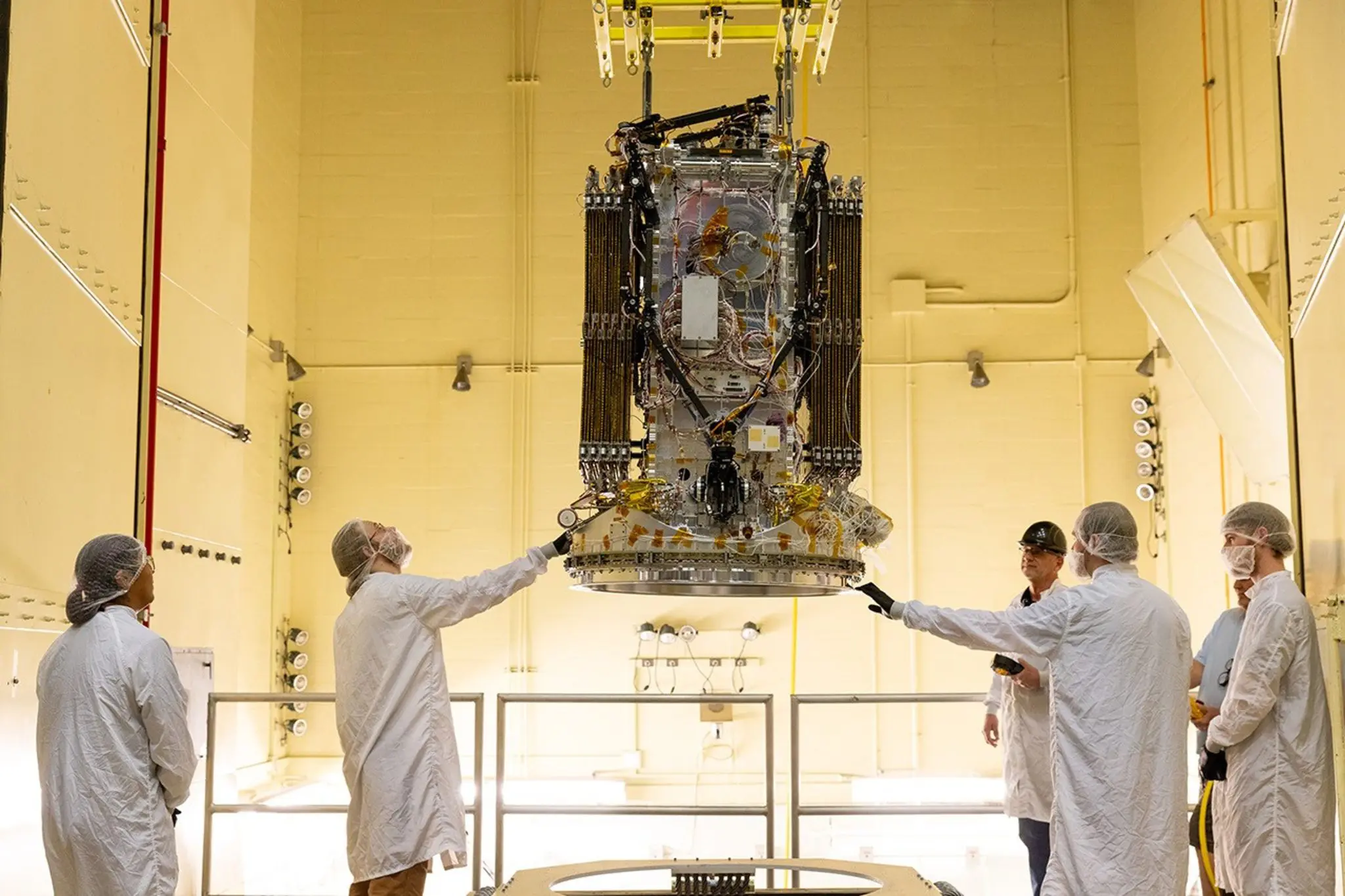
Engineers completed environmental testing of the Katalyst robotic spacecraft, called LINK, at NASA’s Goddard Space Flight Center on April 15, preparing it for a mission to extend the lifespan of the Neil Gehrels Swift Observatory. NASA is opening its Wallops Flight Facility to media on Wednesday, June 17, for a preview of the Northrop Grumman Pegasus XL rocket that will carry LINK into orbit. Targeting a late June launch window, the Katalyst mission will attempt to rendezvous with Swift and raise its altitude, ensuring continued observations of high-energy events in the universe. Swift, which leads NASA’s fleet of space telescopes in studying these changes, functions as a “dispatcher,” providing critical information for follow-up missions studying cosmic phenomena.
Pegasus XL Rocket to Launch Katalyst’s LINK Spacecraft
The Katalyst mission, slated for a late June launch, will employ a unique delivery method to reach its target: NASA’s Neil Gehrels Swift Observatory. A Northrop Grumman Pegasus XL rocket will carry the mission’s robotic servicing spacecraft, LINK, into orbit. This testing phase confirms the readiness of the robotic system to perform its delicate orbital refueling task, a capability increasingly vital for extending the lifespan of valuable scientific assets. Both United States and international media outlets are invited to apply for credentials to observe the L-Stargazer aircraft, which will deploy the rocket during launch, and to receive images and video of the encapsulated spacecraft. The agency will also host an audio-only media teleconference on June 17 to detail the mission’s objectives and expected outcomes, with the audio stream available on NASA’s YouTube channel. Maintaining Swift’s operational capacity is important through missions like Katalyst.
This testing phase involved stabilizing LINK to ensure it could withstand the rigors of launch and in-space operations, a critical step before encapsulation within the Pegasus XL. Swift functions as a critical “dispatcher,” providing initial data that enables other observatories to conduct follow-up studies. This upcoming mission aims to raise Swift’s altitude, thereby extending its scientific lifespan and ensuring continued contributions to our understanding of the universe.
When a rapid, sudden event takes place in the cosmos, Swift serves as a “dispatcher,” providing critical information that allows other “first responder” missions to follow up to learn more about how the universe works.
Source: https://www.nasa.gov/news-release/nasa-to-showcase-mission-to-boost-swift-spacecrafts-orbit/




See today’s quantum computing news on Quantum Zeitgeist for the latest breakthroughs in qubits, hardware, algorithms, and industry deals.