SkyWater Technology is actively building the manufacturing processes for quantum devices, a critical step often overlooked in the rush to develop quantum hardware. While recent industry events like SEMI’s SMC conference and Quantum World Congress presented the breadth of the quantum ecosystem, SkyWater SVP Engineering Percy Gilbert argues a focus on manufacturing is now paramount. “We aren’t approaching quantum manufacturing as a theoretical exercise; we are working directly with the materials, processes, and equipment required to build quantum technologies today,” says Gilbert.
SkyWater’s TaaS Model Bridges Quantum R&D to Production
SkyWater’s approach to quantum manufacturing centers on a continuous Technology-as-a-Service (TaaS) model, extending from initial research through to full-scale production, a strategy designed to address the critical need for yield and process control in emerging quantum technologies. This integrated system bypasses the traditional, often problematic, handoff between research and manufacturing teams, allowing for smooth technology transfer and iterative improvement. The company isn’t simply aiming to create functional devices, but to establish repeatable, reliable manufacturing processes from the outset, a distinction highlighted by SVP Engineering Percy Gilbert.
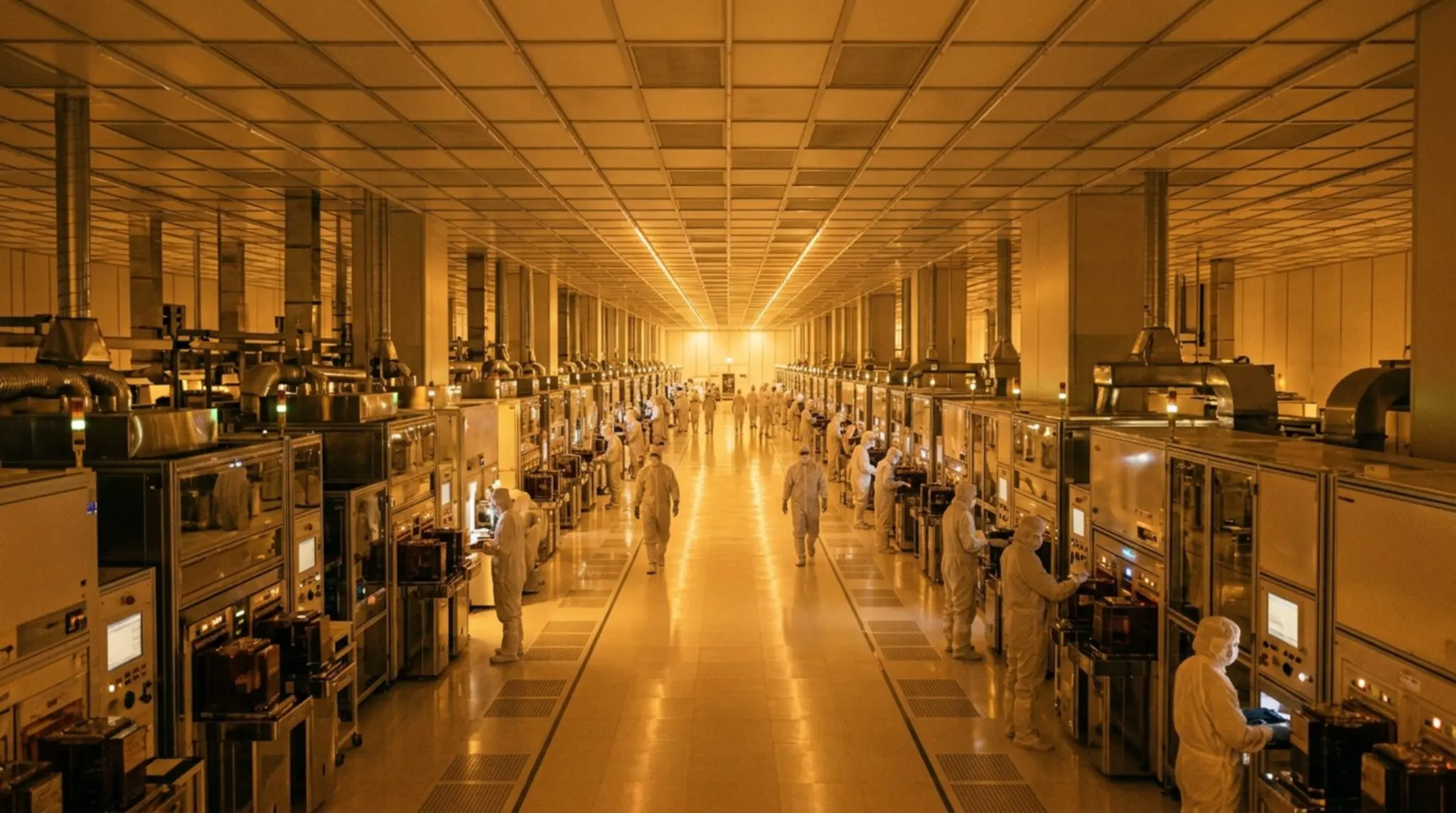
A key element of SkyWater’s strategy involves adapting existing semiconductor equipment for quantum applications, rather than relying solely on entirely new tools. This approach acknowledges that much of the necessary infrastructure already exists, and the innovation lies in refining its application to the unique demands of quantum materials and processes, SkyWater Technology says. “Bringing tool capabilities and semiconductor engineering together allows us to create manufacturing solutions for technologies that don’t yet have an established playbook,” Gilbert explains, emphasizing the value of process integration as a source of intellectual property and competitive advantage.
The company’s TaaS model also prioritizes materials science, specifically addressing the challenges of depositing superconducting materials like NbN and NbTiN with the precise phase and stoichiometry required for quantum devices. SkyWater routinely collaborates with equipment and materials suppliers to push the boundaries of existing technologies, tailoring them to the specific needs of quantum manufacturing.
As the industry moves towards larger, more complex quantum systems, the ability to translate promising research into scalable, manufacturable processes will become increasingly vital. “The future of quantum computing isn’t just being invented. It is being industrialized in the fab,” Gilbert stated, emphasising the shift from theoretical exploration to practical production. This focus on industrialization is already underway, positioning SkyWater as a key player in the advancement of quantum computing.
Bringing tool capabilities and semiconductor engineering together allows us to create manufacturing solutions for technologies that don’t yet have an established playbook. Increasingly, that process integration itself becomes a major source of intellectual property and competitive advantage.
Superconducting & Photonic Architectures Drive Diverse Manufacturing Needs
Superconducting architectures present unique fabrication hurdles, demanding precise control over materials like niobium and titanium nitride during deposition. Achieving the necessary phase and stoichiometry for these superconducting films requires extending the capabilities of existing semiconductor tools, a strategy SkyWater Technology actively pursues through close collaboration with equipment and materials suppliers, according to the company. This focus on adapting established infrastructure, rather than inventing entirely new processes, acknowledges the significant investment already made in semiconductor manufacturing and concentrates innovation on application-specific refinements.
The diversity of quantum hardware modalities, superconducting, photonic, trapped-ion and silicon-based, necessitates a flexible manufacturing approach. Photonic technologies, for example, rely on high-precision silicon-nitride waveguides and optical couplers, each with stringent fabrication tolerances. SkyWater is deliberately avoiding a singular architectural commitment, instead building manufacturing capabilities to support a broader, high-performance computing ecosystem.
This strategy positions the company to serve a wider range of quantum developers and potentially accelerate the overall pace of innovation, as no single approach currently dominates the field. Manufacturing challenges are no longer solely about physics breakthroughs; translating those advances into scalable, reliable systems is the critical next step. “The quantum industry has made remarkable physics progress,” the company notes, emphasizing that co-design of materials, equipment, processes, control electronics, and packaging is essential from the outset.
Waiting until the end of the decade to address manufacturing scalability would be a critical misstep, potentially hindering the widespread adoption of quantum technologies. The ability to consistently translate promising research into manufacturable processes will ultimately define the leaders in this emerging field, and SkyWater’s current efforts are geared toward establishing that capacity.
A multi-year partnership with Qolab, announced on September 8, further solidifies SkyWater’s commitment to manufacturing superconducting quantum devices in the Midwest.
System Integration of Quantum Devices with Cryogenic Electronics
SkyWater Technology emphasizes that successful quantum computing demands more than just functional qubits. It requires a complete approach to system integration, specifically the tight coupling of quantum devices with cryogenic electronics, photonics and advanced packaging. This integration isn’t a final step, but a foundational principle, demanding co-design from the outset to address thermal and operating environment challenges. The company’s focus extends beyond qubit fabrication to encompass the entire system architecture, recognizing that materials, equipment, and processes must evolve in concert.
A critical element of this system-level thinking is the development of control electronics capable of operating at cryogenic temperatures, bringing logic directly adjacent to qubits. SkyWater’s engineering team is actively building these capabilities, moving beyond theoretical exercises to direct work with the necessary materials and processes. The company’s SVP of Engineering, Percy Gilbert, asserts that manufacturing readiness will ultimately dictate which quantum technologies achieve commercial viability. This collaboration aims to establish a robust domestic supply chain and accelerate the transition from research prototypes to scalable, commercially available quantum systems.
The future of quantum computing isn’t just being invented in the lab. It is being industrialized in the fab.
Source: https://www.skywatertechnology.com/quantum-manufacturing-the-key-to-scaling-quantum-computing/


See today’s quantum computing news on Quantum Zeitgeist for the latest breakthroughs in qubits, hardware, algorithms, and industry deals.