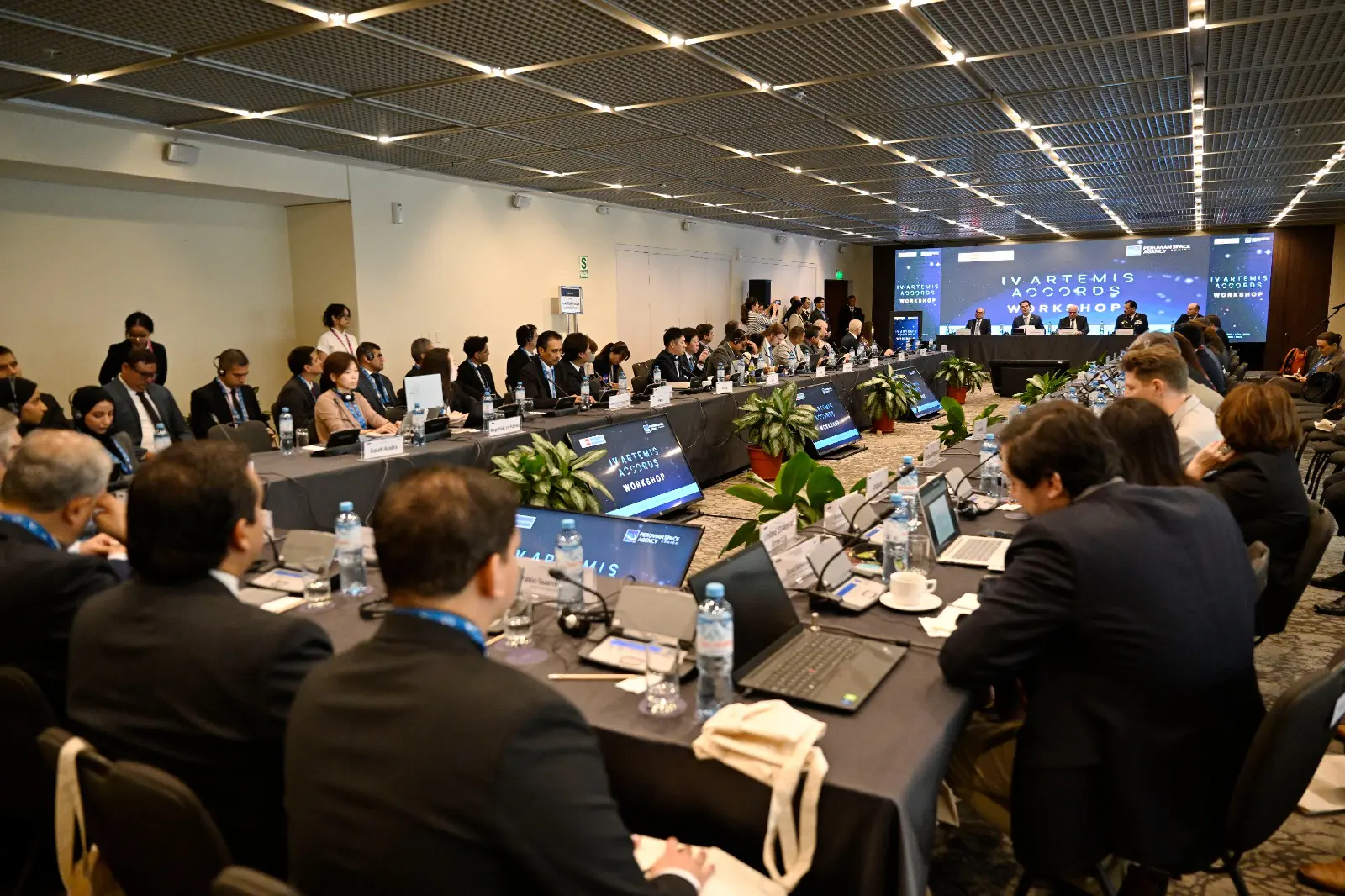
Representatives from 30 countries convened in Lima, Peru, for the fourth annual Artemis Accords workshop, following the recent addition of six new signatory nations: Latvia, Jordan, Morocco, Malta, Ireland, and Paraguay, bringing the total to 67. The workshop, hosted by Peru, saw a high level of in-person attendance, with 90 percent of participating countries choosing to send representatives rather than participate virtually. “This gathering showcases the remarkable global momentum behind the Artemis Accords and our Artemis program,” said NASA Administrator Jared Isaacman. Established during the first Trump Administration, seven other founding nations joined the US in response to growing interest in lunar activities, and the Accords are fostering international collaboration focused on safe and responsible lunar exploration, with planned discussions centering on non-interference, data sharing, and orbital debris mitigation.
The recent workshop in Lima, Peru, underscored a rapidly expanding international coalition committed to lunar and Martian exploration, as six additional nations formalized their participation in the Artemis Accords. Representatives from 30 countries actively engaged in technical discussions and a tabletop exercise simulating operations within the challenging environment of the Moon, a level of participation signaling a move beyond mere endorsement towards concrete collaborative planning. The workshop, hosted by Peru, achieved a significant regional milestone; according to Maj.
Signatory Expansion: 67 Nations Commit to Principles
This expansion signifies a growing global consensus on principles for safe and responsible activity beyond Earth, extending beyond the initial eight founding nations established during the first Trump Administration in response to growing interest in lunar activities by both governments and private companies. This workshop, the fourth annual event, marked a regional milestone as the first to be held in South America, with 90 percent in-person attendance from participating nations. Discussions centered on crucial aspects of coordinated lunar missions, including non-interference protocols, data sharing, orbital debris mitigation, and interoperability, all vital for the anticipated surge of over a dozen lunar landings within the next 18 months. Peru’s commitment to fostering regional participation reflects a wider ambition to integrate diverse nations into the evolving space landscape; as Vice Minister of Foreign Affairs Ambassador Felix Denegri explained, Peru aims to.
This gathering showcases the remarkable global momentum behind the Artemis Accords and our Artemis program.
Lunar Operations Focus: Non-Interference and Data Sharing
These conversations extended beyond simply avoiding physical collisions in orbit or on the surface, encompassing protocols for data sharing and the mitigation of orbital debris. The workshop’s emphasis on non-interference reflects a growing recognition that sustained lunar presence will require a high degree of coordination; with over a dozen lunar landing missions anticipated in the next 18 months, the potential for conflicting activities is substantial. Peru’s hosting of the event marked a regional milestone, with Maj. Roberto Melgar Sheen of the Peruvian Space Agency noting that “All South American signatory countries are taking part in this event, with 90 percent participating in person and 10 percent virtually.” The discussions also covered the release of scientific data, ensuring that discoveries made on the Moon are accessible to the broader international community, and the preservation of historically significant lunar sites, a key tenet of the Accords.
One of our objectives in hosting this edition of the workshops in our country was to increase regional participation.
Maj. Roberto Melgar Sheen, director of Peruvian Space Agency (CONIDA)
Source: https://www.nasa.gov/news-release/nasa-joins-artemis-accords-workshop-as-global-signings-rise/




See today’s quantum computing news on Quantum Zeitgeist for the latest breakthroughs in qubits, hardware, algorithms, and industry deals.