QuEra’s Aquila neutral-atom processor is now being used to transform molecular data in a novel approach to toxicity prediction, utilizing the Molecular toxicity dataset, a specific collection of molecular structures used for the experiment, to test whether quantum computers can generate more informative features than classical methods. Instead of directly determining if a molecule is toxic, the quantum system’s measurement outcomes become new data points fed into a standard machine learning classifier; the team found that these quantum features often add information that classical ones miss. This experiment, run through Kipu Quantum’s Hub platform, processed 122 samples from the dataset, approximately two thirds of which were labeled non-toxic and one third toxic, seeking to improve accuracy in identifying potentially harmful compounds by re-expressing molecular data in a richer form.
Quantum Feature Extraction for Molecular Toxicity
A subtle but significant advance in machine learning is emerging from the intersection of quantum computing and molecular toxicity prediction; researchers are demonstrating that quantum processors can reshape data in ways that enhance the accuracy of classical machine learning models. The core of this work centers on transforming molecular data into a format more readily interpreted by algorithms designed to identify potentially harmful compounds, bypassing the limitations of traditional feature engineering. This experiment utilized the Molecular toxicity dataset, a dataset used for testing predictive models in this field. The team, building on prior successes with superconducting quantum chips, investigated whether neutral-atom quantum hardware could achieve similar results. Unlike digital quantum computers relying on gate sequences, neutral-atom machines utilize the collective dynamics of atoms held in place by laser beams. These were then compared against classical features using several machine learning algorithms, including XGBoost and Google Research’s TabFM.
The results revealed a consistent trend: quantum features matched or beat the tested classical baselines. While plain accuracy saw only modest gains, balanced accuracy and F1 scores, critical metrics for imbalanced datasets like this, showed substantial improvement, with quantum features raising balanced accuracy to about 0.7 and the F1 score to around 0.6.
We believe that hardware providers as QuEra, D-Wave, Pasqal, Atom Computing, Oratomic, and Planqc will have to consider today’s industrial applications with immediate added value for customers.
Neutral-Atom Processor Implementation with QuEra’s Aquila
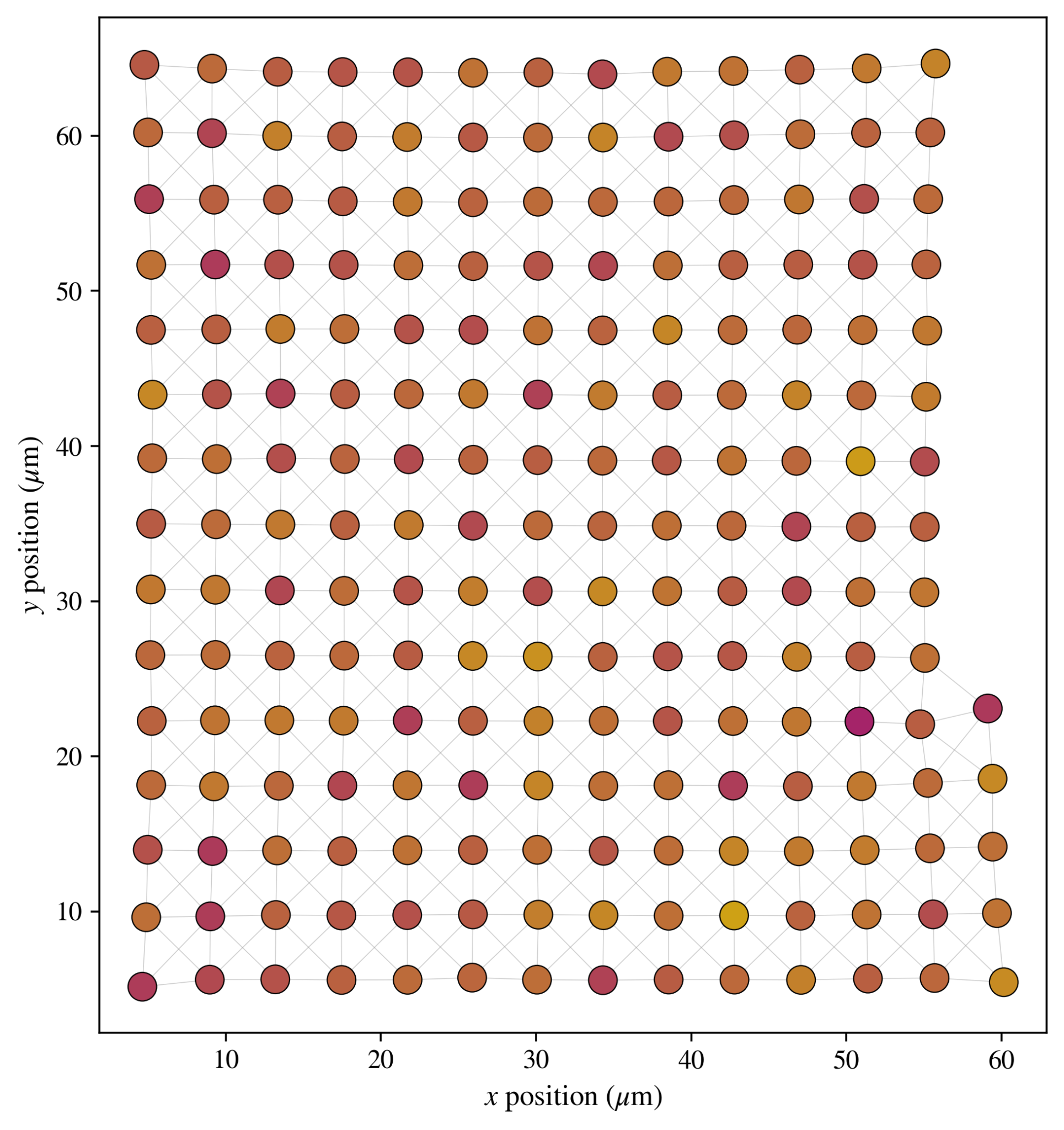
The pursuit of quantum advantage in machine learning is diversifying beyond superconducting circuits, with neutral-atom processors emerging as a promising alternative. Recent work by researchers at QuEra Computing demonstrates a novel application of their Aquila processor: transforming molecular data to enhance toxicity prediction. This approach doesn’t seek to replace classical machine learning, but rather to augment it with features extracted through quantum processing, utilizing the Molecular toxicity dataset. The team assigned specific driving schedules to each molecule within the dataset, laying out 200 atoms on a grid and controlling their interactions via laser excitation. This process, executed on Aquila via the Kipu Quantum Hub platform, generated a statistical portrait of atomic responses for each molecule. The researchers processed 122 samples, with roughly two thirds carrying the non-toxic label and one third on the toxic label, to train and test their models.
Notably, the quantum features consistently matched or exceeded the performance of classical baselines across a range of classifiers, including XGBoost, CatBoost, and Google’s TabFM. While the strongest models achieved close to 0.78 accuracy with classical features, the addition of quantum features significantly improved balanced accuracy and F1 scores. Balanced accuracy rose to about 0.7 and the F1 score to around 0.6. The strongest performance came from a support vector machine utilizing quantum features, reaching about 0.78 accuracy and the best area under the curve.
Performance of Quantum vs. Classical Features
QuEra Computing is actively exploring how quantum processors can be used to enhance machine learning, specifically focusing on transforming data into more informative features. Their recent work centers on utilizing the Molecular toxicity dataset, a dataset used for assessing predictive models of chemical harm, to test a novel approach to feature extraction using neutral-atom quantum hardware. The core of their method relies on encoding data representing a molecule into the state of a quantum system. This system then evolves according to the laws of quantum physics, generating interactions that are difficult to replicate classically. Crucially, the measurement outcomes from this quantum evolution aren’t used to directly determine toxicity; instead, they become new features fed into a conventional machine learning classifier.
While plain accuracy saw only modest gains, balanced accuracy and F1 scores, critical metrics for imbalanced datasets like this, showed substantial improvement, with quantum features raising balanced accuracy to about 0.7 and increasing the F1 score to around 0.6. The strongest performance came from a support vector machine utilizing quantum features, reaching about 0.78 accuracy and the best area under the curve.
Enhanced Classification with Quantum-Derived Data
The pursuit of more accurate molecular toxicity prediction is rapidly evolving, with researchers now exploring the potential of quantum computing to refine the data used in machine learning models. Rather than directly tasking a quantum computer with classification, the focus has shifted to using these systems as data transformers, extracting novel features that enhance classical algorithms. This approach, recently tested using QuEra’s Aquila neutral-atom processor, demonstrates a pathway for integrating quantum capabilities into existing machine learning workflows. The core of this technique involves encoding molecular data into the states of a multipartite quantum system. As the system evolves, driven by the collective dynamics of the neutral atoms, an exponentially complex interplay of influences occurs. Measurements taken from this evolved state then yield new features, statistical portraits of the atoms’ response to each molecule, which are fed into standard machine learning classifiers.
The team processed 122 samples, with roughly two thirds carrying the non-toxic label and one third on the toxic label, generating approximately one thousand quantum features per molecule. Results indicate a significant performance boost when utilizing quantum-derived features, particularly in metrics sensitive to imbalanced datasets. While the strongest models with classical features achieved around 0.55 for balanced accuracy and near 0.3 for the F1 score, the quantum features raised balanced accuracy to about 0.7 and approximately doubled the F1 score to around 0.6. The support vector machine, when driven by quantum features, proved the strongest combination overall, reaching about 0.78 accuracy. The researchers conclude that the neutral-atom-based feature mapping used here has achieved meaningful results, demonstrating a case where only the quantum features can improve quantitatively the performance, suggesting that hardware providers will need to consider today’s industrial applications with immediate added value for customers.
On balanced accuracy and F1 score, the difference is much larger. The classical baseline sits around 0.55 for balanced accuracy and near 0.3 for F1, which is the tell-tale sign of a model that mostly predicts the common class, while the quantum features raise balanced accuracy to about 0.7 and roughly double the F1 score to around 0.6.
Source: https://kipu-quantum.com/blog/reading-toxicity-of-molecules-with-neutral-atom-quantum-processors




See today’s quantum computing news on Quantum Zeitgeist for the latest breakthroughs in qubits, hardware, algorithms, and industry deals.