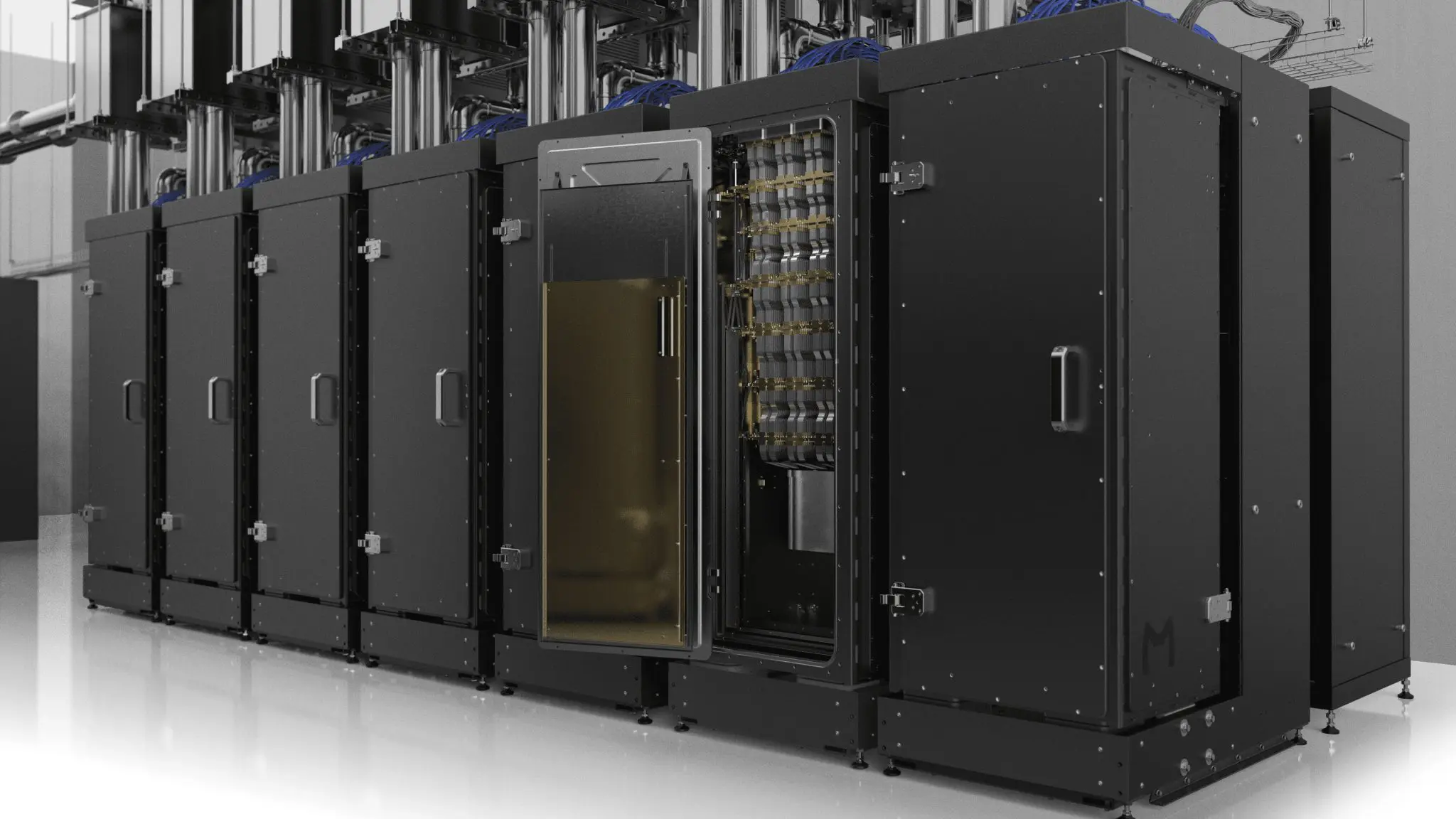
QuantWare is preparing to deliver processors containing 10,000 qubits within a single cryogenic system, a significant increase in qubit density enabled by its VIO architecture. The Dutch company has partnered with Maybell Quantum to ensure compatibility with Maybell’s ColdCloud cooling infrastructure, addressing a critical challenge for scaling quantum computers beyond the experimental phase. Maybell’s technology uses 90% less electricity and cooling water than conventional systems, and up to 80% less helium-3 per qubit. “As we approach hyperscale, our customers will judge quantum systems less on quantum-specific metrics and more on the laws of economics,” said Matt Rijlaarsdam, CEO of QuantWare, emphasizing the need for commercially viable and efficient quantum computing solutions.
VIO-40K Architecture Enables Scalable Qubit Density
This approach differs from traditional architectures, enabling effective monolithic scaling of processors and positioning QuantWare’s offerings to deliver the computational power necessary for practical applications. The company reports its VIO QPU architecture achieves a higher qubit density than previously possible, a critical step towards utility-scale quantum computing. Addressing a major hurdle to scaling, Maybell Quantum has partnered with QuantWare to provide its ColdCloud cooling infrastructure, designed specifically for the VIO-40K processors. The prototype ColdCloud system is currently operational in Colorado, with the first commercial deployment planned alongside the VIO-40K rollout. “Maybell is excited to partner with QuantWare as they scale quantum processors to the level useful quantum computing demands,” said Corban Tillemann-Dick, CEO of Maybell. “Our ColdCloud was designed for this: to keep processors cold at a scale, efficiency, and cost that conventional cryogenics cannot match.” Matt Rijlaarsdam, CEO of QuantWare, notes a shift in evaluation criteria for quantum systems.
QuantWare’s VIO QPU architecture makes the world’s most powerful quantum processors and achieves orders of magnitude higher qubit density than traditional architectures, fitting 10,000 qubits in a single cryogenic system.
ColdCloud Cooling Reduces Helium-3 and Power Consumption
The demand for increasingly dense and powerful quantum processors is rapidly shifting the focus from solely qubit count to practical operational concerns; maintaining cryogenic temperatures at scale presents a significant challenge, traditionally requiring substantial energy input and dwindling resources. Current dilution refrigerators, essential for achieving the near-absolute zero temperatures required for superconductivity, heavily depend on helium-3, a scarce isotope facing supply constraints. A collaboration between QuantWare and Maybell Quantum aims to address these limitations with a new approach to cooling infrastructure. Maybell’s ColdCloud technology is designed to drastically reduce the operational burden of hyperscale quantum computers, extending to helium-3 consumption, with ColdCloud requiring up to 80% less of the isotope per qubit, a detail of increasing importance given the limited global supply. The partnership ensures that Maybell’s ColdCloud will be commercially available for QuantWare’s VIO-40K processors, co-designing the processor and cooling layers to maximize compute-per-watt performance. Beyond efficiency, Maybell emphasizes operational reliability, boasting 99.9% uptime through features like four-to-eight-hour cooldowns and independently serviceable nodes, eliminating a historically fragile component of the quantum stack.
As we approach hyperscale, our customers will judge quantum systems less on quantum-specific metrics and more on the normal laws of economics.
Matt Rijlaarsdam, CEO of QuantWare



See today’s quantum computing news on Quantum Zeitgeist for the latest breakthroughs in qubits, hardware, algorithms, and industry deals.