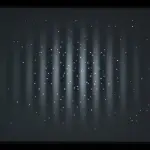
Maximum shared information between a quantum signal’s arrival time and its transverse wave number was previously limited by imprecise bounds on their relationship within established models. Precise limits and second-moment bounds have now been derived and fully realised using Gaussian wave packets with a specific bilinear space-time phase. This identifies conditions where maximum information transfer occurs within continuous variable quantum systems, providing tools for tailoring such waveforms.
Precise limits on the amount of shared information between a quantum signal’s arrival time and its transverse wave number were identified, defining both an upper boundary and demonstrating how to reach it using specifically designed light waves. This builds upon existing models by establishing more accurate bounds on these relationships within continuous variable quantum systems; understanding this connection is key for tailoring waveforms in areas like optical communication networks.
A key concept here is ‘mutual information’, which describes how much useful data two measurements reveal about each other, think of trying to guess someone’s favourite colour based on clues about their personality; high mutual information means strong correlations.
Mutual Information Saturation Defines Precision Limits In Quantum Signal Measurement
Maximising mutual information for Gaussian waveforms exhibiting bilinear space-time phase now allows shared information between a quantum signal’s arrival time and transverse wave number to reach previously unattainable levels. Detector noise defines the precision lost due to measurement limitations by limiting recorded information based on timing jitter relative to pulse duration. This also establishes an upper limit *and* method for achieving it. Uniting entropic uncertainty relations with continuous-variable system covariance descriptions created precise ‘second-moment bounds’, offering necessary and sufficient conditions for reaching target information levels within this model.
For any quantum state possessing defined second moments and Shannon entropies, shared information between a signal’s arrival time and transverse wave number cannot exceed the logarithm of twice the lesser value found in either its time-frequency or position-wave number uncertainty products. Optimal joint measurements yield the Rényi-2 entropy of the reduced state while simultaneously attaining quantum Fisher information at fixed input widths; however, these calculations currently assume ideal conditions. Addressing real-world limitations, such as imperfect detectors and signal degradation in complex environments, requires bridging the gap between model and practical application, potentially necessitating more sophisticated analytical techniques.
Gaussian Wave Packets Define Peak Quantum Data Rates Despite Detector Simplifications
The work demonstrates a clear path to maximising information transfer within a defined system using Gaussian wave packets, establishing both an upper limit and how it can be reached. Relying on additive detector noise as a limiting factor is convenient but may not hold true when more complex or non-linear distortions dominate signal degradation. However, this assumption establishes an important benchmark for quantum information transfer rates based on light’s shape, its ‘waveform’. Definitive limits were established regarding the amount of information encodable within quantum waveforms relating to their arrival time and direction of travel, achievable targets that provide engineers designing future quantum communication systems with concrete goals and guide optimisation efforts even while tackling subtle noise profiles in practical devices.
This research determined precise boundaries for how much information can be encoded into quantum signals using Gaussian wave packets. By combining entropic uncertainty relations with continuous-variable system covariance descriptions, researchers found a relationship between signal waveform characteristics, specifically arrival time and transverse wave number, and maximum attainable information transfer.
The study shows these bounds are met by specific states under ideal conditions, but also indicates timing jitter from detector noise limits recorded information proportionally to pulse duration; this provides a framework for spatiotemporally coupled quantum signal design. These results offer concrete goals for optimising future quantum communication systems within the described canonical model.
👉 More information
🗞 Operator uncertainty and cross-domain information in quantum signals: Second-moment bounds for quantum waveform design
✍️ Mostafizur Rahaman Laskar, Sajad Daei, Gabor Fodor and Mikael Skoglund (KTH Royal Institute of Technology); Franco Nori (RIKEN Center for Quantum Computing)
🧠 ArXiv: https://arxiv.org/abs/2611.16049

See today’s quantum computing news on Quantum Zeitgeist for the latest breakthroughs in qubits, hardware, algorithms, and industry deals.