

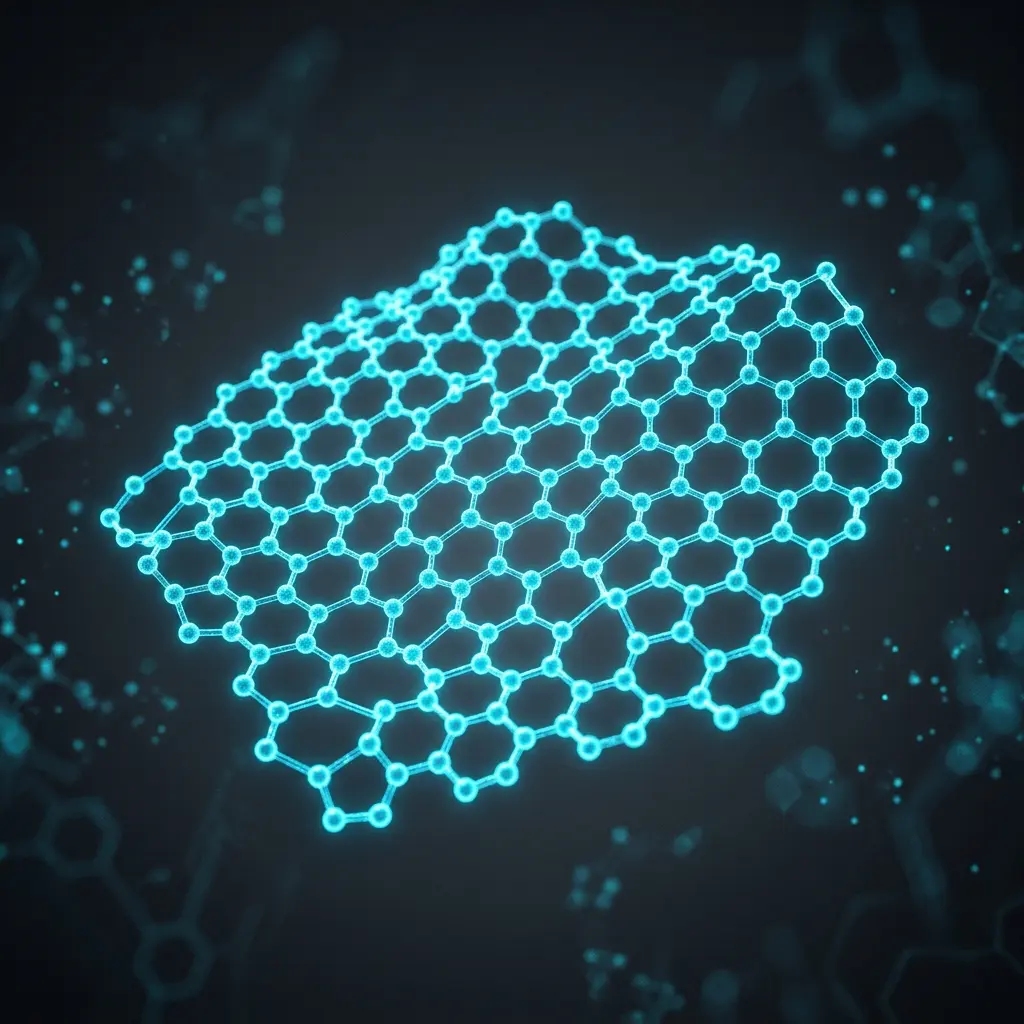
Dario Picozzi and colleagues at London Centre for Nanotechnology present a framework called periodic symmetry-adapted encoding, which sharply lowers the number of qubits required for simulating the electronic structure of crystalline materials using quantum computers. The approach uses the inherent symmetries within crystals, including spin-parity, point-group, and crystal translation, to achieve qubit reductions of 4, 8 across a range of materials such as diamond, silicon, and magnesium fluoride. Benchmarks demonstrate key savings in both variational parameters and circuit complexity, with CNOT counts reduced by up to 309 times, enabling more efficient and accurate quantum simulations of complex materials.
Encoding crystalline electronic structure via symmetry and Boolean algebra
Periodic symmetry-adapted encoding (SAE) extends a technique originally developed for molecules to crystalline materials, offering a pathway to more efficient quantum simulations. The method constructs a simplified representation of a crystal’s electronic structure, starting with a $k$-point calculation that accurately describes electron behaviour by considering their wave-like properties throughout the material, similar to how different wavelengths create tones on a musical instrument. SAE then identifies all applicable symmetries within the crystal, including spin-parity, point-group operations, and crystal translation symmetries, and encodes these as a system of Boolean equations. Applying SAE to crystalline materials enables more efficient quantum simulations. Benchmarks demonstrate this for ten materials: diamond, silicon, 3C-SiC, MgO, NaCl, CsCl, h-BN, AlN, SiO2, and MgF2. These materials were modelled using (2, 2, 2) folded supercells and active spaces ranging from CAS(4,4) to CAS(6,8), requiring 8 to 16 initial qubits. Periodic SAE reduced the qubit count by 4 to 8 across these systems, with the CsCl structure achieving a reduction from 14 to 6 qubits. This improvement arises from identifying and utilising crystal translation symmetries alongside spin-parity and point-group operations.
Crystalline symmetry adaptation enables substantial qubit reduction for materials simulation
The CsCl crystal structure achieved a reduction from 14 to 6 qubits using this new method, surpassing the maximum qubit reduction previously attainable in molecular systems. This substantial decrease goes beyond prior limitations imposed by molecular symmetry-adapted encoding, which was restricted to a maximum of five Boolean generators, because the folded crystal structure provides three additional half-translation symmetries. Such a dramatic qubit reduction unlocks the possibility of simulating larger, more complex crystalline materials than was previously feasible with existing quantum computational approaches.
Across ten benchmarked materials, including diamond, silicon, and magnesium fluoride, the periodic symmetry-adapted encoding removes between four and eight qubits, demonstrating broad applicability. The inclusion of three additional half-translation symmetries within the folded crystal structure expands the available Boolean generators to eight, driving this improvement. Noiseless UCCSD-VQE benchmarks reveal that these reduced encodings maintain energy accuracy below chemical accuracy, while simultaneously reducing variational parameters by 3 to 8 times and CNOT counts by up to 309 times.
Symmetry-adapted encoding lowers qubit requirements for materials modelling
Researchers are striving to unlock more accurate and efficient quantum simulations of materials, a vital step towards designing novel substances with specific properties. While this new periodic symmetry-adapted encoding demonstrably reduces the computational burden, its current reliance on noiseless quantum hardware presents a significant hurdle. The method’s durability against noise remains unproven, given that existing quantum computers are prone to errors; this raises concerns about whether the promised qubit savings will translate into practical advantages on real-world devices.
Nevertheless, acknowledging the current limitations of quantum computers regarding error correction does not diminish the importance of this advance. A smaller computational demand benefits even imperfect hardware, making the reduction of qubits needed for complex simulations vital. Applicable to a range of crystalline materials like silicon and diamond, this new encoding method offers a pathway to more manageable quantum calculations. Scientists have adapted symmetry-adapted encoding, originally used for molecular simulations, to crystalline materials, sharply improving the efficiency of quantum computations.
This advancement tackles a core limitation of modelling solids: the substantial number of qubits required to represent their complex electronic structure. By exploiting inherent crystalline symmetries, including spin-parity, point-group operations, and crystal translation, the method streamlines calculations and reduces qubit demands. Across ten benchmark materials, reductions of four to eight qubits were observed, with the CsCl crystal structure achieving a particularly striking decrease from fourteen to six qubits.
The research successfully adapted symmetry-adapted encoding to model periodic crystalline solids, significantly reducing the number of qubits needed for quantum simulation. This is important because fewer qubits lessen the computational demands of modelling complex materials like silicon, diamond, and magnesium fluoride. Across ten materials tested, the method removed between four and eight qubits, with the CsCl structure demonstrating the largest reduction from fourteen to six qubits. Furthermore, simulations maintained energy accuracy while decreasing variational parameters by 3 to 8 times and CNOT counts by up to 309 times.
👉 More information
🗞 Periodic Symmetry-Adapted Encoding: Qubit Reduction in Crystalline Electronic Structure
🧠 ArXiv: https://arxiv.org/abs/2606.05777




See today’s quantum computing news on Quantum Zeitgeist for the latest breakthroughs in qubits, hardware, algorithms, and industry deals.



