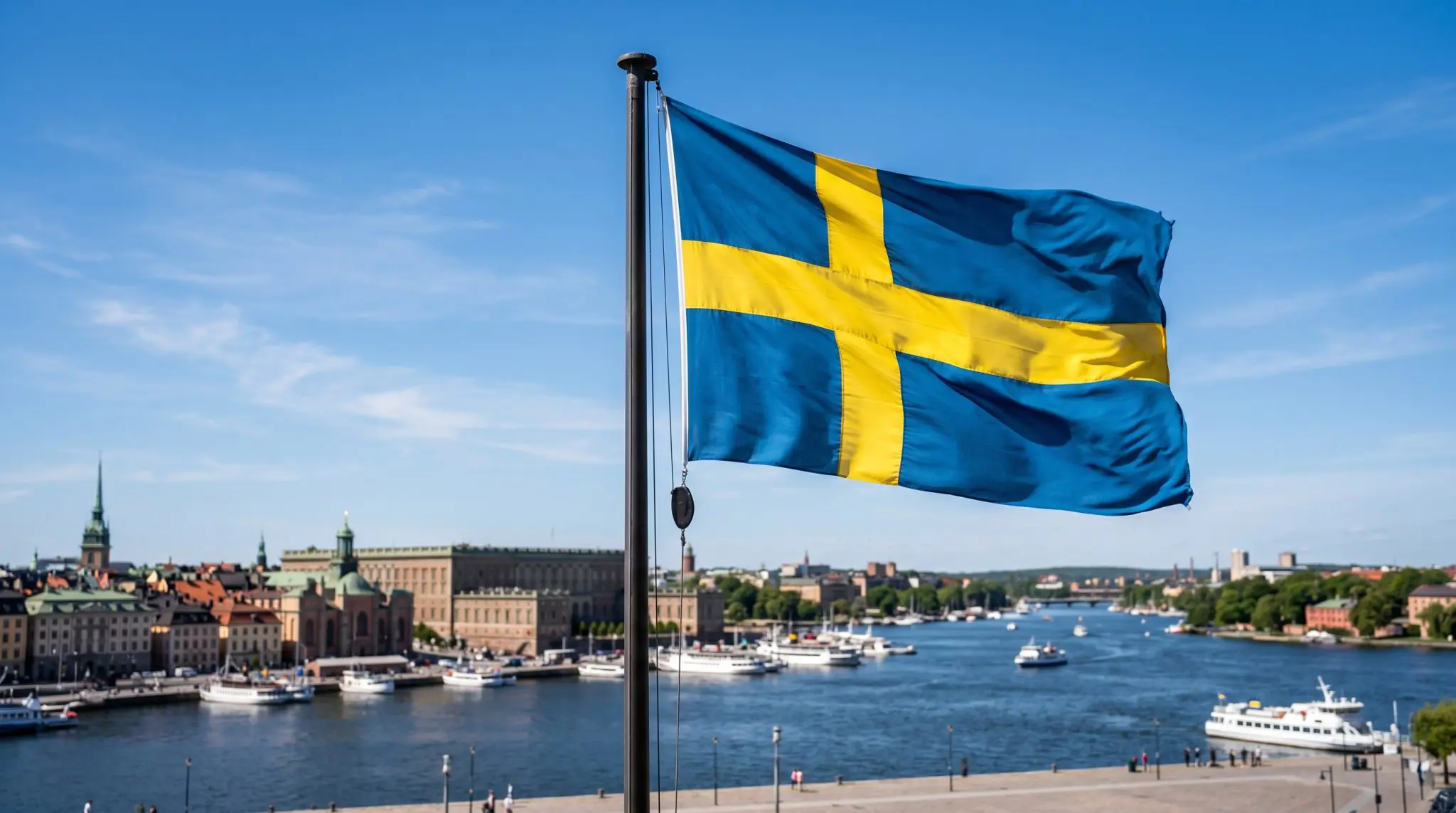
A coordinated national effort in quantum technology is taking shape in Sweden as Chalmers University of Technology, KTH Royal Institute of Technology, Lund University, Stockholm University, Linköping University, and Uppsala University have signed a Memorandum of Understanding to jointly establish the Swedish Center for Quantum Technology. The initiative responds to a current lack of national coordination and aims to consolidate Sweden’s position in a rapidly evolving global landscape of quantum research and infrastructure. “If you want to join in, now’s the time,” says Jan-Åke Larsson, Professor of Quantum Technology at Linköping University, as academia and industry accelerate developments in quantum sensors, communication, and computers. Building on the foundation of the existing Wallenberg Centre for Quantum Technology, the new center will focus on strengthening Sweden’s competitiveness across the entire value chain, from fundamental research to practical applications, with key support from funding bodies such as the Knut and Alice Wallenberg Foundation.
Six Universities Establish Swedish Center for Quantum Technology
The rapidly evolving field of quantum technology is gaining momentum in Sweden with the establishment of a new national center, spearheaded by a consortium of six universities: Chalmers, KTH, Lund, Stockholm, Linköping, and Uppsala. This collaborative effort, formalized through a Memorandum of Understanding, seeks to consolidate Sweden’s position in a competitive global landscape focused on quantum advancements. While the Wallenberg Centre for Quantum Technology already represents the country’s most extensive quantum research program, the new Swedish Center for Quantum Technology aims to address a critical gap in national coordination. The impetus for this hub stems from concerns that fragmented initiatives, particularly those arising from new government policies, could hinder progress. Sweden’s existing strength in fundamental quantum research, coupled with active industrial engagement supported by funding bodies such as the Knut and Alice Wallenberg Foundation, provides a solid foundation for this expanded initiative.
The center’s scope extends across the entire quantum technology value chain, encompassing research, education, infrastructure, and early-stage applications. This holistic approach is intended to strengthen Sweden’s appeal as a collaborative partner within the Nordic region and throughout Europe. Jan-Ingvar Jönsson, Vice-Chancellor of Linköping University, highlights the necessity of collective action, stating, “Sweden has strong research in quantum technology, but to compete internationally, we need to act together.” He further explains that Linköping University will contribute leading expertise, coordinating resources to bolster national capacity and future innovation. Through improved coordination of expertise, infrastructure, and funding, the six universities aim to position Sweden for anticipated rapid developments in quantum technology over the coming decades, fostering a cohesive national strategy to maximize its potential.
We need to demystify the scientist” Henrik Pedersen researches the chemistry behind our modern society.
The Swedish quantum technology sector is rapidly evolving, characterized by robust academic research and growing industrial interest. This collaborative undertaking arrives at a pivotal moment, as global investment in quantum technologies accelerates. The six founding universities will pool expertise and resources, covering everything from foundational research to the early stages of commercial application. Through collaborations, partnerships, and testbeds, industry is actively engaged, with key support from funding bodies such as the Knut and Alice Wallenberg Foundation.
Almost everything we experience today has historical parallels,” says Jeanne Cilliers, new professor of economic history at LiU.
Linköping University Research Spans Diverse Scientific Fields
Linköping University’s contributions to Swedish science extend far beyond quantum technology, encompassing a remarkably diverse portfolio of research areas addressing pressing societal challenges. Professor of Neurobiology David Engblom recently received the Onkel Adam Prize for his work investigating the neurological basis of illness, demonstrating the university’s commitment to fundamental medical research. Simultaneously, engineers are exploring the potential of biogenic carbon dioxide, a byproduct of biogas production, as a valuable resource, potentially mitigating climate impact through innovative resource management. This breadth of inquiry is further illustrated by research into the historical context of humanitarian aid led by Norbert Götz, professor of modern history, who examines the interplay of emotion and knowledge during crises. Researchers have also achieved a significant milestone in bioelectronics, successfully mimicking the ion signaling of heart muscle cells using conductive plastic, opening avenues for advanced implant and sensor development.
Beyond the laboratory, the humanities are also thriving; Burak Alp Çakar is studying Lubunca, a hidden language, to understand its role in preserving identity and fostering community resilience. The university’s impact is bolstered by substantial funding, including a SEK 6 million grant awarded to Joyanto Routh for research on air pollution, health risks, and climate-adapted solutions spanning Sweden and India. LEAD, an innovation incubator based in Östergötland, has been appointed Swedish accelerator for NATO DIANA, fostering the development of technologies with both civilian and military uses.
Jan-Ingvar Jönsson, Vice-Chancellor of Linköping University, emphasizes this point, stating, “Linköping University contributes leading expertise in several areas, and through the new centre we can coordinate expertise, education and research infrastructure in a way that strengthens the capacity of the entire country.” From butterfly research earning national teaching awards to choirs contributing to Grammy-winning albums, Linköping University demonstrates a holistic commitment to both scientific advancement and cultural enrichment.
If you want to join in, now’s the time. Academia and industry are taking major steps forward in quantum technology, in quantum sensors, quantum communication and quantum computers.
Jan-Åke Larsson, Professor of Quantum Technology at Linköping University
LiU’s Role in NATO DIANA and AI Education Initiatives
Beyond bolstering national quantum capabilities, Linköping University (LiU) is actively expanding its influence in both defense innovation and responsible artificial intelligence deployment. This designation positions Sweden, and specifically LEAD’s network, as a key node in securing NATO’s technological edge, focusing on translating research into practical solutions for complex security challenges. This commitment to applied innovation is mirrored by LiU’s investment in AI education for elected representatives. Recognizing the rapidly evolving impact of artificial intelligence on democratic processes, the university launched a learning platform designed to equip politicians with research-based knowledge. The initiative addresses a critical need for informed decision-making in a landscape increasingly shaped by algorithmic systems and data-driven governance. LiU’s efforts extend beyond immediate technological advancements to encompass broader societal implications. The launch of an Excellence Centre in Analytical Sociology demonstrates a commitment to theory-driven research and international collaboration within the social sciences.
This center will focus on understanding complex social phenomena, providing crucial insights for policymakers navigating the ethical and practical challenges of AI implementation. LiU’s research into areas like the moral economy of humanitarian aid, digital twins for forensic science, and the impact of new fuels on transport systems showcases a holistic approach to addressing complex, interconnected challenges facing society.

See today’s quantum computing news on Quantum Zeitgeist for the latest breakthroughs in qubits, hardware, algorithms, and industry deals.