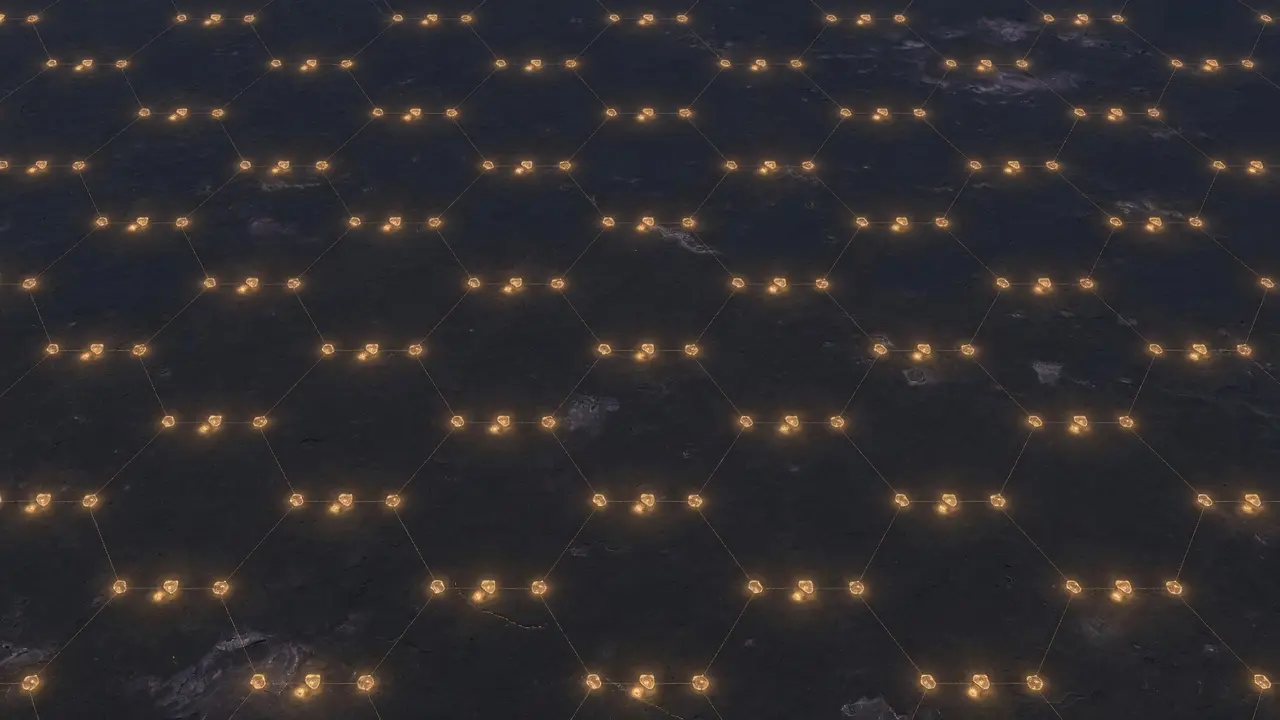
Quantum Cyber has deepened its partnership with Project LightShift, Inc., expanding exclusive rights secured on June 11, 2026, to encompass a multi-domain quantum layer for unmanned warfare. The amendment now extends beyond unmanned aerial vehicles to include unmanned surface and underwater systems, along with the critical infrastructure supporting them. This positions Project LightShift’s patent-protected quantum photonic array technology as the core intellectual property for Quantum Cyber’s entire platform, unifying air, surface and subsea operations under a single quantum intellectual property position. Management views this as the formal unification of the company’s multi-domain autonomous warfare strategy.
Photonic Array License Expands to Multi-Domain Unmanned Systems
Quantum Cyber’s intellectual property license with Project LightShift, Inc. now encompasses unmanned maritime systems, extending beyond initial coverage of unmanned aerial vehicles. This expansion includes “Dedicated Unmanned Systems Infrastructure,” encompassing ground-based, airborne, maritime, subsea and space-based systems designed to support Quantum Cyber’s unmanned platforms.
The broadened license also captures infrastructure for detecting, identifying, tracking, communicating with, controlling, navigating, countering, powering, and supporting unmanned systems, applicable to defense, homeland security and critical infrastructure protection. The amendment specifically lists current licensed patents, including a U.S. Provisional Application for an “Integrated Quantum Photonic Array for Multispectral Energy Capture and Conversion,” filed July 7, 2025, and related PCT and U.S.
This schedule is designed to be updated as Project LightShift develops and patents additional technologies within the expanded field of use. The quantum antenna technology originates from the work of Dr. Wolf Kohn, a research professor formerly with the University of Washington’s Department of Industrial and Systems Engineering, and was incubated through DARPA-funded research. Dr. Kohn’s work focused on hybrid systems and quantum control, initially producing a quantum dot approximately 50 nanometers in size.
Project LightShift is now targeting even smaller quantum-dot dimensions, around 10-13 nanometers, for production designs. The proposed array aims to transmit and receive using visible-light channels, employing randomized color selection for communication, and is intended to provide a miniaturized communications capability for unmanned systems, potentially enabling long-range applications.
The financial implications of this expanded license are significant for Quantum Cyber’s shareholders. David Lazar, Chief Executive Officer of Quantum Cyber, said, “The quantum layer is now exclusive to us across air, surface and subsea unmanned systems.” He continued, explaining that the rights are irrevocable, sublicensable through multiple tiers and held inside Quantum Drones Corporation.
According to Lazar, shareholders will recover four times every dollar spent developing this technology before a single royalty dollar leaves the company, and if Project LightShift commercializes any improvement outside their field, ten percent of those revenues will return to them. This royalty structure is designed to maximize returns on investment in the technology. This development occurs alongside substantial U.S. government investment in drone and autonomous warfare programs, with the fiscal year 2027 budget allocating approximately $55 billion, the largest single-year investment of its kind in U.S. history.
The global counter-UAS market is also projected to reach $10.6 billion by 2030, growing at a compound annual rate of 27.2 percent, with unmanned maritime systems representing a rapidly expanding sector. Quantum Cyber’s exclusive quantum layer is now positioned to capitalize on these converging trends.
The quantum layer is now exclusive to us across air, surface and subsea unmanned systems.
David Lazar, Chief Executive Officer of Quantum Cyber


See today’s quantum computing news on Quantum Zeitgeist for the latest breakthroughs in qubits, hardware, algorithms, and industry deals.