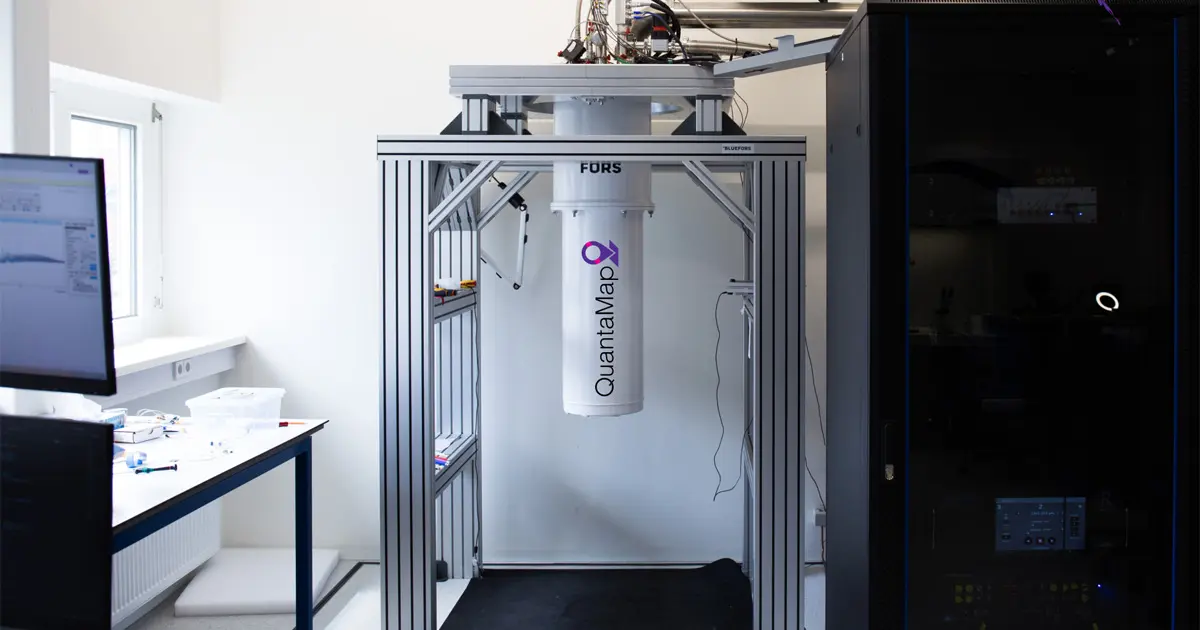
Dutch quantum technology startup QuantaMap and Leiden University have unveiled a revolutionary microscope capable of simultaneously imaging heat, magnetism, structure, and electrical behavior at the nanoscale, published today in ACS Nano Letters. This breakthrough addresses a critical bottleneck in quantum chip development – understanding localized behavior within real-world devices, moving characterization beyond idealized lab conditions. The new multi-modal imaging platform allows researchers to probe interacting physical phenomena with unprecedented resolution without disturbing the chip itself. “In a real quantum device, all physical properties are closely intertwined. If you only study one aspect at a time, you never get ahead,” explains lead author Matthijs Rog of Leiden University. This technology promises to accelerate design optimization, increase fabrication yield, and ultimately, enable scalable quantum manufacturing.
Multi-Modal Nanoscale Imaging Reveals Quantum Chip Behavior
Published in Nano Letters on February 12, 2026, the new platform addresses a key challenge in scaling quantum technologies – understanding localized chip behavior in real-world devices. Unlike conventional testing which can take weeks per chip, this technology allows for nanoscale root-cause analysis at any fabrication stage, correlating performance with local material properties. “Current chip testing relies mainly on electrical characterization of fully finished chips inside quantum computers – a process that takes weeks per chip and if the performance of some qubits is reduced, it cannot reveal the underlying reason,” says Johannes Jobst, founder and CEO of QuantaMap.
The microscope achieves this by employing tapping mode feedback for stable, extended measurements on realistic, nanostructured devices, including functioning quantum chips and novel quantum materials. Researchers can now probe multiple interacting physical phenomena at once, without disturbing the chip itself. “With our microscope, we reveal the relationships between non-equilibrium properties such as current and dissipation, and how those relate to chip structure.” This capability promises to boost fabrication yield and accelerate design optimization.
Root-Cause Failure Analysis Accelerates Quantum Fabrication
This limitation hinders progress toward scalable quantum manufacturing, as identifying the root cause of qubit degradation remains a significant challenge. QuantaMap, in collaboration with Leiden University, is now offering a solution with a new nanoscale imaging platform designed to move characterization beyond idealized lab conditions and directly onto operational quantum chips. The technology promises to correlate device performance with local material behavior, enabling faster iteration between design, fabrication, and testing. The platform’s stability, achieved through tapping mode feedback, allows for extended measurement campaigns on realistic, nanostructured devices, ultimately increasing fabrication yield and consistency, according to QuantaMap.
The ability to perform root‑cause analysis at the nanoscale makes it possible to identify reasons for failure in quantum chips at any fabrication stage, correlating device performance with local material behavior, and faster design-fabrication-test feedback loops.
Johannes Jobst, Founder and CEO of QuantaMap



See today’s quantum computing news on Quantum Zeitgeist for the latest breakthroughs in qubits, hardware, algorithms, and industry deals.