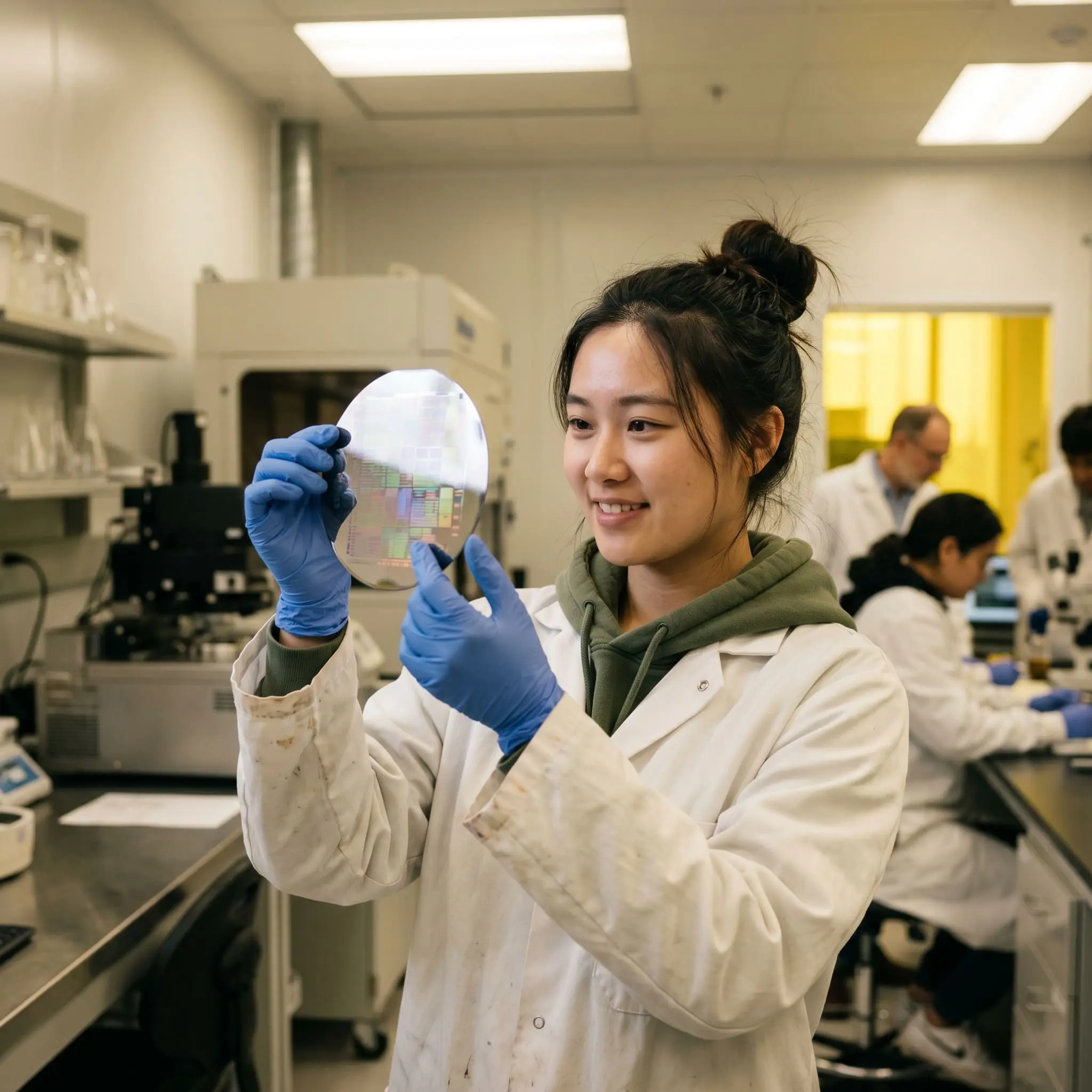
More than 150 graduate students and 100 postdoctoral researchers are trained each year at Berkeley Lab through the Quantum Science Accelerator (QSA) program, a substantial investment in developing the quantum workforce needed to sustain American innovation. This training complements research at facilities like the Advanced Light Source (ALS), which hosts approximately 2,000 scientists annually from industry, academia, and national labs, probing materials with atomic precision to support new technologies. Central to this research is the Molecular Foundry’s QIS cluster tool, an automated system allowing experimentation with dozens of materials for qubit components. These combined efforts aim to advance quantum computing and engage students at all levels, with programs like QSA’s Quantum Computing Mathematics and Physics Summer Camp (QCaMP) reaching over 300 educators and more than 200 students nationwide.
Molecular Foundry Tools Advance Quantum Materials Research
This high-throughput capability addresses a critical bottleneck in quantum computing development, accelerating the search for viable qubit components and reducing the time required to move from theoretical designs to physical devices. Beyond material creation, the Foundry integrates atomic-scale synthesis with advanced characterization techniques and AI-driven theory, providing a comprehensive platform for quantum materials innovation. Industry researchers can collaborate with staff who integrate atomic-scale synthesis and design, multimodal characterization, AI-accelerated theory, and device feedback to achieve these goals. The ALS generates intense beams of electromagnetic radiation, enabling researchers to probe materials with atomic precision; this is crucial for understanding and controlling quantum states in materials like superconductors and topological insulators. These insights are directly applicable to the development of electronics and quantum devices, fostering innovation across a broad spectrum of technological applications.
The ALS’s ability to visualize and manipulate quantum phenomena at the atomic level is proving valuable for industry partners seeking to accelerate their quantum technology roadmaps. The lab’s focus on early engagement, coupled with hardware partnerships and collaborative research and development, aims to solidify American leadership in transformative quantum technologies.
Quantum Computing Education Pipeline: From High School to Postdocs
This pipeline extends beyond graduate-level studies, with initiatives designed to engage students at earlier stages of their education, recognizing the need to cultivate foundational skills and spark interest in quantum technologies before career paths are established. The Academic Learning Internships and Faculty Training Office, in collaboration with Sandia National Laboratories, is actively developing programs to introduce high school students and educators to core quantum concepts. Many QCaMP alumni have returned to Berkeley Lab as quantum research interns, demonstrating the program’s effectiveness in fostering long-term engagement and creating a sustained talent pool. The Molecular Foundry further supports this ecosystem with a QIS cluster tool, allowing researchers to rapidly prototype qubit components by experimenting with dozens of materials and methods within a single automated system, accelerating the pace of materials discovery. Building on this strong foundation of graduate and postdoctoral training, efforts are also underway to engage students much earlier in their educational journeys, demonstrating a commitment to a holistic, multi-tiered approach to quantum education and workforce development.
Through collaborative R&D, hardware partnerships, and skilled talent, AQT strengthens America’s leadership in transformative quantum technologies.
Berkeley Lab


See today’s quantum computing news on Quantum Zeitgeist for the latest breakthroughs in qubits, hardware, algorithms, and industry deals.