Researchers at the Paul Scherrer Institute PSI have investigated that tantalum disulphide, a quantum material with paradoxical properties, becomes superconducting at temperatures roughly three times higher when subjected to pressure. The layered material features one layer that conducts electricity while an adjacent layer acts as an insulator; however, this interplay shifts under pressure, altering its behavior and enhancing superconductivity. This finding offers new insights into unconventional superconductivity and could contribute to the development of energy-efficient technologies currently limited by the need for extremely low operating temperatures, as seen in applications like the Large Hadron Collider at CERN. “Currently, research is being conducted worldwide on novel, unconventional superconductors that exhibit robust superconductivity even at higher temperatures or in strong external magnetic fields,” says Zurab Guguchia, a research group leader at PSI.
Tantalum Disulfide Exhibits Layered Insulator-Superconductor Paradox
Tantalum disulfide presents a striking paradox: within its layered structure, one atomic plane conducts electricity with zero resistance while an immediately adjacent layer actively blocks electrical flow, a behavior rarely observed in quantum materials. This detailed examination contributes to the global pursuit of superconductors functioning at temperatures amenable to widespread technological application, a critical step toward more efficient energy technologies. The paradoxical behavior of tantalum disulfide becomes more pronounced under pressure. Applying external force doesn’t simply alter the material’s behavior, it dramatically elevates its superconducting temperature, roughly tripling it compared to its performance without compression. The team’s work, published in Nature Communications, provides a comprehensive characterisation of this quantum material, aiming to unravel the underlying mechanisms driving this behavior. Understanding this transformation relies on the material’s layered structure and how pressure affects the interactions within it.
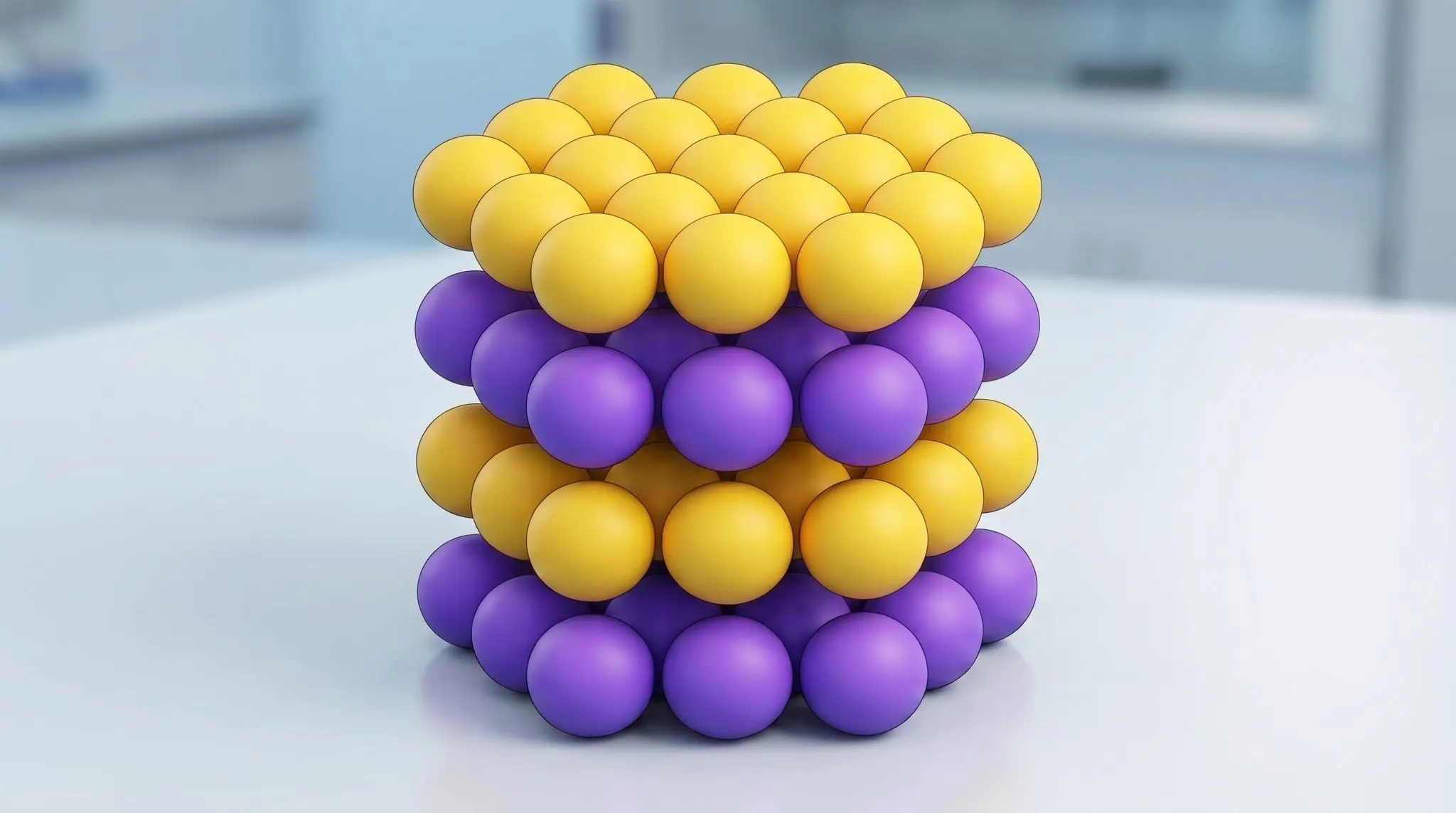
Tantalum disulfide consists of alternating layers with differing atomic arrangements. At high temperatures, both layers are metallic and conductive. However, as the material cools, one layer transitions into an insulator, restricting current flow to a single plane. “Its chemical formula sounds very simple: for every tantalum atom there are two sulfur atoms,” says Guguchia, highlighting the complexity hidden within the seemingly straightforward composition. Applying substantial pressure, several hundred times higher than in a car tyre, tightly compresses these layers, enhancing contact between the superconducting planes and diminishing the insulating effect of the intervening layer.
The pressure releases electrons from the insulating layer, allowing them to participate in the superconducting process. “Due to these effects, high pressure causes tantalum disulfide to become superconducting in all three dimensions at temperatures approximately three times higher,” Guguchia summarizes, noting a concurrent sevenfold increase in the number of electrons contributing to superconductivity. “So, pressure not only raises the temperature at which superconductivity can occur, but also changes the very nature of the superconducting state.” These findings will be invaluable for theoretical physicists seeking to model and predict the behavior of similar quantum materials, bringing the prospect of room-temperature superconductivity closer to reality.
Currently, research is being conducted worldwide on novel, unconventional superconductors that exhibit robust superconductivity even at higher temperatures or in strong external magnetic fields.
Muon Spin Spectroscopy Probes Quantum Material Magnetism
Muon spin spectroscopy (SμS) is a tool for characterizing the subtle magnetic properties of novel quantum materials, offering insights inaccessible through conventional techniques. Researchers are increasingly using the unique sensitivity of muons to probe the complex interplay of quantum phenomena within these materials, particularly those exhibiting unconventional superconductivity. The Paul Scherrer Institute PSI, operating the world’s most powerful muon source, is a leading center for this research, enabling detailed investigations into materials like tantalum disulfide and paving the way for potential applications in energy-efficient technologies. A recent study focused on tantalum disulfide, a layered material displaying paradoxical behavior: one layer becomes superconducting when cooled, while an adjacent layer remains an insulator. The PSI team, led by Zurab Guguchia, utilized SμS to investigate how applying pressure alters this behavior and enhances superconductivity.
The team found that subjecting tantalum disulfide to high pressure, several hundred times higher than in a car tyre, increases the temperature at which it becomes superconducting approximately threefold. The technique hinges on implanting muons into the material; these elementary particles, similar to electrons but 200 times heavier, react to the surrounding magnetic fields with exceptional sensitivity. “Since muons are exceptionally sensitive probes for magnetic and superconducting properties, we can gain unique insights into quantum materials here at PSI,” Guguchia explains. By analyzing the muons’ spin, researchers can map the magnetic landscape within the material on a microscopic scale. The experiments revealed that the applied pressure not only elevates the superconducting temperature but fundamentally alters the material’s quantum behavior. Zurab Guguchia is an experimental solid-state physicist specialising in muon spin rotation and magnetotransport under extreme conditions.
He leads a research group focused on discovering and controlling competing quantum phases, superconductivity, magnetism, and charge ordering, using parameters such as pressure, tension, and strong magnetic fields. In 2026, he will receive the ICSM2026 International Career (Lifetime) Achievement Award on Superconductivity for his outstanding work on novel superconducting materials.
Since muons are exceptionally sensitive probes for magnetic and superconducting properties, we can gain unique insights into quantum materials here at PSI.
Led by Zurab Guguchia, the team’s investigations, recently published in Nature Communications, reveal a dramatic increase in the superconducting temperature of this layered material when subjected to external force, a finding with significant implications for energy-efficient technologies. The team investigated how applying pressure alters this arrangement. The researchers utilized muon spin spectroscopy, a technique leveraging the sensitivity of muons to magnetic fields, at the Swiss Muon Source SμS, the world’s most powerful muon source, to probe the material’s internal behavior. These measurements revealed that under high pressure, the temperature at which the entire material transitions into a superconducting state increases roughly threefold. The mechanism behind this transformation is multifaceted.
Due to these effects, high pressure causes tantalum disulfide to become superconducting in all three dimensions at temperatures approximately three times higher.
The team’s work centers on understanding how external pressure dramatically alters the material’s quantum behavior, potentially leading to optimized, energy-efficient technologies. Detailed analysis revealed that applying pressure doesn’t simply modify existing properties, but alters the material’s quantum state. Experiments involving varying levels of pressure revealed a significant increase in the superconducting temperature of tantalum disulfide. Guguchia, who received the ICSM2026 International Career (Lifetime) Achievement Award on Superconductivity for his work, states the long-term goal of creating materials superconducting at room temperature and atmospheric pressure.
Its chemical formula sounds very simple: for every tantalum atom there are two sulfur atoms.
The expectation that applying force to a material simply alters its physical characteristics is often accurate, yet with quantum materials like tantalum disulfide, the response is far more nuanced and revealing. The paradoxical nature of tantalum disulfide stems from its atomic structure. Composed of alternating layers, one layer exhibits superconductivity when cooled, while its adjacent counterpart functions as an insulator, restricting electron flow to a single plane. However, the PSI team’s work, utilizing muon spin spectroscopy, reveals that this interplay changes under pressure, and simultaneously, pressure allows electrons within the insulating layer to participate in the superconducting process.
Suddenly the entire material becomes superconducting, so the insulating layers also become conductive and take part in superconductivity.




See today’s quantum computing news on Quantum Zeitgeist for the latest breakthroughs in qubits, hardware, algorithms, and industry deals.