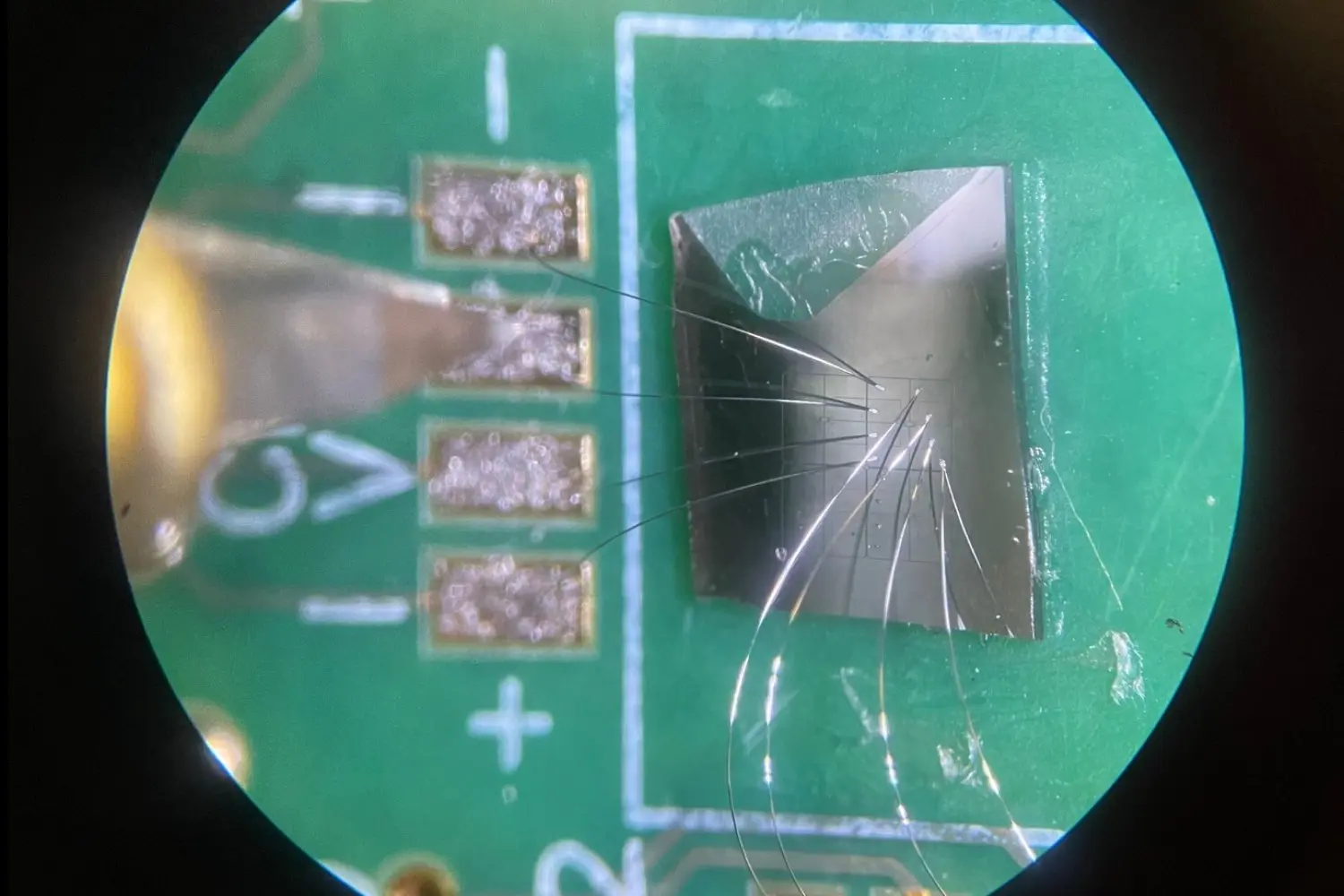
MIT researchers have created a device resembling an ultrathin superconducting film sandwiched between two magnetic layers, offering both data storage and signal control, a combination not typically found in current random access memory technology. The team reports in Physical Review Letters that this device can act as a programmable diode, allowing signals to travel in one direction, both directions, or be blocked entirely. “Integrating these devices can lead to processors operating at high speed and low energy,” says senior research scientist Jagadeesh Moodera, addressing a critical need for efficient cryogenic memory to advance quantum computing and networking.
Superconducting Layered Device Stores Data with Magnetic Alignment
The ability to isolate individual bits of information within a memory cell represents a critical advancement in superconducting device design. Researchers demonstrated they could switch one cell without affecting its neighbors, a key step toward viable memory technology. This selective switching, detailed in a recent Physical Review Letters paper, addresses a fundamental challenge in building dense, reliable superconducting memory arrays.
According to Josep Ingla-Aynés, “Any useful memory must have the ability to change one bit without disturbing all the information around it. Showing that we could switch a single cell without losing the neighbor’s memory state was an important step toward bringing this superconducting layered device closer to a practical memory technology.” The team achieved this isolation through careful manipulation of magnetic alignment within the layered structure. Beyond data retention, the device’s functionality extends to signal control, operating as a programmable diode capable of directing electrical current.
This functionality arises from the superconducting film’s ability to conduct electricity with minimal resistance in one direction while blocking it in the other, a behavior tunable through magnetic field application. Changing the magnetic alignment reverses the preferred direction of current flow, or creates a fully resistive state, offering a method to actively manage data pathways within a circuit. This level of control surpasses the simple storage function of conventional RAM, potentially streamlining data transfer and minimizing interference.
The method of storing information relies on a combined thermal and magnetic stimulus, altering the superconducting film’s state between superconducting and resistive conditions. A brief heating pulse, coupled with a small magnetic field, induces a change in the magnetic layers’ alignment, effectively writing a bit of data. This contrasts with traditional memory technologies that rely on storing information as electrical charge, offering a potentially more energy-efficient and stable storage mechanism. The non-volatile nature of the memory is also noteworthy. Each bit retains its state without a continuous power supply, reducing overall energy consumption.
Integrating these devices can lead to processors operating at high speed and low energy.
Jagadeesh Moodera, Senior Research Scientist at Plasma Science and Fusion Center
Programmable Diode Controls Signal Flow in Superconducting Circuits
Offering a new approach to managing signal flow within circuits, the device’s ability to function as a programmable diode expands its utility beyond simple data retention. Unlike conventional diodes which allow current in one direction, this superconducting iteration can actively control signal transmission, permitting flow in either direction or blocking it entirely based on the magnetic alignment of its constituent layers. This level of control minimizes interference and streamlines data pathways, potentially improving the efficiency of complex computational processes.
The layered structure achieves this signal control through its superconducting properties. At low temperatures, the film conducts electricity with minimal resistance, but this conductivity is directly linked to the magnetic configuration of the surrounding layers. This functionality, detailed in Physical Review Letters, is an added benefit and an integral part of the device’s architecture, allowing for the potential integration of memory and signal control onto a single superconducting chip.
This integration is important for realizing the full potential of superconducting computers, which promise significant energy savings but require innovative methods for both storing and processing information. The team’s design addresses both needs within a single structure, potentially circumventing the need for separate memory and control components. “Magnetic Exchange-Coupled Superconducting Devices with Broken Symmetry for Cryogenic Memory,” describes the underlying principles of this combined functionality, highlighting the potential for creating more compact and efficient computing systems.
This selective addressing is achieved through precise control of the thermal and magnetic stimuli applied to the device, ensuring that changes are localized and do not propagate to surrounding bits. Beyond its application in superconducting computers, this technology could also benefit quantum computing systems. While the device stores conventional bits, not qubits, both types of computers require reliable methods for data storage and signal transmission.
The layered structure could provide the necessary memory and signal control for the supporting electronics of quantum computers, enhancing their overall performance and stability. The researchers envision a future where this technology contributes to both traditional and quantum computing architectures, offering a versatile solution for the growing demands of data-intensive applications. The ability to manipulate signal flow with such precision could allow for new approaches to circuit design and optimization.
Any useful memory must have the ability to change one bit without disturbing all the information around it. Showing that we could switch a single cell without losing the neighbor’s memory state was an important step toward bringing this superconducting layered device closer to a practical memory technology.
Josep Ingla-Aynés, Postdoc at Plasma Science and Fusion Center
Source: https://news.mit.edu/2026/tiny-superconducting-sandwich-could-help-computers-use-less-energy-1120

See today’s quantum computing news on Quantum Zeitgeist for the latest breakthroughs in qubits, hardware, algorithms, and industry deals.