Planck Dynamics, a defense technology firm backed by NUNC Capital BV, will deploy Quantum Computing Inc.’s NeuraWave photonic reservoir computer as the core of its AI applications, beginning with an initial purchase order of five systems expected in 2026. The agreement establishes a pathway for up to 100 NeuraWave deployments, representing a potential value exceeding $10 million as Planck Dynamics reaches program milestones. “We believe photonic reservoir computing represents a new computing architecture for AI workloads that must operate at the edge, where data are generated,” said Yong Meng Sua, Chief Technology Officer at QCi. This collaboration aims to deliver AI capabilities at the edge with low latency and power efficiency, crucial for applications supporting NATO and allied forces, according to Nathan Eskue, Managing Director at Planck Dynamics.
QCi and Planck Dynamics Establish NeuraWave Deployment Framework
Quantum Computing Inc. and Planck Dynamics have formalized an agreement to deploy up to 100 NeuraWave photonic reservoir computing systems, potentially generating over $10 million in value if pre-defined milestones are achieved. This collaboration is a substantial step toward commercializing QCi’s technology within the defense sector, with an initial purchase order for five NeuraWave systems scheduled for delivery in 2026. The program’s core objective is to advance electro-optic reservoir computing architectures, targeting applications demanding AI-at-the-edge capabilities where minimal latency, power efficiency, and rapid decision-making are paramount.
Planck Dynamics intends to leverage the technology to provide tactical operators with real-time insights, particularly in scenarios characterized by sensor overload and the need for immediate, informed decisions. Nathan Eskue, Managing Director of Planck Dynamics, explained, “Planck Dynamics was created to bring real-time insights to tactical operators at the frontlines.” He continued, “We work at the tip of the spear, ensuring that the right decision can be made with zero latency.” The company’s RAPTR platform, designed for mounted land forces and special operations, will benefit from this advanced computing capability.
Pouya Dianat, Chief Revenue Officer at QCi, highlighted the broader significance of the agreement. “The significance of this agreement extends beyond the sale of the hardware. Planck Dynamics selected NeuraWave as a foundational technology platform and made an initial commercial commitment that provides a pathway for scaled deployment over time. We believe this validates both the performance of our technology and its ability to address emerging AI infrastructure requirements at commercial scale.” NUNC Capital views the partnership as a crucial step in bringing advanced photonics capabilities into the European defense landscape, supporting the development of deployable technologies for NATO and allied forces.
That is why Planck has partnered with QCi, developing our high-demand AI applications with advanced electro-optic computing built to work in low thermal footprint, low power, edge-native environments.
Nathan Eskue, Managing Director, Planck Dynamics
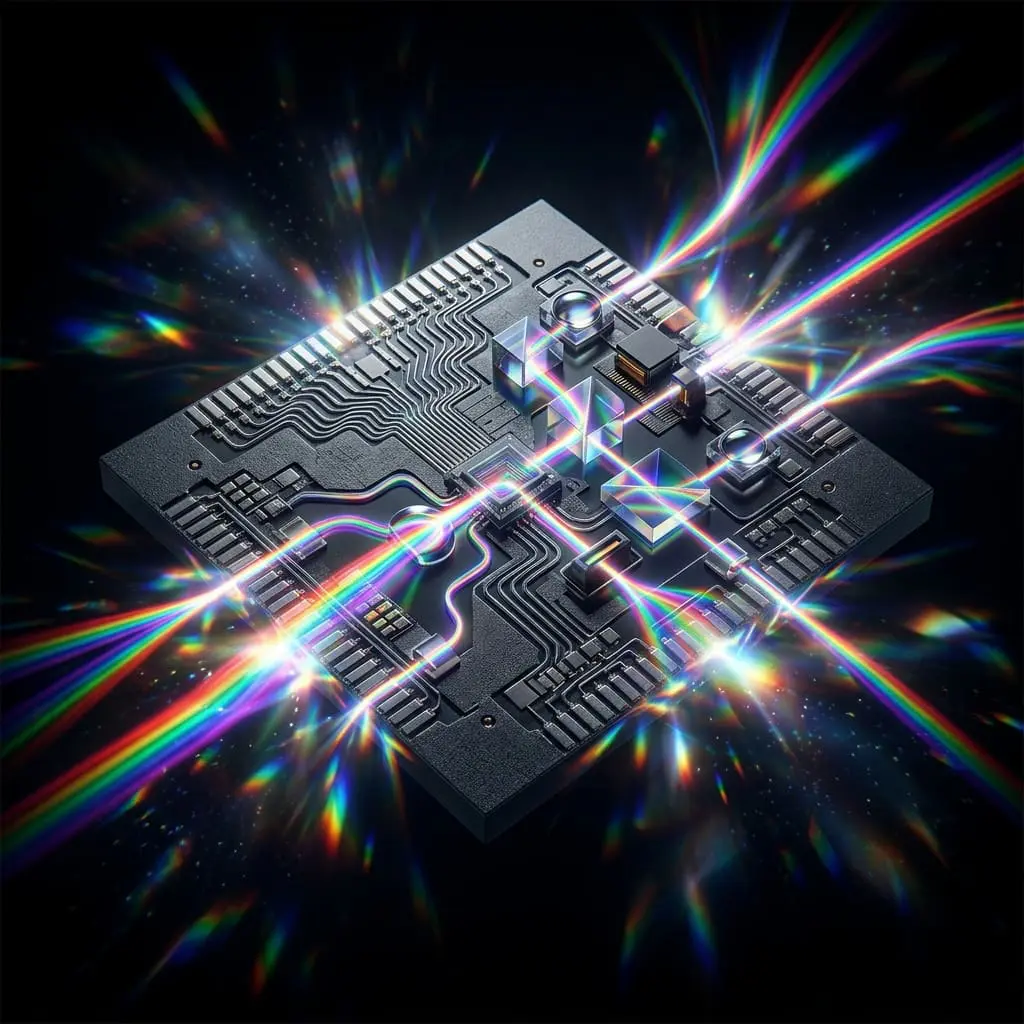
Planck Dynamics’ commitment to deploying Quantum Computing Inc.’s NeuraWave system signals a growing interest in shifting artificial intelligence processing closer to data sources, a trend known as edge computing. This move addresses limitations of traditional cloud-based AI, particularly in scenarios demanding minimal latency and robust operation in disconnected environments. This initial investment is part of a larger program potentially valued at over $10 million, contingent upon Planck Dynamics achieving pre-defined milestones. The core of this deployment centers on electro-optic computing, a departure from conventional electronic processors. QCi’s NeuraWave utilizes photonic reservoir computing, a technique leveraging the complex interactions within a network of optical components to process information. Planck Dynamics, a portfolio company of NUNC Capital BV, intends to integrate the NeuraWave system into its RAPTR platform, designed for tactical operations.
We believe photonic reservoir computing represents an important new computing architecture for AI workloads that must operate at the edge, where data are generated.
Yong Meng Sua, Chief Technology Officer at QCi
This move is underpinned by a framework agreement potentially worth over $10 million, contingent on Planck Dynamics achieving pre-defined program milestones. The financial commitment highlights a growing confidence in photonic reservoir computing as a viable solution for demanding AI applications. The collaboration centers on advancing electro-optic architectures for artificial intelligence, specifically targeting applications requiring AI-at-the-edge capabilities. These environments demand low latency, power efficiency, and real-time decision-making, critical factors for tactical operations. QCi’s NeuraWave system is positioned to provide that technological advancement, leveraging photonic reservoir computing to efficiently process temporal AI and time-series machine learning workloads.
Planck Dynamic’s collaboration with QCi represents a tangible step forward in bringing advanced nonlinear photonics capabilities into the European defense domain. That QCi has selected Planck Dynamics as an early commercialization and development partner for NeuraWave underscores the strategic nature of this collaboration.
Bram Oostvogel, Founding Partner, NUNC Capital BV
This move signifies a growing trend toward edge-based AI solutions, particularly within defense sectors demanding low-latency, power-efficient processing. He further detailed the need for driving the partnership with QCi. QCi’s NeuraWave system employs photonic reservoir computing, a novel approach that leverages the physics of light to accelerate AI workloads.
With NeuraWave, we’re giving organizations a highly differentiated path to deploy real-time intelligence for temporal AI and time-series applications, without dependence on centralized compute infrastructure.
Yong Meng Sua, Chief Technology Officer at QCi


See today’s quantum computing news on Quantum Zeitgeist for the latest breakthroughs in qubits, hardware, algorithms, and industry deals.