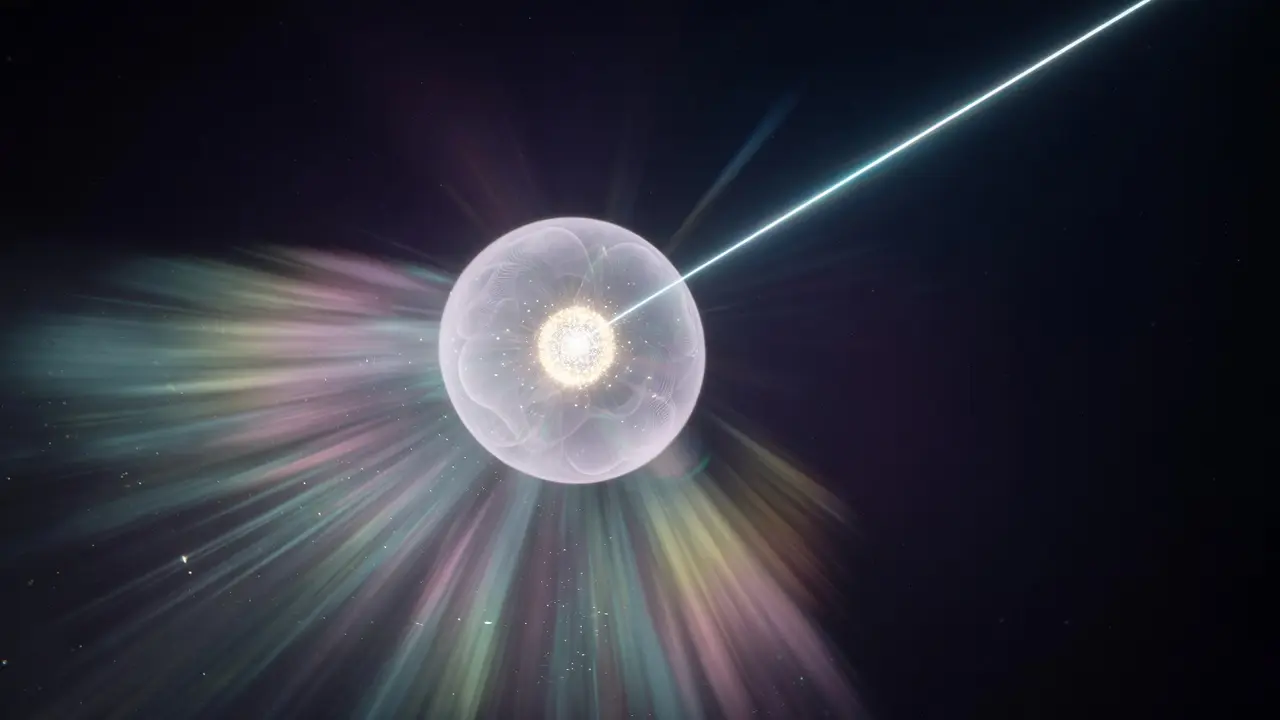
Previous estimates of classical simulation limits, ranging from 50 to 98 photons, proved inconsistent due to differing measurement criteria; the team instead focused on a standardized metric of “seconds per exact sample.” This work establishes a universal yardstick for comparing classical simulation capabilities across diverse quantum inputs. The researchers explain the need for a consistent measurement scale.
NVIDIA H100 GPU Simulates 38 Single Photons at One Sample Per Second
The NVIDIA H100 GPU successfully simulated the behavior of 38 single photons at a rate of one exact sample per second, establishing a new benchmark for classical simulation of quantum systems. Researchers used this fixed machine and consistent code base to evaluate the performance with single photons, squeezed light, and quantum-emitter trains, focusing on the time required for an exact sample.
Earlier figures lacked a standardized measurement scale, often focusing on different aspects of the simulation process such as sampler cost, source rate, or optical elements. By concentrating on “seconds per exact sample,” the researchers created a universal yardstick for assessing the capabilities of classical hardware.
The team’s implementation of the 2020 algorithm improved the single-photon frontier from 32.5 to 35.7 photonic inputs, and a subsequent move to a production NVIDIA CUDA kernel pushed it further to 38.3. The study also quantified the impact of specific quantum features on simulation cost. Coherence between photon-number branches, for example, shifted the simulation limit by 14.2 photonic inputs, demonstrating its significant computational demand, NVIDIA says.
Introducing a non-linear phase shift of π/2 at a single site increased the limit by 2.2 photonic inputs, while feed-forward control using adaptive modes offered a more modest improvement of up to 0.2 inputs. These granular measurements reveal how different aspects of a quantum device contribute to the overall computational burden on a classical simulator.
At 38 single photons, the H100 GPU consumed approximately 7.3 x 10⁻² Wh of measured board energy to produce one exact sample, a figure the researchers compare to an estimated energy requirement of 10-8 Wh for a comparable photonic device. This comparison highlights the potential for energetic advantages in quantum systems, suggesting that quantum devices may eventually outperform classical simulators in terms of energy efficiency. The team’s work, built on the photonic-engines code base, provides a foundation for understanding the limits of classical simulation and guiding the development of more powerful quantum hardware.
Photon Count Impacts: Device Features and Simulation Cost
The NVIDIA H100 GPU maintains a one-sample-per-second rate for simulating interferometers receiving 38 photonic inputs, establishing a measurable boundary for classical simulation capabilities. A superposition of vacuum and one photon, at half brightness, reached 50 photonic inputs before hitting the same limit, demonstrating the influence of input state preparation on simulation cost. These granular measurements reveal that the complexity of the quantum state directly affects the resources required for classical emulation. Memory limitations also constrain simulation scale, with a maximum of 13 single photons fully represented within the 80 GiB of the H100’s memory.
Each doubling of memory capacity yields only a marginal increase of 0.36 photons in simulatable complexity, suggesting memory expansion offers diminishing returns beyond a certain point. Highlighting the potential for substantial energetic advantages in future quantum systems, the researchers emphasize that rate is not the sole limiting factor, as precision and energy consumption also play critical roles in determining the feasibility of classical simulation. Establishing this simulability frontier allows for a more informed assessment of when and where quantum computers may offer a genuine computational advantage.
Memory and Precision Limit Exact Quantum Simulation Beyond 60 Photons
This figure, determined by researchers, represents a practical constraint for classical simulation. Beyond the rate of simulation, arithmetic precision presents a significant hurdle, limiting the accuracy of finite-precision algorithms. Double precision (fp64) maintains acceptable error rates, below 10−3, up to approximately 55 single photons and 62 squeezed inputs, based on extrapolations from data collected up to 38 photons. These algorithmic improvements demonstrate that software optimization can temporarily mitigate hardware constraints, though the fundamental limits of memory, precision, and energy remain.


See today’s quantum computing news on Quantum Zeitgeist for the latest breakthroughs in qubits, hardware, algorithms, and industry deals.