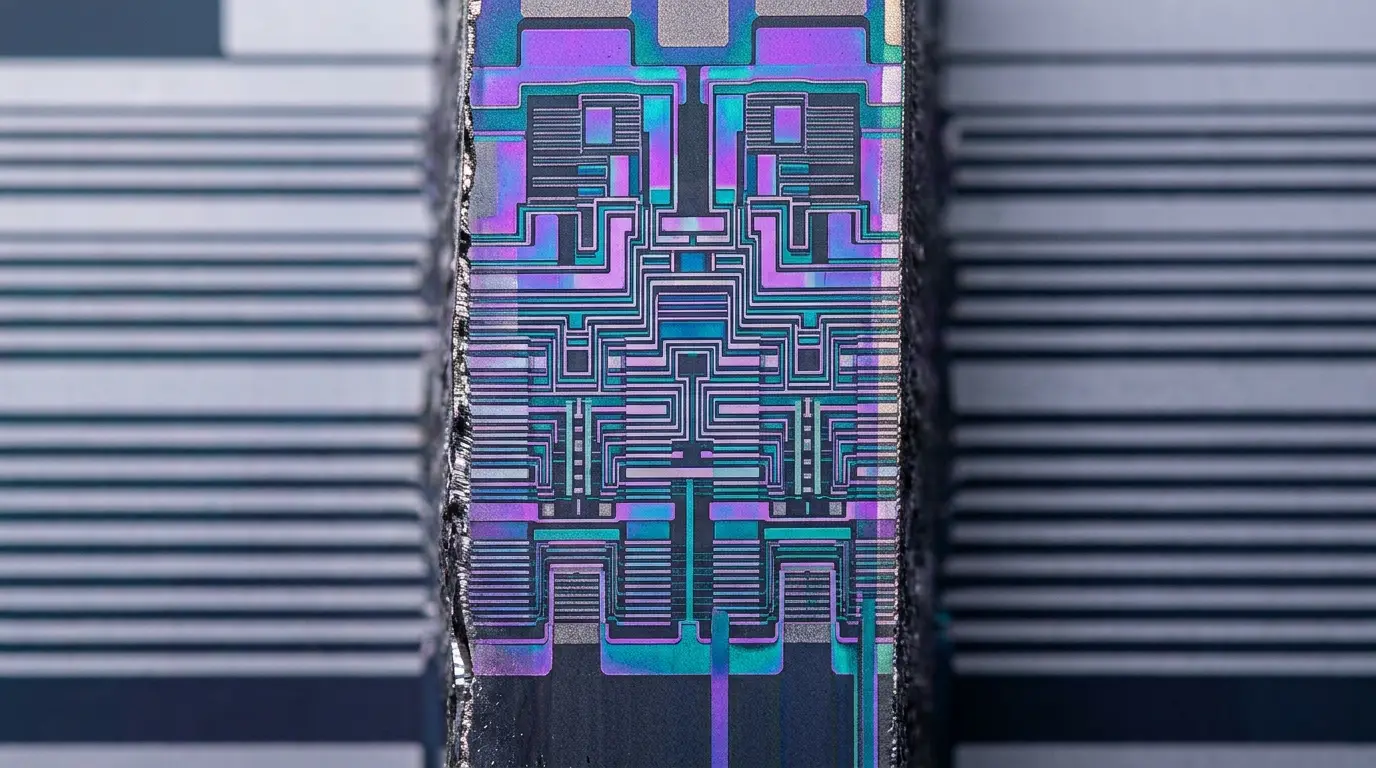
Researchers are gaining insight into the behavior of quantum materials by visualizing the evolution of “speckle patterns” revealed by the Advanced Photon Source at Argonne National Laboratory. These materials exhibit quantum phenomena, such as existing in multiple states simultaneously, at scales far larger than typically observed, potentially leading to technologies capable of detecting disease in a single cell of human tissue.
“You don’t have to be an X-ray expert to take advantage of the APS,” says Matthew Highland, APS physicist and group leader, “Users can bring their science, and we provide the capabilities and expertise to help them get the answers they’re looking for.” The facility’s newly upgraded X-ray beams, now the brightest in the world, are illuminating the mechanisms behind these remarkable properties.
Advanced Photon Source Reveals Quantum Behavior in Materials
The Advanced Photon Source (APS) now visualizes dynamic changes within quantum materials using speckle patterns, a technique enabled by the facility’s highly coherent X-ray beams. These patterns, which appear as seemingly random interference, allow scientists to track the evolution of a material’s internal structure with detail, offering a direct way to observe quantum phenomena typically hidden from view. Unlike traditional methods that capture static images, the APS’s upgraded capabilities reveal how quantum behavior emerges and shifts over time, which is an important step toward harnessing these materials for future technologies.
The X-ray Photon Correlation Spectroscopy (XPCS) beamline at 8-ID is central to this effort, following material evolution across timescales ranging from millionths of a second to minutes. “They vary significantly over time, and from one tiny region to the next.” This non-uniformity makes understanding their behavior exceptionally challenging, but the APS’s enhanced coherence allows detection of subtle variations previously obscured within the overall picture. The recent upgrade to the APS, increasing X-ray brightness by up to 500 times is about intensity and about unlocking new analytical possibilities.
This heightened brightness, combined with the XPCS beamline, allows researchers to correlate fluctuations in a material’s structure with its functional properties, such as electrical conductivity and magnetism. “XPCS is helping us determine how these fluctuations influence overall material properties, such as electric conductivity, magnetism and decoherence in quantum information systems,” researchers report.
This connection between microscopic fluctuations and macroscopic properties is essential for designing materials with tailored quantum characteristics. Beyond simply observing these fluctuations, the APS is also developing new methods for detecting the faint signals they produce. A team is constructing quantum-enhanced X-ray detectors that use superconducting materials to amplify subtle changes in X-ray energy while minimizing background noise. “A lot of phase transitions cause jumps in heat capacity, so if we can monitor that alongside X-ray scattering data, we can identify things that we can’t see with X-rays alone,” researchers noted.
The APS is designed to be accessible to a broad range of scientists, not just X-ray specialists. Whether they’re from national laboratories or industry, the APS aims to support researchers with challenging questions and facilitate new understanding.
Coherent X-rays at APS Enhance Material Observation
The upgraded Advanced Photon Source now allows observation of material fluctuations at an atomic scale, revealed through evolving speckle patterns generated by coherent X-ray beams. Researchers can track how these speckle patterns evolve to study a quantum material’s behavior in great detail.
The increased coherence of the X-rays is key; as Matthew Highland, an APS physicist, explained, “With less coherent beams, we could measure the average properties of a material, but the increased coherence allows us to detect small variations hidden within that overall picture.” This ability to discern subtle differences within a sample, and to track their evolution is transforming materials research. The Coherent High-Energy X-ray (CHEX) beamline at 28-ID further expands these capabilities by allowing in situ observation of materials during their growth. By watching the material as it forms, scientists can gain insights into local processes that would otherwise remain hidden.
This approach has already revealed complexities in material growth that challenge conventional understanding; as researchers have found, “Any time we’ve used in-situ X-ray beams to investigate a growth process, we’ve found that it is more complicated than the conventional wisdom suggests.” Combining X-ray measurements with other signals, such as heat capacity, provides an even more comprehensive understanding of material behavior. Researchers are now placing detectors directly next to samples during experiments to monitor these additional parameters.
CHEX Beamline Observes Silicon Carbide Growth Dynamics
The CHEX beamline Advanced Photon Source is revealing the detailed atomic choreography during silicon carbide growth, a critical step in developing materials for quantum computing. Researchers are not simply analyzing the finished product, but actively observing the material’s formation layer by layer through chemical vapor deposition, a process where gases react to create a solid material. This in situ observation is exposing complexities in polytype formation, different atomic arrangements within the silicon carbide, that challenge existing models of material growth.
Controlling which polytypes emerge during synthesis has long been a hurdle, as even slight variations in growth conditions can yield dramatically different structures. The team, part of the Q-NEXT research center, is using the CHEX beamline to pinpoint the conditions that favor specific polytypes, aiming to create reliable “recipes” for large-scale qubit production.
The ability to watch the material grow allows scientists to understand local processes inaccessible through analysis of the final crystal. Beyond identifying favorable growth conditions, the CHEX beamline is also providing insights into the dynamic fluctuations within the forming material. The facility’s highly coherent X-ray beams are essential for this detailed analysis.
The team is also using the POLAR beamline to visualize magnetic and electronic states, furthering their understanding of how complex quantum phases emerge and interact. Matthew Highland, a physicist and group leader at the APS, said, “Users can bring their science, and we provide the capabilities and expertise to help them get the answers they’re looking for.” Chiral states, where electron spins form spiral patterns, hold particular promise for energy-efficient computing and memory applications.
This detailed understanding is not limited to silicon carbide; the techniques developed at the APS are broadly applicable to a wide range of quantum materials, accelerating the development of technologies. The ability to observe these materials as they form, rather than simply analyzing the finished product, represents a leap forward in materials science.
You don’t have to be an X-ray expert to take advantage of the APS. Users can bring their science, and we provide the capabilities and expertise to help them get the answers they’re looking for.
Matthew Highland, APS physicist and group leader
Increased APS Brightness Enables Real-Time Material Studies
The upgraded Advanced Photon Source now focuses X-ray beams onto spots more than 100 times smaller than the width of a human hair, enabling observation of quantum materials at a scale. This increased focus, coupled with the facility’s enhanced brightness, allows researchers to detect subtle variations within samples previously obscured by averaged measurements. The ability to resolve these localized behaviors is critical for understanding the complex interplay of quantum phenomena within these materials.
Physicist Yue Cao, a Materials Science division researcher and XPCS beamline user, noted that quantum materials are inherently non-uniform. XPCS is now revealing how these fluctuations influence macroscopic properties like electrical conductivity and magnetism, bridging the gap between microscopic behavior and observable characteristics.
The team is also using the POLAR beamline, where experiments can be conducted at cryogenic temperatures or under strong magnetic fields, to further refine their analysis. In recent experiments, the tightly focused, polarized X-ray beams at POLAR were used to image a quantum material exhibiting promising magnetic properties, demonstrating the power of this combined approach.
X-ray Speckle Patterns Track Quantum Material Evolution
These patterns, generated as coherent X-ray beams interact with the material, provide a dynamic map of its internal fluctuations, a level of detail previously unattainable. Researchers can now observe how these patterns evolve, offering insight into the material’s behavior over time and across different regions. The upgraded APS’s enhanced coherence is critical to this process, enabling the detection of minute variations in the material’s structure and properties.
The POLAR beamline, with its ability to conduct experiments at cryogenic temperatures and under strong magnetic fields, further expands the range of conditions that can be explored. Researchers discovered that the direction of chiral patterns within the material could spontaneously flip with temperature changes, unless constrained by internal strain. These detectors, built using superconducting materials, promise to enhance the ability to measure the energy of incoming photons, revealing even more information about the material being studied.
Miceli envisions a future where these quantum sensors extend beyond X-ray detection, potentially impacting a wide range of sensing applications. The ability to visualize and understand these quantum phenomena at the nanoscale is clearing the way for the development of new materials and technologies with capabilities.



See today’s quantum computing news on Quantum Zeitgeist for the latest breakthroughs in qubits, hardware, algorithms, and industry deals.