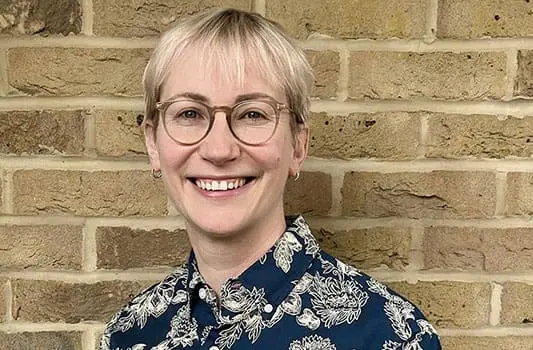
Linda Cremonesi officially became co-spokesperson of the NOvA neutrino experiment on April 1, joining Fermilab scientist Alex Himmel in leading an international team investigating the behavior of these elusive particles. NOvA, short for NuMI Off-axis ν e Appearance, operates with detectors separated by 500 miles, one in Illinois and another in Minnesota, allowing physicists to study how neutrinos change as they travel across vast distances. “Neutrinos do not give up their secrets easily,” said Himmel, acknowledging the ongoing challenges of the decade-long experiment. Cremonesi aims to guide NOvA through its final phase, solidifying its findings and establishing a scientific legacy built on understanding the fundamental properties of these particles that permeate the universe.
Linda Cremonesi Appointed NOvA Co-Spokesperson
Cremonesi brings extensive experience from previous work on the T2K and Hyper-Kamiokande experiments in Japan and currently serves as an associate professor in particle physics and UKRI Future Leaders Fellow at Imperial College London. Her appointment follows a period of significant contribution to NOvA, including serving as analysis coordinator and overseeing the publication of oscillation analysis based on a decade of collected data, as well as coordinating the first joint analysis with T2K, which doubled the experiment’s physics output. “What really drew me to NOvA was how welcoming it was and how valued I felt from the beginning,” she shared, emphasizing her commitment to fostering a supportive environment within the collaboration. Himmel emphasizes the continued importance of NOvA, stating, “Even after 10 years of operating NOvA, there is still so much for us to learn,” and Cremonesi agrees, asserting, “My goal is to lead NOvA into its final stage, where we can solidify our findings and establish our scientific legacy.”
Even after 10 years of operating NOvA, there is still so much for us to learn.
Alex Himmel, NOvA co-spokesperson
NOvA Experiment: Long-Baseline Neutrino Detection Setup
The NOvA experiment is currently Fermilab’s primary facility for long-baseline neutrino research, distinguished by its expansive scale. A neutrino beam generated at Fermilab in Batavia, Illinois, travels 500 miles to a detector in Ash River, Minnesota. This considerable distance is fundamental to the experiment’s purpose: to observe how neutrinos transform over both time and space, offering insights into their inherent properties and behaviors. The collaboration, comprised of 203 scientists and engineers representing 52 institutions across eight countries, began full operation in October and has since delivered some of the world’s most precise measurements of neutrino oscillations, significantly refining constraints on neutrino mass and mixing angles.
Cremonesi’s journey into neutrino physics began unexpectedly during an exchange program at Queen Mary University of London, where she initially chose the topic due to limited project availability; “I didn’t know what they were, so I ended up googling things on my phone on the way to meet up with my supervisor,” she recalled. Her subsequent work on T2K and Hyper-Kamiokande, culminating in her current position, demonstrates a sustained commitment to unraveling the mysteries of these elusive particles. NOvA’s ongoing data collection is crucial, not only for solidifying existing findings but also for laying the groundwork for future collaborations, particularly with the Deep Underground Neutrino Experiment (DUNE) at the Long Baseline Neutrino Facility. While DUNE, with its 800-mile detector separation, will eventually supersede NOvA, the current experiment remains the only long-baseline neutrino facility operating in the United States.
Neutrinos do not give up their secrets easily.
Alex Himmel, NOvA co-spokesperson
The experiment, a setup with detectors 500 miles apart in Illinois and Minnesota, generates and studies neutrino behavior over vast distances. This allows physicists to probe the fundamental properties of these elusive particles, seeking to understand their role in the universe and potentially resolve existing mysteries. “We have a lot that we can give to the international neutrino community,” Cremonesi said, highlighting the importance of training the next generation of physicists within a supportive and dynamic research environment.
NOvA is in an exciting transition phase.
Linda Cremonesi, NOvA co-spokesperson
NOvA’s Role as Precursor to the DUNE Experiment
The NOvA experiment, a long-baseline endeavor spanning 500 miles between Illinois and Minnesota, continues to refine our understanding of neutrino behavior while simultaneously preparing for its successor, the Deep Underground Neutrino Experiment (DUNE). Currently the leading long-baseline neutrino experiment managed by the U.S. Department of Energy’s Fermi National Accelerator Laboratory, NOvA generates a neutrino beam and studies its transformations across this considerable distance, yielding insights into neutrino properties crucial for broader physics. Linda Cremonesi’s recent appointment as co-spokesperson, joining Alex Himmel, underscores the experiment’s ongoing importance; she will help set research priorities and represent the team externally. Beyond data collection, the collaboration is actively pursuing joint analyses with other international experiments, aiming to extend the impact of NOvA’s findings and train the next generation of physicists long after the beam is switched off, ensuring a lasting contribution to the field.
What really drew me to NOvA was how welcoming it was and how valued I felt from the beginning.



See today’s quantum computing news on Quantum Zeitgeist for the latest breakthroughs in qubits, hardware, algorithms, and industry deals.