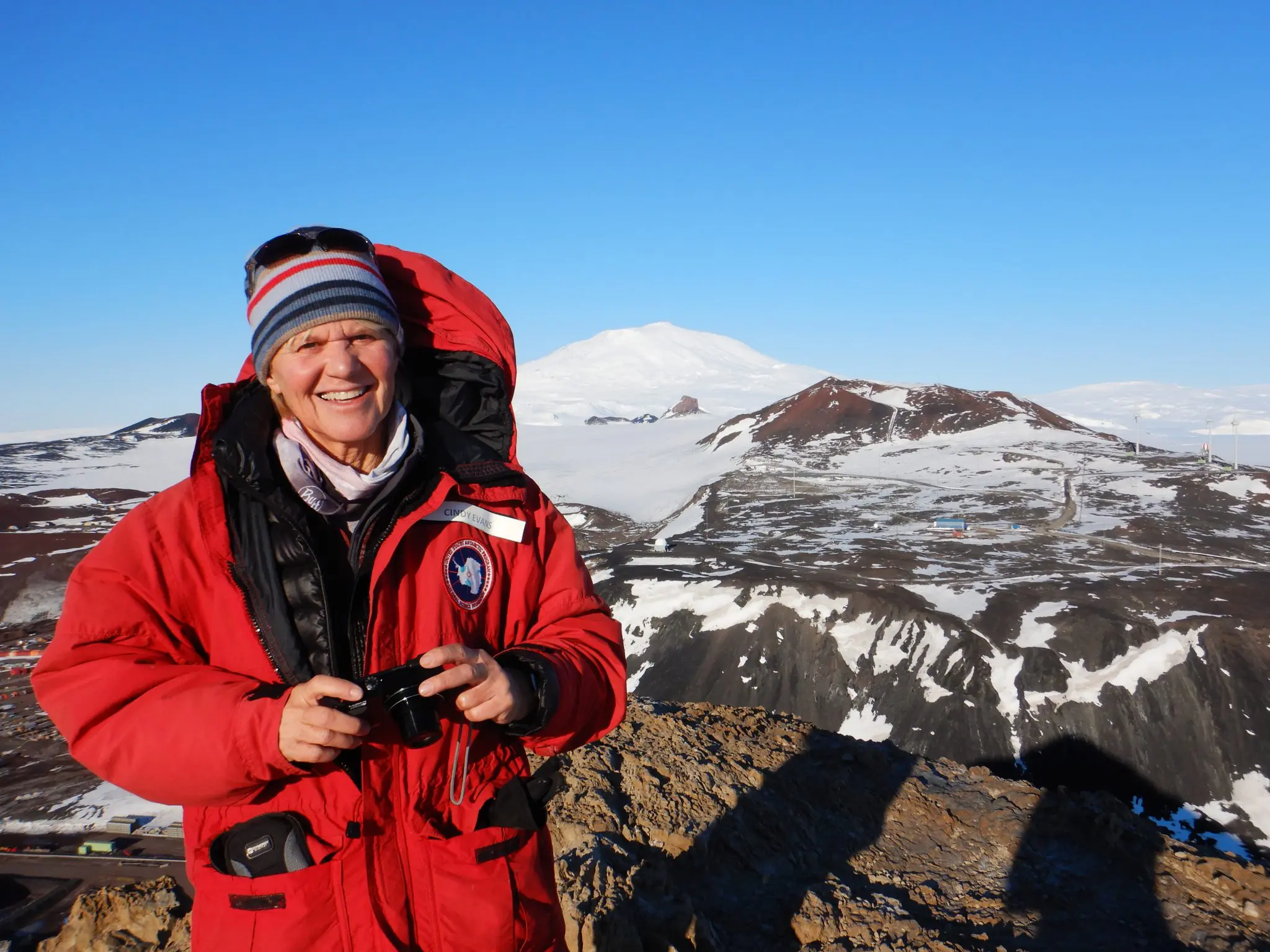
During a recent 10-day mission, the Artemis II crew did not land on the Moon, but instead flew by its far side to analyze and photograph geologic features, an observation effort intended to inform future lunar exploration. The astronauts acted as remote observers, relying on detailed visual analysis of shapes, textures, and colors to reveal the Moon’s history, a skillset honed through an intensive training regimen led by NASA’s Cindy Evans, Artemis exploration scientist and geology training lead at Johnson Space Center. This preparation extended beyond classroom science to include field work in extreme environments; Evans herself deployed to collect meteorites in Antarctica and study geologic features in Iceland. “Artemis crew members require geology and field skills so that they can execute the mission science requirements from lunar orbit and on the surface of the Moon,” Evans explained, emphasizing the importance of practical knowledge for understanding the Moon’s ancient secrets.
Artemis II Crew Training for Lunar Geologic Observation
The Artemis II crew underwent a rigorous training program extending beyond conventional classroom science to prepare them for a unique role: remote geologic observation of the Moon. The 10-day mission did not involve a lunar landing, but the astronauts were tasked with detailed analysis and photographic documentation of the far side’s geologic features, including impact craters and ancient lava flows, to inform future surface missions and broader lunar science. This emphasis on visual assessment positioned the crew as crucial scientific observers, relying on nuanced descriptions rather than solely on instrument data. These experiences were intended to build “muscle memory and confidence in their geology knowledge to conduct the geology observations, sampling, and other scientific tasks,” according to Evans. The training also incorporated simulations, allowing the team to practice real-time assessment of imagery and observations that the Artemis II crew would transmit back to Earth.
Evans, a veteran of multiple NASA programs including the Space Shuttle and International Space Station, emphasized the importance of interdisciplinary collaboration throughout her career. “As a planetary scientist at Johnson, I am challenged to work with engineers, and embrace the complex teamwork between hardware engineers, operations engineers, management, many of whom are engineers, and scientists,” she said. This holistic approach underscores the Artemis program’s commitment to integrating scientific expertise with engineering prowess for a comprehensive understanding of the Moon and our solar system.
Cindy Evans’ Role in NASA’s Astromaterials Research Division
Within NASA’s Astromaterials Research and Exploration Science (ARES) Division, Cindy Evans spearheads geology training for a diverse group encompassing crew members, mission managers, engineers, and flight controllers, recognizing the critical need for terrestrial expertise in lunar exploration. This training extends beyond traditional classroom science to encompass immersive field work designed to hone observational skills essential for the Artemis program; Evans herself participated in deep-field geology sessions in Antarctica, collecting meteorites from the Davis Ward Icefield, and led sessions in Iceland. Evans’ curriculum emphasizes the ability to describe “nuances in shapes, textures, and colors”, qualitative data vital for reconstructing the Moon’s geologic history, and a skillset developed through rigorous training.
Evans’ 37-year career at NASA began with the Space Shuttle Program and evolved through the Shuttle-Mir Program and the International Space Station, demonstrating a consistent commitment to integrating scientific observation with complex engineering endeavors. She previously established the Crew Earth Observations effort for Shuttle-Mir, equipping crews to document terrestrial changes from orbit, and contributed to the Columbia accident investigation by developing imagery inspection processes. “I have been both honored and incredibly fortunate to have participated in a wide variety of human spaceflight programs,” Evans said, emphasizing the collaborative spirit that defines her approach. She added, “And I am very proud of the work my team is doing right now.”
As the scientists ‘on the ground,’ Artemis crew members require geology and field skills so that they can execute the mission science requirements from lunar orbit and on the surface of the Moon,” Evans explained.
Antarctic Meteorite Collection Informs Lunar Science Expertise
NASA’s preparation for the Artemis II mission extended beyond conventional classroom learning and simulations, incorporating geographically diverse field work designed to hone the crew’s observational skills. This emphasis on hands-on experience aimed to build a crucial skillset for the 10-day mission, during which the crew flew by the far side of the Moon to analyze and photograph geologic features. The selection of Antarctica as a training ground wasn’t arbitrary; the continent provides an analog environment for lunar surface exploration, offering unique opportunities to study rocks originating from beyond Earth. This training wasn’t solely about identifying rock types, but also about developing the ability to discern subtle differences in shape, texture, and color, details that reveal a region’s geologic history.
Whether they’re looking out the spacecraft’s windows or walking the surface, Artemis astronauts are working on behalf of all scientists to collect clues to the ancient geologic processes that shaped the Moon and our solar system.



See today’s quantum computing news on Quantum Zeitgeist for the latest breakthroughs in qubits, hardware, algorithms, and industry deals.