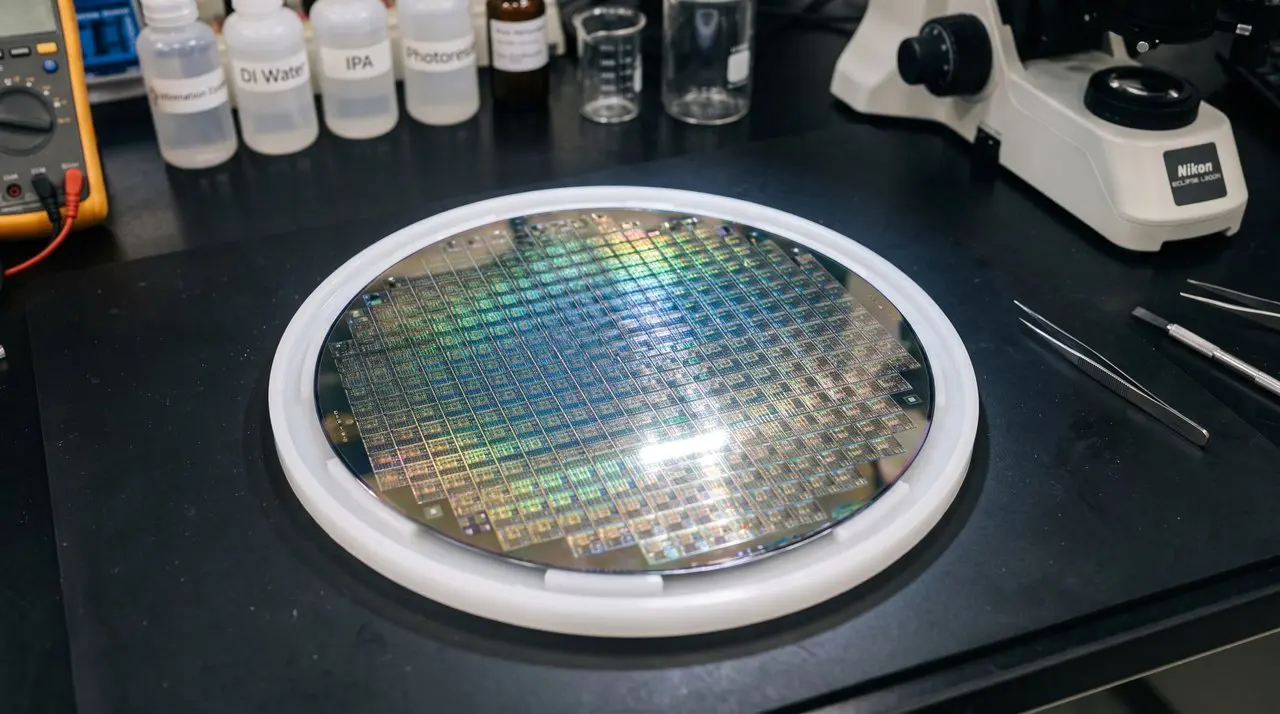
Radiation-induced blurring during extreme ultraviolet (EUV) lithography presents a quantum-level challenge, and is now the focus of a collaboration between Xanadu Quantum Technologies and Mitsubishi Chemical. The companies demonstrated in an initial phase that quantum algorithms accurately model the optical properties of photoresists used in EUV lithography; this next phase aims to integrate those simulations directly into Mitsubishi’s semiconductor models to predict and prevent blurring, the company says.
Quantum Algorithms Model EUV Lithography Blur in Semiconductor Fabrication
Radiation-induced blurring presents a significant challenge to classical computer simulations used in extreme ultraviolet (EUV) lithography, a critical process for manufacturing advanced semiconductors. This quantum-level phenomenon limits the ability of conventional computing methods to accurately predict and mitigate defects during chip fabrication, creating a bottleneck in the pursuit of smaller and more powerful microchips.
Xanadu Quantum Technologies and Mitsubishi Chemical are collaborating to address this issue by leveraging quantum algorithms. This achievement moves the technology from theoretical possibility to practical application, integrating parameters derived from Xanadu’s quantum computing simulations directly into Mitsubishi’s existing multi-scale models to predict and minimize blurring.
The collaborative effort is receiving financial backing from the National Research Council of Canada Industrial Research Assistance Program (NRC IRAP) and Japan’s Strategic Innovation Promotion Program (SIP), highlighting a commitment to advancing semiconductor manufacturing, according to the company. “Our collaboration with Mitsubishi bridges quantum simulation and semiconductor fabrication, eliminating a critical manufacturing bottleneck and securing a competitive advantage for semiconductor technology,” said Dr. Christian Weedbrook, Founder and Chief Executive Officer of Xanadu.
“The funding from both the Canadian and Japanese governments underscores the importance of this partnership to advance the semiconductor industry globally.” This partnership builds on previous work that demonstrated the utility of quantum computing in simulating EUV resist materials.
Dr. Masahiro Horibe, Sub-Program Director, Cross-ministerial SIP and Deputy Director, G-QuAT, AIST, added, “This project connects quantum computing research with real industrial challenges. In the field of semiconductor materials development, we expect this Japan-Canada collaboration to accelerate the implementation of quantum technology. At SIP, we look forward to the new industrial value this initiative will create.” This joint initiative intends to demonstrate quantum computing innovation on a global scale while simultaneously advancing quantum simulation capabilities for the semiconductor industry.
This partnership expands on Mitsubishi’s previously successful collaboration with Xanadu, where we demonstrated the utility of quantum computing in simulating EUV resist materials for semiconductor manufacturing.
Dr. Qi Gao, Senior Chief Scientist at Mitsubishi Chemical




See today’s quantum computing news on Quantum Zeitgeist for the latest breakthroughs in qubits, hardware, algorithms, and industry deals.