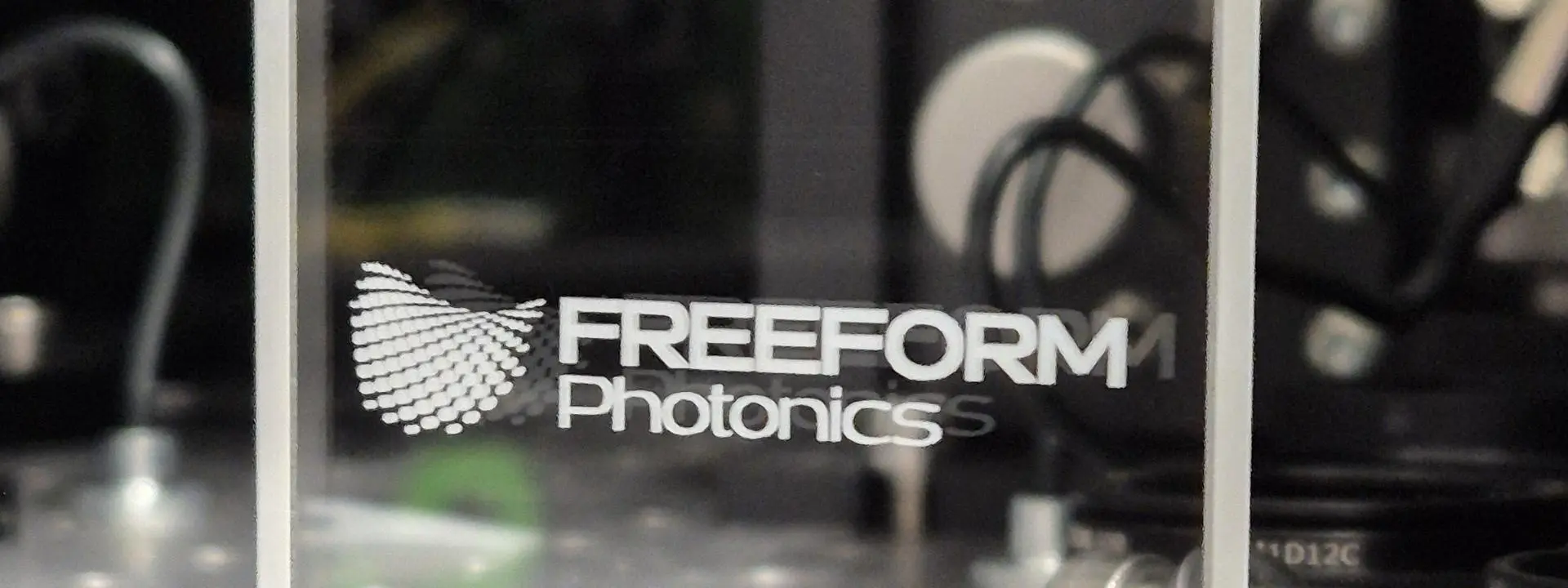
More than 50 percent of current photonics production costs result from painstaking manual calibration, a challenge Heriot-Watt University researchers have now addressed with a novel laser process. FreeForm Photonics is commercializing technology that builds alignment directly into optical glass components, fundamentally altering how these critical parts are manufactured. This process achieves sub-micron tolerances, a scale smaller than the width of a human hair, and promises to reduce expenses for sectors reliant on precisely assembled photonics, including quantum computing systems, medical diagnostics, and the optical communications infrastructure that supports the modern internet. “By integrating passive alignment features into the glass components themselves, we are fundamentally changing what it takes to manufacture high-performance optics,” said Dr. Calum Ross, Research Fellow at Heriot-Watt University.
FreeForm Photonics Laser Process Eliminates Manual Calibration
A new laser-based manufacturing process developed at Heriot-Watt University promises to reduce costs and complexity in the production of photonic components, a sector currently burdened by extensive manual calibration. FreeForm Photonics is commercializing technology that embeds alignment features directly into optical glass, circumventing a process that accounts for more than half of all photonics production costs. FreeForm Photonics has secured funding through Scottish Enterprise’s High Growth Spinout Programme, preparing the company for seed investment and commercial scale-up.
Derek Shaw, Director of Entrepreneurship and Investment at Scottish Enterprise, stated that FreeForm Photonics exemplifies how Scotland’s supportive innovation ecosystem can help translate research into global opportunity. With a global photonic components market nearing $1 billion and projected for substantial growth, the company is already engaging with over 100 industry leaders and potential customers, supplying trial samples to sectors including aerospace, telecommunications, and healthcare. Professor Gillian Murray, Deputy Principal for Enterprise and Business at Heriot-Watt University, emphasized the university’s role in fostering innovation, stating, “Through our entrepreneurial programmes and business support, we are working to strengthen Scotland’s innovation ecosystem and support high-growth businesses that can compete globally.”
Sub-Micron Precision Optics Enable Quantum and Beyond
The demand for increasingly sophisticated photonic systems is currently limited by manufacturing processes reliant on extensive manual calibration, which accounts for more than half of all photonics production costs. This reliance on hand-assembly creates a bottleneck for scaling production in critical areas like quantum computing, medical diagnostics, and the optical communications networks that support modern infrastructure. A new laser-based process developed at Heriot-Watt University directly addresses this challenge by embedding alignment features into optical glass components during manufacturing, effectively eliminating the need for post-production calibration. This advancement offers benefits beyond cost reduction, promising to accelerate development cycles and improve the reliability of complex photonic systems. FreeForm Photonics.
FreeForm Photonics is a great example of how Scotland’s supportive innovation ecosystem system can help turn cutting-edge research into global opportunity.
Derek Shaw, Director of Entrepreneurship and Investment at Scottish Enterprise
Source: https://www.hw.ac.uk/news/2026/laser-breakthrough-rewrites-the-rules-of-photonics-manufacturing


See today’s quantum computing news on Quantum Zeitgeist for the latest breakthroughs in qubits, hardware, algorithms, and industry deals.