

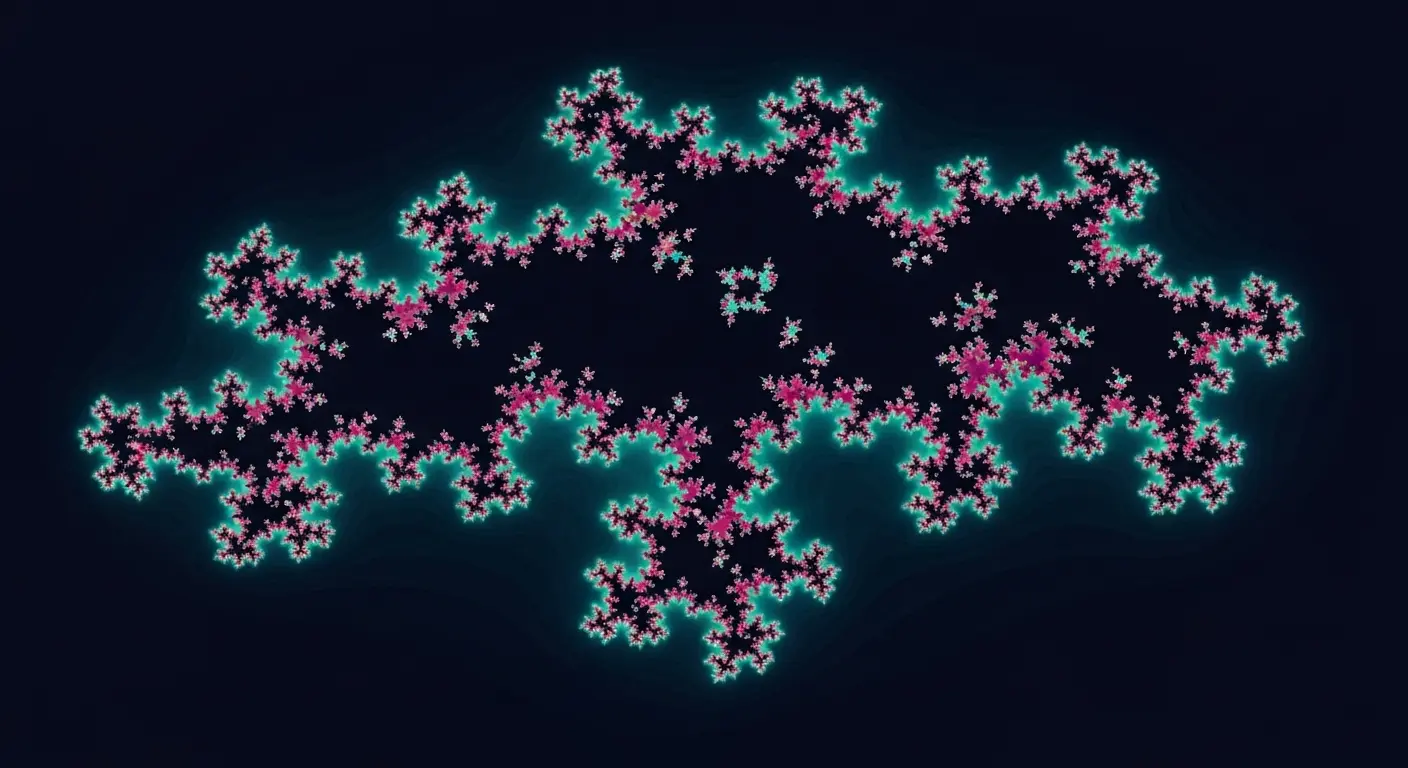
The Klein-Gordon and Duffin-Kemmer-Petiau equations, when applied to a scalar particle interacting with a specific transcendental potential, have no Liouvillian solution. Benjamin de Zayas and Clara Rojas at Yachay Tech University rigorously proved this non-integrability by analysing the differential Galois group, revealing it to be the full special linear group. This finding shows that wavefunctions cannot be expressed using elementary functions or classical special functions like Bessel, Whittaker, or Heun types. It sharply expands understanding of the limitations within solvable relativistic quantum systems.
Determining analytical solvability via differential Galois group analysis
Picard-Vessiot theory offers a powerful framework for determining whether solutions to differential equations can be expressed using elementary functions, constructed from operations like addition, multiplication, root extraction, exponentiation, and logarithms. This theory, rooted in Galois theory, extends beyond simply finding solutions. It investigates the nature of those solutions and whether they can be built from a known set of functions. The application of this theory began by constructing a “differential field”, which extends standard mathematical functions, the ‘base field’, to incorporate potential solutions to the equation. This extension allows for the examination of the algebraic relationships between these solutions and the equation’s coefficients, effectively creating a field where the differential equation can be studied algebraically. Central to this analysis is the “differential Galois group”, a mathematical “symmetry group” that reveals fundamental properties of the equation’s solvability by describing how solutions transform under parameter changes. The group’s structure dictates whether solutions can be expressed in a closed form. Matthew Turton of the University of Bath and collaborators examined the analytical solvability of the Klein-Gordon and Duffin-Kemmer-Petiau equations for a scalar particle interacting with an α-attractor potential defined by parameters V₀, a, and b. This potential, given by V(x) = V₀ ea tanh(bx), is particularly interesting due to its transcendental nature and its relevance in certain theoretical models. Constructing a “differential field” and analysing the resulting “differential Galois group” allowed them to determine solution properties. They deliberately avoided methods applicable to simpler potentials and focused on the intrinsic transcendence of this system. The choice of this specific potential was motivated by its complexity and the expectation that it might exhibit non-integrable behaviour.
Liouvillian solution absence for the α-attractor potential in relativistic quantum mechanics
The size of the differential Galois group has now decreased to a demonstrably solvable group, establishing a firm boundary for analytical solutions in relativistic quantum mechanics. Previously, determining whether solutions to the Klein-Gordon and Duffin-Kemmer-Petiau equations could be expressed using elementary functions remained an open problem for many potentials. This research definitively proves the non-existence of Liouvillian solutions for the α-attractor potential. This finding rigorously establishes that wavefunctions cannot be constructed from familiar mathematical tools such as Bessel or Whittaker functions, a limitation previously unproven for this class of potentials. The absence of Liouvillian solutions implies that any solution must be expressed using functions that are not elementary, requiring more sophisticated mathematical techniques or numerical approximations.
Analysis of the differential field extensions revealed the differential Galois group to be the full special linear group SL(2, ), definitively precluding analytical solutions expressible in elementary functions or their integrals. The special linear group SL(2, ) is a non-solvable Lie group, meaning its corresponding differential equation does not admit Liouvillian solutions. This result is a direct consequence of the properties of the differential Galois group and provides a rigorous mathematical proof of non-integrability. The Hermite-Lindemann theorem proves that no rational coordinate transformation exists to simplify the equation into a standard solvable form, confirming the potential’s inherent non-integrability. This theorem, a cornerstone of transcendence theory, further reinforces the conclusion that the equation cannot be reduced to a simpler, solvable form through algebraic manipulation. Currently, however, these results apply only to one spatial dimension and do not yet extend to multidimensional systems or more complex particle interactions. Investigating the behaviour of the system in higher dimensions presents a significant challenge for future research.
Non-integrability of relativistic quantum systems constrains analytical approaches
Establishing which quantum systems yield to analytical solutions has long been a central challenge in theoretical physics. The boundaries of what is mathematically tractable are clarified by demonstrating the non-integrability of the α-attractor potential within the Klein-Gordon and Duffin-Kemmer-Petiau equations, though Matthew Turton and colleagues explicitly limit their analysis to one spatial dimension, prompting whether higher-dimensional systems might exhibit unexpected behaviours. The Klein-Gordon equation describes spin-0 particles, while the Duffin-Kemmer-Petiau equation is a relativistic wave equation for particles of any spin. Understanding the limitations of analytical solutions for these equations is crucial for developing accurate models of physical phenomena. Despite this restriction to one spatial dimension, the significance of this finding remains substantial. The one-dimensional simplification allows for a focused and rigorous analysis, providing a solid foundation for future investigations in higher dimensions.
Demonstrating non-integrability, the absence of a simple, analytical solution, is key for guiding future research efforts, allowing physicists to confidently avoid pursuing solutions using methods reliant on solvable systems. The Klein-Gordon and Duffin-Kemmer-Petiau equations describe relativistic particles, important for understanding high-energy physics and cosmology, making the identification of limitations within these frameworks particularly valuable. Consequently, physicists must employ more complex numerical methods for calculations. These methods, while computationally intensive, provide accurate approximations to the solutions even when analytical solutions are unavailable.
Picard-Vessiot theory was employed to show the associated differential Galois group is isomorphic to SL(2, ), indicating a lack of Liouvillian solutions. These solutions, constructible from elementary functions and integrals, are absent, signifying a fundamental limit to analytical methods. As a result, wavefunctions describing this interaction cannot be built from familiar functions like Bessel or Whittaker functions, previously used to solve similar equations. The implications of this finding extend beyond the specific α-attractor potential. It highlights the inherent difficulty in finding analytical solutions for many relativistic quantum systems, pushing the boundaries of theoretical physics and encouraging the development of new mathematical tools and computational techniques.
The researchers demonstrated that the Klein-Gordon and Duffin-Kemmer-Petiau equations, when used with a specific α-attractor-type potential, have no analytical solutions expressible using standard mathematical functions. This means calculations involving this potential require more complex, numerical approaches rather than relying on simpler, exact formulas. By proving the non-integrability of the system using Picard-Vessiot theory and the Hermite-Lindemann theorem, the study clarifies the limitations of analytical methods for certain relativistic quantum systems. The authors suggest this rigorous analysis provides a foundation for further investigations, potentially in higher dimensions.
👉 More information
🗞 Proof that the Klein-Gordon type equation with alpha attractor potential has no Liouvillian solution or as a composition of special functions
🧠 ArXiv: https://arxiv.org/abs/2606.07320


See today’s quantum computing news on Quantum Zeitgeist for the latest breakthroughs in qubits, hardware, algorithms, and industry deals.



