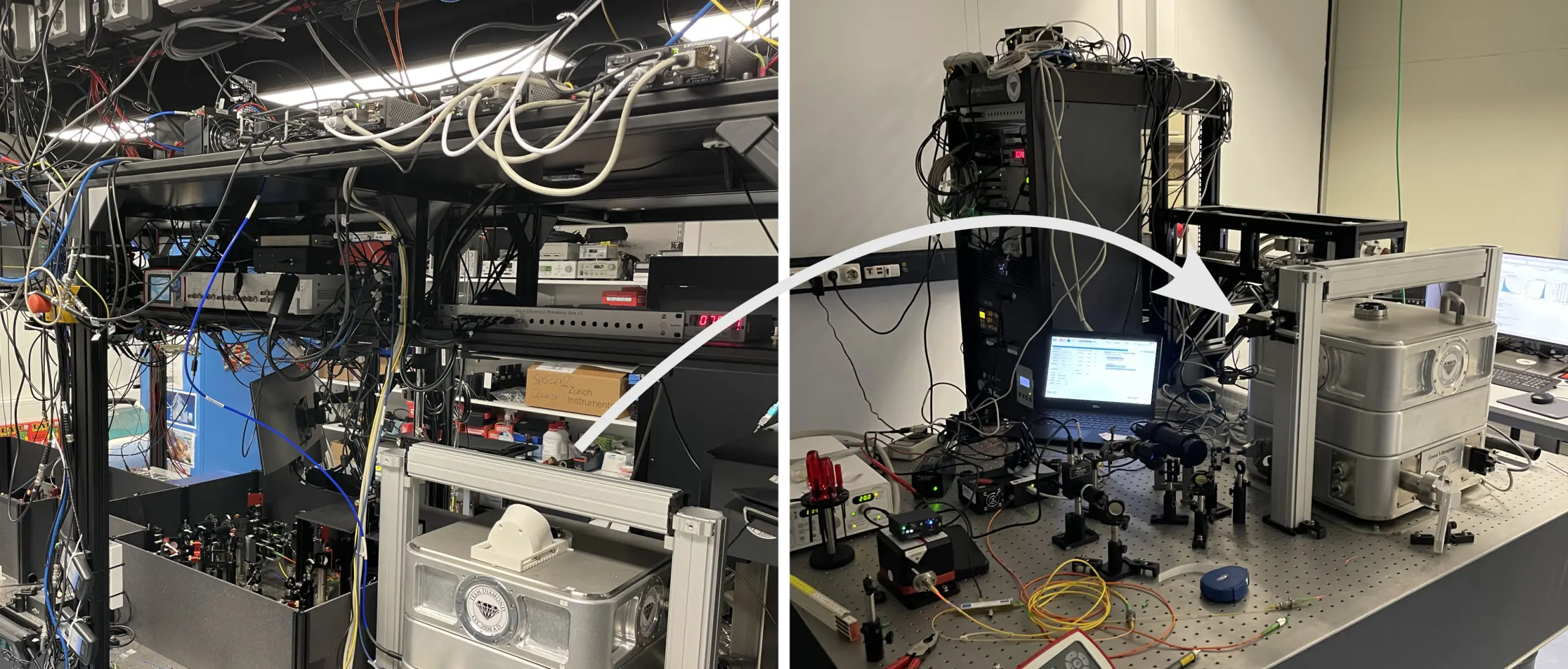
After fourteen years of development, a complex quantum research platform has relocated from the Hanson Lab at QuTech in Delft to Tina Müller’s group at the Karlsruhe Institute of Technology (KIT) in Germany. The move, involving five generations of PhD researchers, demonstrates a collaborative approach to quantum research by repurposing a fibre-based open microcavity platform cooled below 10 Kelvin. This sensitive system, requiring a vibration stability of 25 Picometer, demanded careful preparation for transport; the team ensured it could be reinstalled and maintain performance in a new laboratory.
The quantum setup in the optical laboratories in Delft and in Karlsruhe
Achieving this level of cooling and stability presented significant technical challenges, demanding years of refinement to minimize the impact of external vibrations on performance. Over time, the team reduced vibration to a passive stability of 25 Picometer, a measurement approximating the size of a single Helium atom, QuTech says. This extreme sensitivity highlights that the setup’s overall performance stemmed from the complete, engineered system rather than simply the sum of its individual components. The microcavity’s wide spectral tunability will now be available for new investigations within the KIT laboratories.
Deconstruction and packing in Delft
The vacuum chamber, weighing over 100 kilograms, required a small crane for removal from the Hanson Lab at QuTech, initiating the relocation of a fourteen-year research project. Disassembly in Delft prioritized maintaining a vacuum within the experimental chamber during transit, a critical requirement for preserving the integrity of the diamond colour centre research. Cables were meticulously labelled and all equipment gathered as the team prepared for the move to the Karlsruhe Institute of Technology.
Preparing the control code for operation in Karlsruhe formed a key part of the initial stages, ensuring smooth functionality upon arrival. This work acknowledged that the system’s capabilities were not simply within the hardware, but also embedded within the software governing its operation. The team’s approach extended beyond physical deconstruction to encompass the digital infrastructure necessary for continued experimentation.
This careful preparation reflects the complexity of the apparatus, developed over five generations of PhD researchers, and the desire to extend its lifespan through collaboration. Rather than storing the equipment after the research line concluded, the team opted for a transfer, demonstrating a commitment to maximizing the value of the investment.
Transport to Karlsruhe
The relocation of a complex quantum platform concluded swiftly with standard shipping protocols following meticulous preparation in Delft. A dedicated transport company moved the entire system, comprising a 19-inch control rack, compressor, vacuum chamber, and associated equipment, to the Karlsruhe Institute of Technology (KIT) without incident. Recommissioning the apparatus at KIT involved more than simply unpacking boxes; the team prioritized verifying performance levels comparable to those achieved in Delft, according to QuTech. Within one week of arrival, a test cool-down was completed, and vibration levels were measured, demonstrating the system’s resilience during transit.
Successful replication of the original performance metrics represents a significant undertaking, given the apparatus’s sensitivity and the complexity of its assembly over many years. The team rebuilt the system in a newly prepared laboratory space, confirming that the transport process had not degraded its functionality. This outcome highlights the collaborative approach to quantum research, allowing continued investigation using a fully functional, relocated platform.
Installation in Karlsruhe
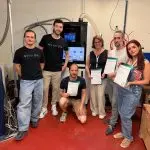
The final step involved assembling and testing the microcavity housed within the chamber, a component particularly sensitive to vibrations that must be controlled for stable operation. The transfer maintains an advanced experimental platform in active research following the conclusion of the original research line in Delft, representing fourteen years of development repurposed for a new program at KIT. This outcome was facilitated by the collaborative efforts of technicians from both institutions; Vinod Narain and Siebe Visser of QuTech. Heinz Leonhard of KIT, provided critical support during the move and installation.
Rebecca Mayrhofer managed the administrative aspects, while Julius Fischer, Jan Riegelmeyer, Timo Dolné and Leonardo Wienhoven assisted with the physical relocation. The research group led by David Hunger at KIT is also supporting the setup and initial testing phases. A team member stated, “Fourteen years of work in Delft have resulted in a mature system whose capabilities can now support a new programme of experiments in Karlsruhe,” highlighting the value of continued investigation using the relocated platform.
See today’s quantum computing news on Quantum Zeitgeist for the latest breakthroughs in qubits, hardware, algorithms, and industry deals.