Qunova Computing has been selected as one of 21 organizations worldwide to join the JHPC-quantum Test User Program, a Japanese national initiative designed to advance hybrid quantum-high performance computing. The agreement, formalized through a Memorandum of Understanding with JHPC-quantum and funded by NEDO, grants Qunova no-cost access to a uniquely powerful platform combining the Supercomputer Fugaku with an IBM Quantum System Two. Qunova is one of only two non-Japanese organizations participating, reflecting international recognition of its expertise in quantum chemistry and materials science. “It is a privilege to be included in JHPC-quantum alongside many of Japan’s most distinguished research institutions and prominent corporations,” said Kevin Rhee, CEO of Qunova Computing, adding that the partnership will accelerate the company’s path to demonstrating industrial quantum advantage in real-world chemistry applications.
Qunova’s HI-VQE Algorithm for Industrial Quantum Chemistry
This integrated platform represents a significant leap forward in the pursuit of solving complex computational problems, and Qunova’s participation highlights the potential of its proprietary HI-VQE (Handover Iterative Variational Quantum Eigensolver) algorithm. The JHPC-quantum initiative is currently midway through its five-year research and development mandate, running through October, and is designed to connect supercomputers and quantum computers through advanced system software, ultimately supporting the commercial deployment of hybrid quantum applications.
Qunova will leverage this access to apply its HI-VQE algorithm to challenging problems in quantum chemistry, with a particular focus on the iron-sulfur cluster, a benchmark problem with implications for both materials science and drug discovery. The fact that Qunova is one of just two non-Japanese organizations participating in this program demonstrates the power and maturity of our HI-VQE algorithm. The JHPC-quantum platform’s comprehensive hardware, including a superconducting quantum computer in Kobe and a trapped-ion quantum computer in Wako, allows for a diverse range of computational approaches. Qunova specializes in developing hybrid quantum-classical algorithms that combine the strengths of both conventional and quantum computing, aiming to solve problems currently intractable for even the most powerful supercomputers. This partnership accelerates Qunova’s path to demonstrating industrial quantum advantage and provides access to Japan’s expanding network of industrial quantum end users.
JHPC-quantum Platform Integrates Fugaku Supercomputer and IBM Quantum System Two
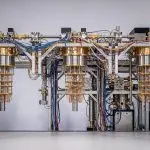
The convergence of high-performance computing and quantum processing is rapidly evolving, with several national initiatives now establishing integrated platforms to explore hybrid applications; the JHPC-quantum project in Japan stands out due to its scale and ambition. This initiative, funded by NEDO under Japan’s Ministry of Economy, Trade and Industry, recently selected 21 organizations, including Qunova Computing, for its Test User Program, granting them access to a uniquely powerful computational environment. Central to JHPC-quantum is the integration of two distinct, yet complementary, computing architectures: the Supercomputer Fugaku and an IBM Quantum System Two. This combination creates one of the world’s most comprehensive hybrid quantum-HPC environments, offering researchers an unprecedented ability to tackle complex problems that exceed the capabilities of either system alone. The platform also includes a trapped-ion quantum computer in Wako (Quantinuum “Reimei”), further expanding the range of quantum hardware available to program participants.
“It is a true privilege to be included in JHPC-quantum alongside many of Japan’s most distinguished research institutions and prominent corporations,”
Kevin Rhee, CEO of Qunova Computing



See today’s quantum computing news on Quantum Zeitgeist for the latest breakthroughs in qubits, hardware, algorithms, and industry deals.