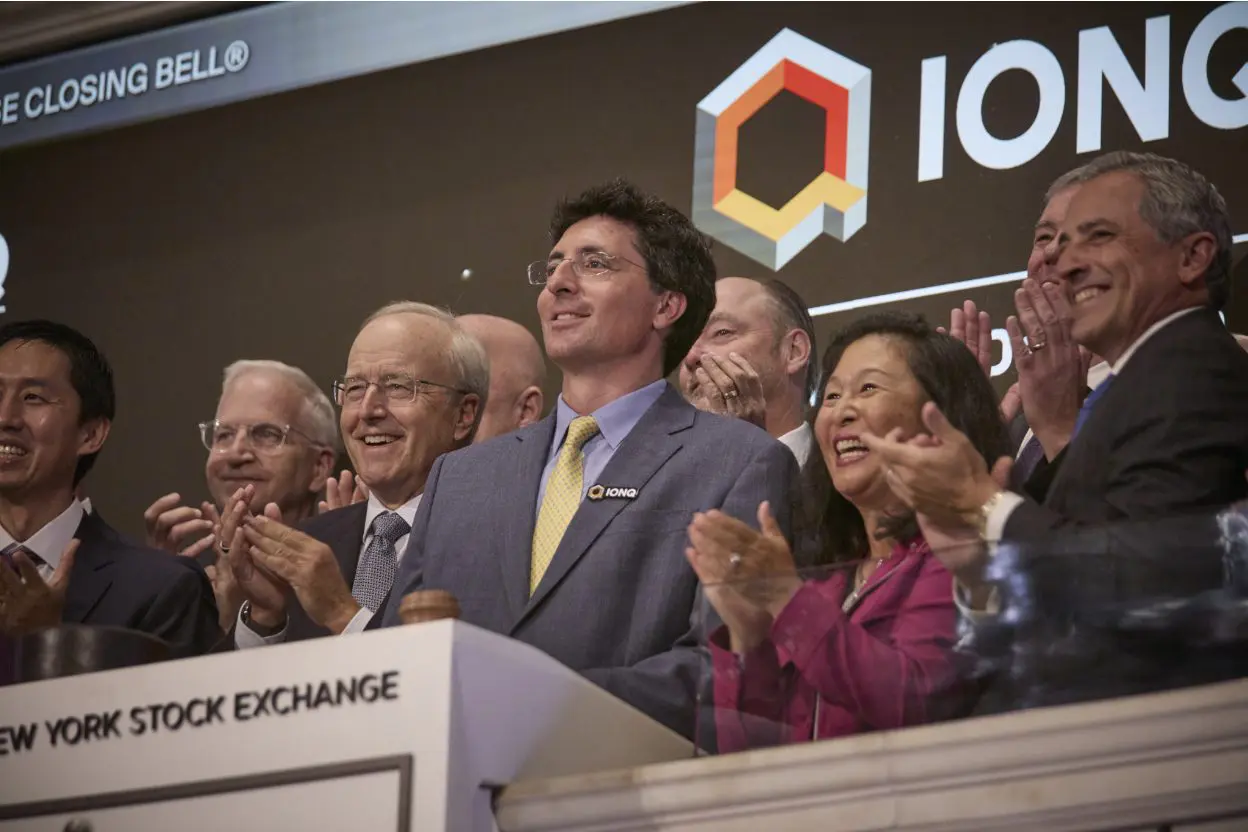
IonQ has raised its full-year 2026 revenue outlook to between $260 million and $270 million, signaling continued growth in the quantum computing sector following the completed acquisition of SkyWater Technology. At its Investor Day held at the New York Stock Exchange, the publicly traded company, founded in 2015 by Christopher Monroe and Jungsang Kim, detailed a strategy of vertical integration spanning computing, sensing, networking, and quantum-safe security. This integration, bolstered by SkyWater’s manufacturing capabilities, positions IonQ to deliver its Superion 256 system with initial customer deliveries scheduled for 2027.
Superion 256 Hardware: Scaling to Millions of Qubits
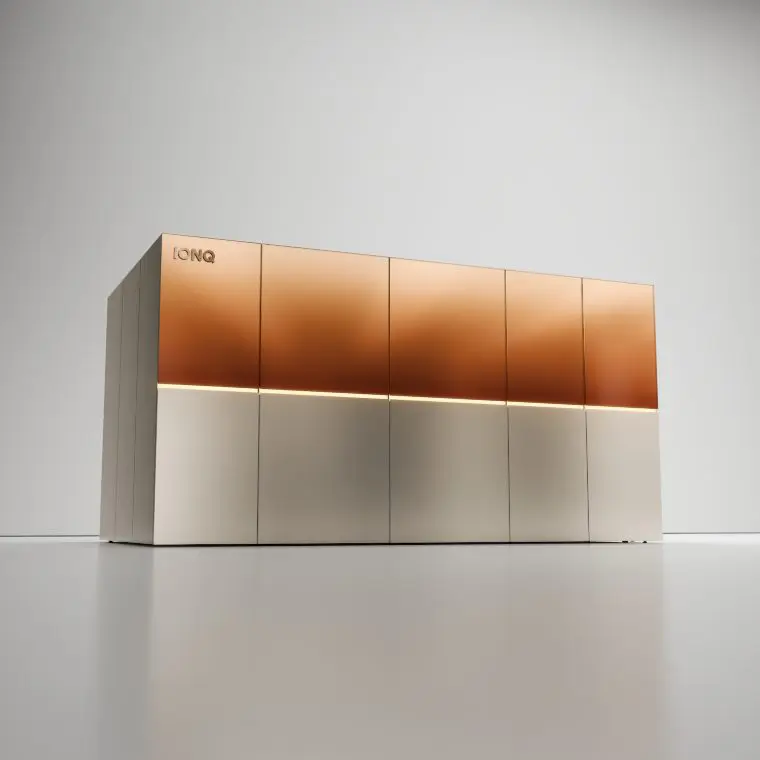
Superion 256 hardware represents a shift in IonQ’s strategy, moving beyond simply building quantum computers to establishing a fully integrated platform capable of scaling to millions of qubits. Initial customer deliveries of the flagship system are scheduled for 2027, a timeline enabled by architectural breakthroughs and the recent acquisition of SkyWater Technology.
Chris Ballance, IonQ President of Quantum Computing, explained the necessity for this redesign: “If we want to build out systems with orders of magnitude more qubits and deploy orders of magnitude more of them, which we definitely do, we need to radically simplify the platform.” This simplification is about accelerating the entire development cycle and increasing qubit count. A key innovation driving this scalability is Electronic Qubit Control, or EQC, originating from the acquisition of Oxford Ionics.
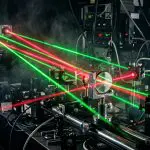
EQC replaces complex optical laser setups with chip-integrated classical electronics, reducing the cost per qubit by over 300x across IonQ’s roadmap while simultaneously enhancing system stability, the company says. “\[EQC] allows us to take out this whole middle layer of laser control, directly connecting our classical control electronics to our quantum chip, and build out these quantum chips in standard semiconductor ways,” Ballance stated.
Complementing EQC is the implementation of Quantum Multiplexed I/O and a “Walking Cat” architecture, allowing single unit cells to control dense qubit arrays and unifying error-correction codes into a streamlined compute fabric. The integration of SkyWater Technology is central to IonQ’s ambition to control the entire manufacturing process. The company has already demonstrated a significant acceleration in hardware iteration, reducing the 256-qubit product development cycle from nine months to just two.
This speed is further bolstered by a twelve-fold increase in wafer lot deliveries over a six-month period compared to previous third-party suppliers, according to IonQ. Currently, thousands of quantum wafers are in production at the SkyWater fab, with approximately one-third dedicated to IonQ hardware. Thomas Sonderman, CEO of SkyWater Technologies, emphasized the implications of this capacity: “Today, we have thousands, literally thousands, of quantum wafers running in our fab.
A third of those are tied to IonQ. What that means is we’re designing for manufacturability. When it’s time to run at scale, we will be ready.” Beyond hardware advancements, IonQ is also addressing the looming threat of quantum-enabled codebreaking. The company recently published a blueprint demonstrating how a 19,397-physical-qubit trapped-ion system could compromise 256-bit Elliptic-Curve signatures, the foundation of Bitcoin and blockchain security, in under 26 days.
Jordan Shapiro, IonQ President and GM of Quantum Platform, outlined the company’s response: “We offer customers quantum security posture management, or QSPM, which gives them visibility into their full infrastructure to determine where they are vulnerable to potential quantum attacks.” This is coupled with the deployment of NIST/CNSA 2. 0-compliant Post-Quantum Cryptography and Quantum Key Distribution, offering a multi-layered defense against future threats. An $8.18 million agreement with Congruity360 will deploy this quantum-safe network across the U.S., protecting enterprise data.
Niccolo de Masi, IonQ CEO, succinctly summarized the company’s unique position as both a pioneer in quantum computing and a provider of quantum security solutions: “You want a safecracker to be the one who builds your safe.” This dual focus, combined with the vertical integration achieved through the SkyWater acquisition, is driving financial momentum. “To have revenue, you’ve got to have a technical milestone that’s hit, a product that works, a customer that buys it, and of course, machines that are delivered that do useful things.
We’ve been doing that longer than anyone in our sector. We continue to do it, and of course, we’re doing it at an accelerating rate.” De Masi believes IonQ is only beginning to explore the possibilities of quantum computing, stating, “We believe we’re just scratching the tip of the iceberg here. There will be far more applications than we can think of in advance as our machines roll out, and far more exciting applications we hope will be created by people building businesses and doing research with our machines at arm’s length.”
Today, we have thousands, literally thousands, of quantum wafers running in our fab. A third of those are tied to IonQ. What that means is we’re designing for manufacturability. When it’s time to run at scale, we will be ready.


See today’s quantum computing news on Quantum Zeitgeist for the latest breakthroughs in qubits, hardware, algorithms, and industry deals.