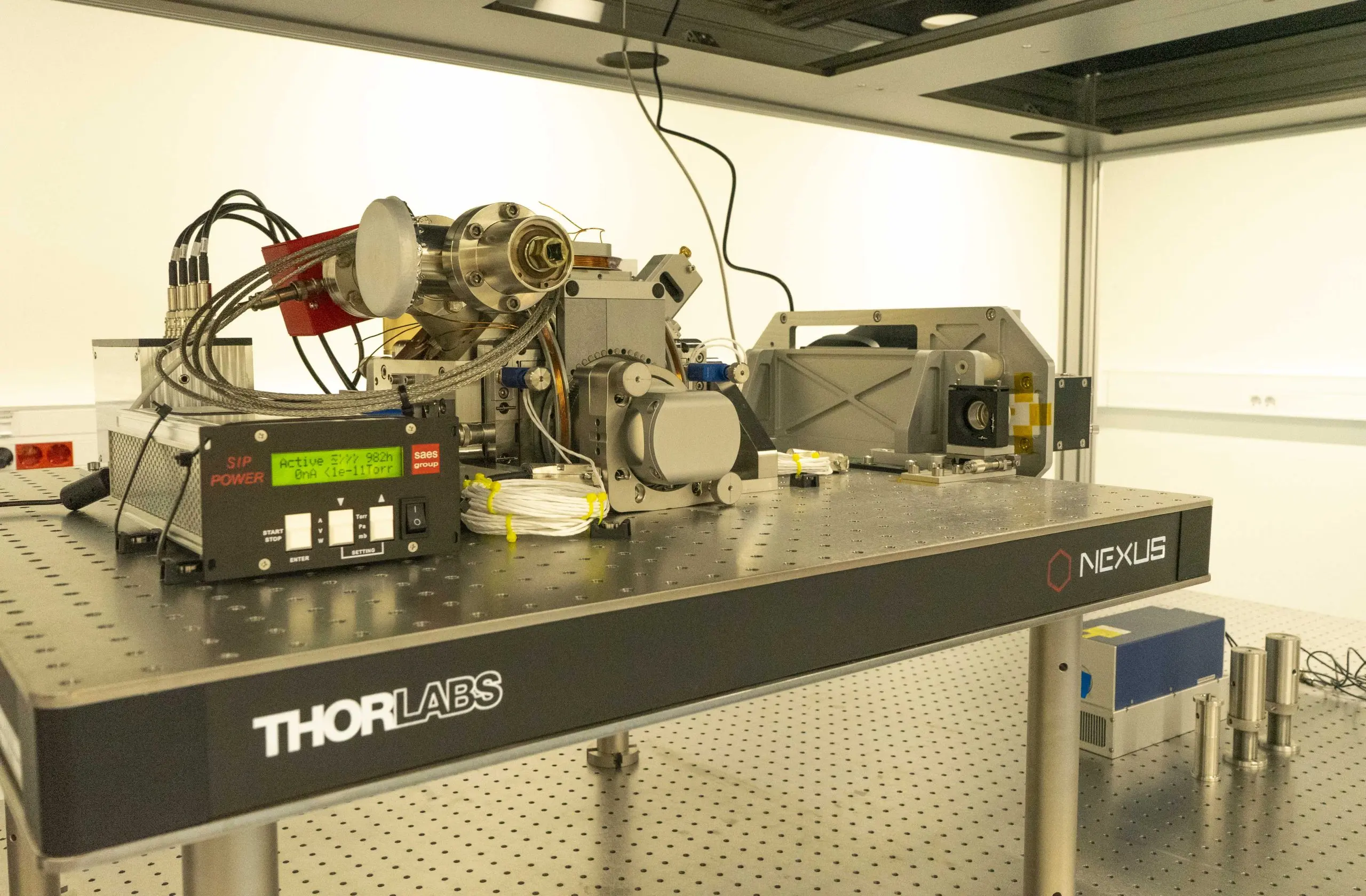
Forty-nine organizations from 15 countries are collaborating on HADRON-2030, a European project funded by the European Union’s Horizon Europe programme under Grant Agreement No. 101292522. The initiative unites experimental facilities like CERN, GSI/FAIR, and GANIL with theoretical and quantum computing resources to advance understanding of the strong force, a fundamental component of the Standard Model. A key contribution comes from the IGFAE-CESGA Quantum Computing Lab in Galicia, which will offer remote access to both CESGA’s quantum computer and IGFAE’s analogue quantum simulator, a unique facility within Spain.
HADRON-2030 Project Unites European Resources for Strong Force Study
This access extends beyond hardware, encompassing quantum emulation resources used for modelling particle interactions. The project’s structure is designed to open these infrastructures to a wider range of researchers, allowing them to select the optimal location for their specific investigations into the strong interaction, a fundamental pillar of the Standard Model of particle physics.
Beyond facilitating access to advanced computing and experimental setups, HADRON-2030 prioritizes training for the next generation of scientists. PhD students, postdoctoral researchers, engineers, and technical staff will all benefit from the initiative’s educational programs, supporting a deeper understanding of the forces governing matter at its most fundamental level.
See today’s quantum computing news on Quantum Zeitgeist for the latest breakthroughs in qubits, hardware, algorithms, and industry deals.