


Scientists have revealed a new regime where domain growth sharply exceeds nucleation in the dynamics of metastable states, a phenomenon central to diverse fields ranging from cosmology to quantum matter. Gregor Humar and colleagues at the Institute of Science and Technology Austria (ISTA), in collaboration with Technical University of Munich, Jülich Supercomputing Centre, Italy’s National Institute, CENN Nanocenter, University of Leeds, Jozef Stefan Institute, National Institute for Nuclear Physics (INFN), University of Cologne, University of Ljubljana, University of Padova, and Munich Centre for Quantum Science and Technology (MCQST) utilised a 4000-qubit quantum annealer to model a two-dimensional quantum Ising model, demonstrating resonant expansion of true-vacuum domains. The findings establish a growth-dominated regime of false vacuum decay and highlight the potential of large-scale quantum simulation to explore nonequilibrium dynamics relevant to quantum field theory, cosmology, and strongly correlated matter.
Quantum annealing simulates false vacuum decay via a two-dimensional Ising model
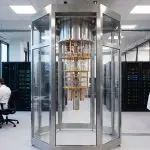
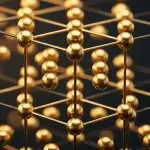
The technique at the heart of this work employed a quantum annealer, a specialised computational device engineered to identify the lowest energy state of a given system, containing over 4000 qubits, the quantum analogue of classical bits. This substantial number of qubits facilitated the modelling of a two-dimensional quantum Ising model, a simplified yet powerful mathematical representation of interacting magnetic spins, conceptually similar to a grid of microscopic compass needles exerting influence upon one another. The Ising model serves as a valuable proxy for understanding more complex physical systems exhibiting phase transitions and collective behaviour. This approach allowed the researchers to simulate a false vacuum decay, a process describing the transition of a system from a metastable, seemingly stable state to a genuinely stable, lower-energy state. By observing the rate at which new, stable regions, or domains, emerge and expand, the team could investigate the underlying dynamics of this transition. Crucially, the quantum simulation was complemented by classical tensor-network simulations and stochastic circuit modelling, providing a multi-faceted and comprehensive analysis of the system’s behaviour. Tensor-network simulations offer an efficient way to represent quantum states, while stochastic circuit modelling introduces controlled randomness to mimic real-world imperfections. The combination of these techniques allowed for robust validation of the quantum annealing results and a deeper understanding of the observed phenomena.
Resonant spin flips enable observation of ballistic domain growth in quantum simulations
A growth rate exceeding nucleation by over four orders of magnitude was observed in the simulated false vacuum decay, unlocking the study of dynamics dominated by domain expansion rather than initial bubble formation. Traditionally, research has focused almost exclusively on the nucleation process, the initial formation of stable domains, leaving the mechanisms governing subsequent growth largely unexplored. This imbalance hindered a complete understanding of the overall decay process. Researchers at ISTA and collaborating institutions observed this accelerated growth and established a new regime where resonant single-spin flips drive the expansion of stable domains. These resonant flips occur when the energy cost of changing a spin’s direction is minimised, allowing for rapid and efficient domain growth. The scientists identified resonances at field strengths corresponding to one, two, three, and four-spin flips, with the one-spin resonance being the most prominent, indicating that single-spin flips are the primary driver of expansion under these conditions. Nearly ballistic growth of true-vacuum domains was observed, meaning the domains expanded at a nearly constant speed, alongside sub-ballistic interface broadening, a slower widening of the boundary between the old and new states. This behaviour aligns with predictions from the Kardar-Parisi-Zhang (KPZ) universality class, a well-established theoretical framework for describing the dynamics of growing interfaces and rough surfaces. The KPZ class predicts specific scaling relationships between the growth rate, interface roughness, and other relevant parameters. The 4000-qubit quantum annealer enabled the creation of these resonant single-spin flips at the edge of a seeded bubble, providing crucial insight into the microscopic mechanisms driving rapid expansion and validating the connection to the KPZ universality class.
Domain growth surpasses nucleation in unstable system transitions
Researchers at ISTA and collaborating institutions have demonstrated a new understanding of how unstable systems transition to more stable states, focusing on the rapid expansion of these stable areas. This work challenges the long-held emphasis on the initial formation of these stable regions, known as nucleation, by revealing conditions where growth becomes the dominant factor. The implications of this finding extend beyond the specific system studied; it suggests that in many nonequilibrium processes, the dynamics may be governed by growth mechanisms rather than nucleation events. Simulations utilising a quantum annealer may not perfectly mirror all real-world scenarios, due to inherent limitations in current quantum hardware and the simplified nature of the Ising model, but this work remains a key advancement. The ISTA team’s work demonstrates that, under specific conditions, namely, when resonant spin flips dominate, the expansion of stable regions within an unstable system can dramatically outpace their formation. This finding is significant because it reveals resonant conditions where individual spin flips at the expanding boundary accelerate growth, aligning with established theoretical predictions for growing interfaces and offering a new perspective through which to view nonequilibrium dynamics. The ability to observe and control this growth-dominated regime opens up new avenues for exploring fundamental questions in cosmology, such as the fate of the universe, and in condensed matter physics, such as the behaviour of strongly correlated materials. Furthermore, the successful implementation of this simulation on a large-scale quantum annealer demonstrates the potential of quantum computing to tackle complex problems in nonequilibrium physics that are intractable for classical computers.
The researchers successfully demonstrated that, in an unstable system, the expansion of stable regions can occur much faster than their initial formation. This is achieved through resonant conditions where individual spin flips accelerate growth, a phenomenon observed using a quantum annealer with over 4000 qubits. The findings suggest that growth mechanisms, rather than nucleation, may dominate certain nonequilibrium processes. The team combined experiment with tensor-network simulations and stochastic circuit modeling to validate their observations and confirm alignment with Kardar, Parisi, Zhang universality.
👉 More information
🗞 Resonant false vacuum decay in two dimensions on a 4000-qubit quantum annealer
✍️ Gregor Humar, Jean-Yves Desaules, Luka Pavešić, Marko Ljubotina, Zlatko Papić, Kristel Michielsen and Jaka Vodeb
🧠 ArXiv: https://arxiv.org/abs/2606.25889


See today’s quantum computing news on Quantum Zeitgeist for the latest breakthroughs in qubits, hardware, algorithms, and industry deals.



