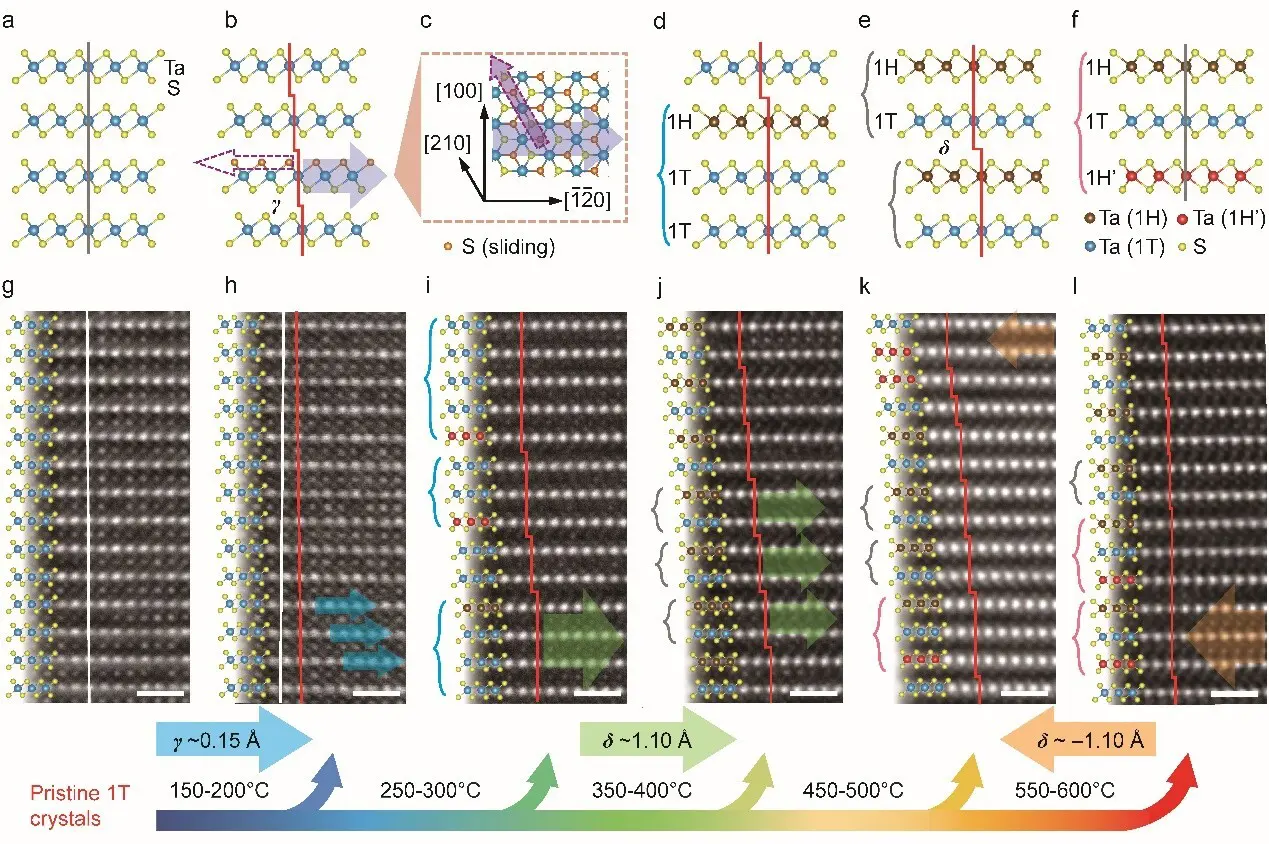
Hefei Institutes of Physical Science researchers have engineered periodic superlattice structures within bulk 1T-TaS2 crystals, addressing a longstanding challenge in controlling the quantum material’s charge-density waves, Mott insulating states, and superconductivity. The team, led by Assoc. CAO Liang, utilized a novel approach centered on controlled interlayer sliding to regulate quantum states in layered materials, effectively tuning the arrangement of atomic layers to design these superlattices and modify electronic properties. This work, conducted with collaborators from the Institute of Solid State Physics, Anhui University, and utilizing the Steady High Magnetic Field Facility, demonstrates that adjusting the stacking configuration can switch the insulating state between different electronic phases. The researchers propose that stacking sequences could serve as a structural ‘code’ for designing material properties, potentially enabling layered-material-based quantum devices.
A team led by Assoc. CAO Liang from the Hefei Institutes of Physical Science, Chinese Academy of Sciences, has demonstrated a method for manipulating quantum states within layered materials by exploiting controlled interlayer sliding. This approach builds upon earlier investigations, allowing for precise tuning of atomic layer arrangement to induce phase transitions and regulate electronic behavior. These resulting heterophase superlattices, containing distinct electronic phases arranged with control, exhibited unique superconducting states, highlighting the critical influence of stacking configuration on quantum properties.
Building on their previous work, the team created periodic superlattice structures in bulk 1T-TaS2 crystals by tuning the arrangement between atomic layers.
Researchers are now leveraging the inherent structural flexibility of van der Waals materials to engineer novel quantum states, moving beyond simple material composition as the primary control method. The team led by Assoc. CAO Liang found that layer sliding, combined with atomic rearrangement, can trigger transformations between different phases of TaS2, resulting in heterophase superlattices with controlled arrangements of distinct electronic phases. This establishes interlayer sliding as a powerful tool for quantum material design and holds promise for the development of layered-material-based quantum devices.



See today’s quantum computing news on Quantum Zeitgeist for the latest breakthroughs in qubits, hardware, algorithms, and industry deals.