

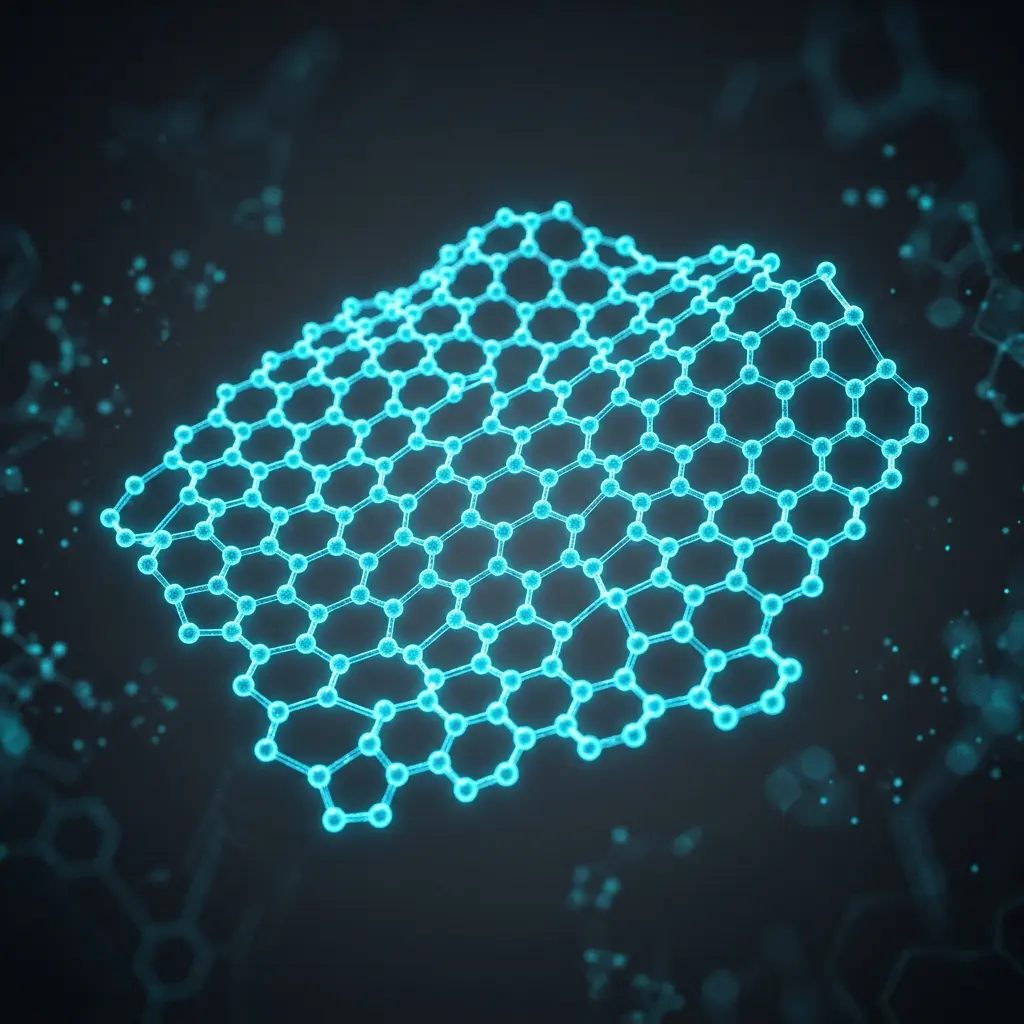
Researchers at Mohammed V University, led by Yassine Dakir, demonstrate that a triple-layer graphene (TLG) system embedded within a planar microcavity exhibits sensitivity to external parameters, thereby enabling control over quantum coherence, entanglement, and quantum memory effects. Their analysis, utilising time-dependent perturbation theory, reveals that manipulating the number of cutoff modes, layer positioning, momentum, and interlayer rotation angles allows precise control of these quantum correlations. The system offers a tunable platform for exploring vacuum-mediated quantum phenomena and a pathway towards advanced graphene-based photonic and optoelectronic devices.
Analytic solution unlocks tunable quantum coherence and entanglement in multilayer graphene
Entanglement measures now reach levels previously unattainable in planar graphene systems, with tripartite tangle values demonstrably sensitive to interlayer rotation angles. Previously, precise control over quantum correlations, coherence, entanglement, and non-Markovian memory effects was limited by the difficulty of analytically solving the complex dynamics within multilayer graphene structures. This exact analytic solution allows manipulation of these quantum resources via parameters such as the number of cutoff modes and the interlayer rotation angle, opening avenues for advanced graphene-based photonic and optoelectronic devices. The significance of this lies in the ability to move beyond simply observing quantum phenomena in graphene, towards actively engineering and controlling them for specific applications.
A tunable platform for exploring vacuum-mediated quantum phenomena is now available, offering a framework for manipulating quantum correlations and potentially enabling novel quantum technologies. Quantum coherence was quantified using the relative entropy of coherence (REC), revealing its sensitivity to the design of triple-layer graphene (TLG) structures embedded within microcavities. The REC provides a robust measure of the quantumness of a state, quantifying the distance between the given state and the closest incoherent state. Direct control over the number of cutoff modes, representing the range of electromagnetic wavelengths considered within the microcavity, influences the strength of quantum coherence. Increasing the number of cutoff modes effectively broadens the range of electromagnetic interactions, potentially enhancing the coupling between the graphene layers and thus affecting the coherence. This control is crucial as environmental noise typically degrades coherence, and careful management of these modes can mitigate such decoherence effects.
The spatial arrangement of graphene layers and the momentum parameter governing electron movement also provide avenues for tuning coherence levels, with the interlayer rotation angle proving particularly effective in generating entanglement. Specifically, the interlayer rotation angle alters the overlap of the electronic wavefunctions between adjacent layers, directly impacting the strength of the interlayer coupling and the resulting entanglement. The highest tripartite tangle values achieved represent a key advancement in quantum control, although current measurements focus on idealised conditions and do not yet demonstrate sustained coherence times necessary for complex quantum computations or practical device applications. The tripartite tangle is a specific measure of entanglement for three-partite systems, providing a quantitative assessment of the degree of correlation between the three graphene layers. Achieving high tangle values is essential for applications such as quantum information processing and secure communication. Increasingly, researchers are focused on using quantum effects within two-dimensional materials to create novel photonic and optoelectronic devices, but this work relies on time-dependent perturbation theory, an approach which inherently assumes weak coupling between the layers and the electromagnetic field.
The validity of this approximation remains an open question, despite the valuable insight offered by the analytic solution. Time-dependent perturbation theory is most accurate when the interaction strength is significantly smaller than the energy scales of the system. In scenarios where the coupling between the graphene layers and the electromagnetic field becomes stronger, higher-order perturbative corrections become increasingly important, and the single-perturbative approach may break down. Stronger coupling regimes, potentially yielding more substantial quantum effects, demand alternative theoretical frameworks, such as the development of non-perturbative methods or the use of more sophisticated quantum electrodynamic models, and may invalidate the current findings. Quantum correlations between graphene layers are mediated by the confined electromagnetic field, enabling control over subtle quantum properties. The microcavity acts as a resonator, enhancing the electromagnetic field and increasing the interaction strength between the graphene layers. Specifically, manipulating parameters like layer positioning allows precise tuning of quantum coherence, a measure of a system’s ability to maintain quantum states, and entanglement, a correlation between particles, potentially beginning a major era in graphene-based optoelectronics. The ability to tailor the electromagnetic environment within the microcavity is critical for optimising these quantum effects. This analysis of triple-layer graphene within a microcavity confirms the material’s potential as a highly adaptable platform for quantum technologies, offering a route to explore the implications of vacuum-mediated effects and refine theoretical models for stronger coupling scenarios. Further research will focus on extending these findings to more complex multilayer graphene structures and investigating the impact of environmental factors on the observed quantum phenomena, paving the way for the realisation of practical graphene-based quantum devices.
The potential applications of this research extend beyond fundamental quantum studies. Tunable quantum coherence and entanglement are essential ingredients for quantum computing, quantum communication, and quantum sensing. Graphene-based devices offer advantages such as miniaturisation, high carrier mobility, and compatibility with existing microfabrication techniques. The ability to control these quantum properties within a graphene platform could lead to the development of novel quantum sensors with enhanced sensitivity, secure communication protocols based on entangled photons, and compact quantum processors. Moreover, the understanding gained from this work can inform the design of new materials and structures for harnessing quantum effects in other two-dimensional systems, broadening the scope of quantum technologies.
Researchers demonstrated precise control over quantum coherence and entanglement within a triple-layer graphene system placed inside a microcavity. This control is achieved by adjusting parameters such as layer positioning and rotation angles, influencing the electromagnetic field and quantum correlations between the graphene layers. The study confirms that this system is highly tunable and offers a means to explore vacuum-mediated quantum phenomena. The authors intend to extend these findings to more complex graphene structures and investigate environmental impacts, furthering the development of graphene-based quantum devices.
👉 More information
🗞 Vacuum fluctuation induced quantum resource harvesting in triple-layer graphene
🧠 DOI: https://doi.org/10.1088/1361-648X/ae74a3



See today’s quantum computing news on Quantum Zeitgeist for the latest breakthroughs in qubits, hardware, algorithms, and industry deals.



