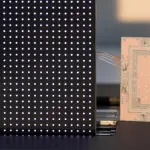
Researchers at the Ferdinand-Braun-Institut and Humboldt-Universität zu Berlin can now identify plastics in just 10 milliseconds using a compact, silicon-based spectrometer, potentially enabling rapid, on-the-go material analysis. The device employs mid-infrared light to swiftly characterize polymers. This advance complements FBH’s work in reconfigurable capacitor cells, which now achieve four selectable capacitance states within a single structure, reducing chip area for more flexible radio frequency circuits. FBH reports this innovation enables reliable, high-fidelity RF characterization as InP HBT architectures scale down to sub-micron emitter widths.
GaN Transistors Enhanced via Selective Doping and Novel Designs
Selective silicon doping guides the creation of stacked channels in GaN transistors, addressing a key limitation in current capacity, according to simulations conducted within the Joint Lab BTU-CS, FBH Microwave. Buried channels within these transistors are prone to depletion, hindering performance. However, the simulations demonstrate how targeted doping effectively populates these channels, enabling a four-channel tri-gate design.
FBH also reports advancements in radio-frequency transistor testing, achieving sub-2 µm probe positioning accuracy at frequencies up to 50 GHz. This precision is enabled by a new optically guided probing method combined with machine learning algorithms for image analysis, improving the reliability of on-wafer measurements.
Mid-Infrared Spectroscopy Enables Rapid Polymer Identification
Researchers at Ferdinand-Braun-Institut and Humboldt-Universität zu Berlin have developed a new compact, silicon-based spectrometer capable of distinguishing between different polymer types in milliseconds. This speed stems from using mid-infrared light to characterize polymers, a technique that allows for rapid material identification without complex sample preparation or lengthy analysis times. The system’s performance opens possibilities for deployment in portable sensing devices, extending spectroscopic analysis beyond the laboratory. Further demonstrating design versatility, the institute also reports advancements in photonic crystal surface emitting lasers, proposing a new unit cell design based on stretched isosceles triangles.
Simultaneously, simulations guiding the design of multichannel GaN tri-gate transistors demonstrate how selective silicon doping can populate channels in a four-channel design, addressing the issue of depletion in buried channels. These parallel developments highlight a broad focus on miniaturization and performance enhancement across multiple technological fronts.
Hermetic Sealing Solutions for Long-Life Far-UVC LEDs
Maintaining the long-term stability of far-ultraviolet LEDs presents a significant materials challenge; hermetic sealing, while protecting against degradation, can unexpectedly reduce optical power output. Ferdinand-Braun-Institut researchers have now identified the mechanism driving this reduction and developed a chip assembly approach to mitigate it, ensuring stable operation over extended periods. This innovation addresses a key obstacle to wider deployment of far-UVC LEDs in applications like disinfection and sterilization.
The team discovered that the hermetic packages, designed to shield the LEDs from moisture and reactive gases, can inadvertently accelerate optical power reduction through a complex interaction with the LED materials. By carefully controlling the assembly process, FBH has demonstrably prevented this effect. This control extends beyond simply preventing degradation; it actively preserves the initial light output over the LED’s lifespan.
Miniaturized Systems Advance Compact Quantum Sensing Technologies
FBH has developed compact diode laser modules emitting at 619 nanometers, a wavelength critical for both quantum technologies and industrial applications, addressing a demand for scalable light sources in these rapidly evolving fields. This development builds on the institute’s work in high-power diode lasers intended for fusion power plants, where robust III-V technology and wavelength stabilization are paramount for efficient and reliable pump technology. FBH has developed a miniaturized active optical dipole trap system incorporating a piezoelectric MEMS mirror for beam steering.
This enables dynamic time-averaged potentials for efficient atom trapping and manipulation in compact atomic quantum sensing applications. Further miniaturization efforts center on alkali vapor cells, a core component in integrated atomic devices, with FBH developing a technology for producing highly miniaturized versions to meet the demands of mobile applications like navigation and telecommunications.
Ion implantation techniques are being refined to define tunnel-junction apertures in vertical-cavity surface-emitting lasers (VCSELs) without oxidation, while modeling lateral proton straggle to extract reliable specific resistances across different designs. “We are advancing the miniaturization of photonic systems in quantum technologies,” the institute reports, highlighting a broad effort to reduce the size and complexity of essential quantum components.


See today’s quantum computing news on Quantum Zeitgeist for the latest breakthroughs in qubits, hardware, algorithms, and industry deals.