EV Group, a semiconductor equipment provider, is now directly addressing the manufacturing challenges of scaling quantum computers with its expertise in advanced packaging, heterogeneous integration and photonics manufacturing. The company announced this push in 2026, applying established semiconductor processes to help quantum chip developers increase qubit counts while maintaining performance. Achieving fault-tolerant quantum computing requires significantly more physical qubits for error correction, a hurdle EV Group aims to help overcome, the company says.
“Quantum computing is not a single technology, but a collection of fundamentally different approaches, each with its own materials and manufacturing requirements,” the company states. EV Group will showcase its quantum computing solutions at SEMICON Europa in Munich, Germany, November 10-13.
Advanced Packaging Enables Qubit Scaling for Quantum Systems
EV Group is applying its established expertise in advanced packaging, heterogeneous integration and photonics manufacturing to help customers develop and validate new product designs and manufacturing processes for increasingly complex quantum architectures. The company’s approach centers on enabling denser integration and improved performance of qubits, the fundamental building blocks of quantum computers, while mitigating the inherent challenges of error correction, according to EV Group.
The need for increased qubit density stems from the requirements of fault-tolerant quantum computing, where a large number of physical qubits are necessary to correct errors and achieve reliable computation. According to McKinsey & Company, quantum computing could generate up to $2.7 trillion of economic value globally by 2035, but realizing this potential hinges on overcoming these scaling hurdles.
EV Group addresses these challenges through a portfolio of process technologies including fusion and hybrid bonding, high-vacuum oxide-free bonding and thin-wafer processing, providing the precision needed for demanding wafer alignment and bonding requirements. They are refined and tailored to the specific materials and device structures used in various quantum architectures. Different quantum computing approaches, superconducting, photonic, spin, trapped-ion and others, each present distinct manufacturing challenges.
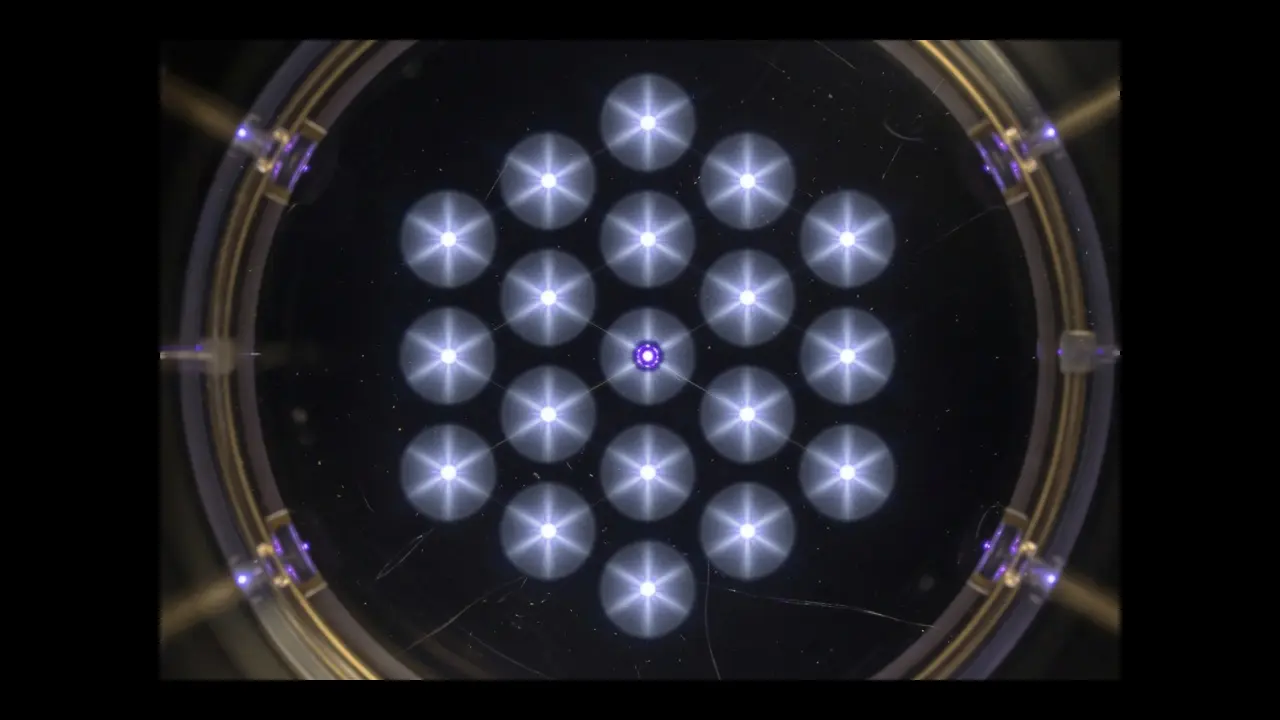
For instance, in photonic quantum devices, fusion and oxide-free bonding facilitate the integration of III-V and high-Pockels-coefficient materials onto waveguides. Hybrid bonding supports ultra-high-density interconnects vital for emerging spin qubit architectures. EVG’s collaboration with researchers on trapped ion quantum computing has yielded low-temperature metal bonding processes, enabling the integration of ion-trap and photonic chiplets constructed from dissimilar substrate materials.
Bernd Dielacher, director of business development at EVG, explained that as developers work to scale these technologies, the challenge is not simply increasing the number of qubits but finding ways to integrate them in increasingly complex chip architectures without compromising performance. The company’s Heterogeneous Integration Competence Center (HICC) and NILPhotonics Competence Center provide materials and process integration expertise to help quantum computing companies explore and validate new designs, the company says. This collaborative approach extends to partnerships with a developer of quantum photonic computing technology and participation in the CHAMP-ION pilot line project, Europe’s first open-access facility for industrial-scale production of ion-trap quantum chips.
These engagements demonstrate EVG’s commitment to advancing qubit integration, building on its established expertise in semiconductor and photonics manufacturing to address the specialized requirements of quantum hardware. Dr. Dielacher added that EVG’s broad portfolio of process solutions, combined with its experience in advanced packaging and heterogeneous integration, can help customers develop practical manufacturing solutions for a new generation of quantum devices. The company’s focus extends beyond simply increasing qubit counts; it aims to provide the manufacturing infrastructure necessary to build reliable, scalable and ultimately, commercially viable quantum computers.
Quantum computing is not a single technology, but a collection of fundamentally different approaches, each with its own materials and manufacturing requirements.
Dr. Bernd Dielacher, director of business development at EVG
See today’s quantum computing news on Quantum Zeitgeist for the latest breakthroughs in qubits, hardware, algorithms, and industry deals.