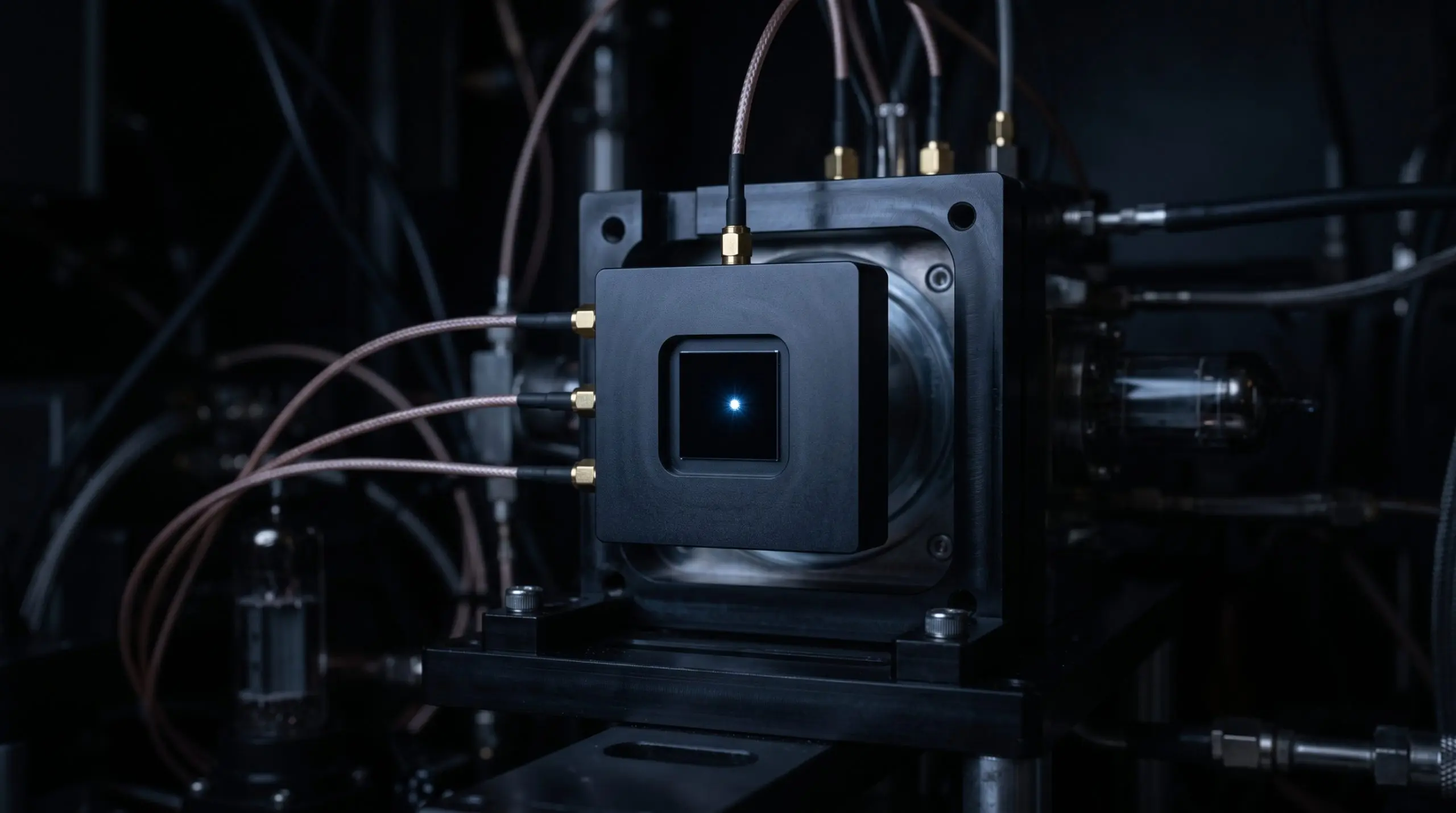
The Donostia International Physics Center (DIPC) is seeking a PhD candidate to explore a novel approach to particle detection using nitrogen-vacancy (NV) centres in diamond. This project investigates how these quantum sensors can map the tiny tracks of damage caused by particle interactions, potentially enabling detectors capable of measuring the direction of incoming particles.
The candidate will use numerical tools at the Centro de Física de Materiales (CFM) to theoretically study neutrino detection, linking measurements to underlying physics models with Monte Carlo simulations using Geant4 and SRIM/TRIM. The work is part of a collaboration between CFM and DIPC, offering access to neutron sources and irradiation facilities.
Diamond NV Centres for Neutrino and Dark Matter Detection
This directional sensitivity represents an advancement for the detection of rare events, such as those involving dark matter or low-energy neutrinos. The research, conducted at the Donostia International Physics Center (DIPC), focuses on harnessing the ability of NV centres to reveal strain patterns created when particles collide with the diamond’s atomic lattice. The prospective PhD candidate will be responsible for constructing a high-resolution NV sensing instrument, encompassing both the light detection electronics and a control system for the experimental apparatus.
Characterisation of the diamond’s response to neutron sources is also a key component of the work, alongside the design of optimised spin-control pulse sequences for enhanced strain sensing. Collaboration with external facilities will facilitate controlled neutron irradiation of diamond samples, allowing for evaluation of the detection capabilities using the newly developed methods.
These simulations will allow researchers to understand the extent of damage caused by particle collisions and refine the sensitivity of the detection system. The Neutrino Group at DIPC, founded in 2018 by Ikerbasque Professor J.J. Gómez Cadenas, currently comprises three Ikerbasque Professors, one Ikerbasque Associate Professor, one Ikerbasque Fellow, eight postdoctoral researchers, ten PhD students and eight electrical and mechanical engineers.
The group currently leads the NEXT experiment at the Canfranc Underground Laboratory and the νESS coherent neutrino scattering programme at the European Spallation Source, and also participates in Hyper-Kamiokande, BOLD and CRYSP. Funding for the group’s work comes from several European Research Council (ERC) grants, including BOLD, ESSCEvNS Advanced and GanESS Starting.
The CFM’s quantum technologies team will contribute to the development and optimisation of the NV centre-based detection system. The project’s scope extends beyond the development of the sensor itself; the candidate will also be expected to apply the new methods to evaluate the detection capabilities of the system. This evaluation process will involve analysing samples subjected to controlled neutron irradiation, allowing for a direct assessment of the sensor’s performance.
Applicants are expected to possess a degree in Physics, Engineering, or a related field, with experience in areas such as electronics, instrumentation, optics, photonics, quantum physics, or particle physics and detector simulation being considered valuable. Programming skills in languages like Python or C++, an interest in experimental work, the ability to collaborate within a team, and strong English communication skills are also desirable qualities.
The DIPC provides a highly stimulating research environment and unique professional career development opportunities, and welcomes applicants regardless of age, disability, gender, nationality, ethnicity, religion, sexual orientation, or gender identity. Interested candidates must submit an updated CV, a letter of statement of interest, and two reference letters to the application email listed, referencing the specific opening in the subject line. According to the application instructions, “Even though the deadline is February 26, it may be extended until the position is filled.”
See today’s quantum computing news on Quantum Zeitgeist for the latest breakthroughs in qubits, hardware, algorithms, and industry deals.