Xinru Tang of the University of Basel and colleagues demonstrate that the choice of entangling operation is a “first-order design decision” as quantum processors scale and correlated noise limits multiqubit gate fidelity. The research reveals that CZ and gates display a pronounced resilience to this spatiotemporally correlated noise when compared to the SWAP gate in semiconductor spin qubits.
This hierarchy stems from how each gate redistributes noise-sensitive channels, holding true for common low-frequency noise profiles like 1/f and Lorentzian. The work provides a framework to translate measured noise into quantitative error budgets for scalable quantum architectures.
Correlated Noise Impacts Multiqubit Gate Fidelity
This finding establishes the selection of an entangling operation as a primary consideration in quantum processor design as systems scale and correlated noise becomes a limiting factor. This analysis quantifies how different correlation structures contribute to errors, identifying that certain types of correlated noise can diminish gate fidelity to a degree comparable to, or even exceeding, that caused by local noise, while others have a negligible effect.
Specifically, the research demonstrates that the resilience hierarchy holds true for noise spectra dominated by both 1/f and Lorentzian profiles, indicating the findings are not limited to a single type of low-frequency noise but apply to common noise characteristics found in quantum systems.
The study’s general expression for average gate infidelity considers the coherent dynamics of the gate itself, which shapes the spectral window through which correlated fluctuations enter, and is valid for generic multiqubit systems and various system-environment coupling structures. The authors state in their report, “These results follow from a general expression for the average gate infidelity under arbitrary spatiotemporal noise correlations.” The team’s evaluation focused on regimes where other control errors are minimized through techniques like pulse shaping and dynamical decoupling, allowing them to isolate the impact of correlated noise. Their formula for quantum gate fidelity, detailed in the report, assesses the average gate fidelity of an operation generated by the qubit-qubit interaction, accounting for the quantum channel describing the noisy implementation.
The analysis reveals that contributions from spatially correlated frequency noise can, in some cases, be negative, though they remain bounded by the effects of local noise, ensuring overall infidelity remains positive. Recent experiments reveal that these different noise correlations often exhibit complex temporal structures and can be comparable in magnitude, fully captured by their equation. This is particularly relevant as quantum processors increase in complexity, as correlated noise becomes more prominent than previously assumed.
The work highlights that the choice of gate is a “first-order design decision” with significant implications for overall system performance. This resilience, however, does not imply immunity. Correlated fluctuations of the exchange interaction can still degrade performance to a level comparable to local noise, emphasizing the need for careful noise characterization and mitigation strategies. The framework developed by the team provides a concrete design principle for selecting entangling operations in scalable quantum architectures.
CZ and √(iSWAP) Gates Resist Correlated Noise
The choice between entangling operations in quantum computing isn’t simply a matter of ease of implementation; specific gates demonstrate a marked ability to withstand noise that plagues increasingly complex processors. The team’s analysis reveals that the SWAP gate activates a larger number of noise-sensitive channels, rendering it more susceptible to correlated fluctuations than either the CZ or operations. This difference originates from the structure of transition amplitudes, where the SWAP gate’s operation makes it uniquely vulnerable.
This dividing line aligns with the entangling character of the gates: the non-entangling SWAP gate falters, while the entangling CZ and gates maintain resilience. The researchers observed that the decay rates of interaction noise differ significantly between gates and noise channels.
Specifically, the interaction-noise contribution diminishes more rapidly for the CZ and gates than for the SWAP gate, because their filter functions sample noise at frequencies where the Lorentzian spectrum rolls off. Conversely, the SWAP gate’s filter concentrates at zero frequency, where the Lorentzian spectrum remains flat and largely unaffected by the correlation time. The team’s work extends beyond specific noise profiles, demonstrating that the underlying principles apply to both spatially correlated Lorentzian noise and local noise.
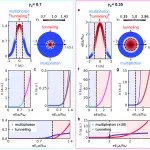
For local noise, the filter functions of all three gates are similarly affected, resulting in comparable reductions in infidelity. However, under correlated Lorentzian noise, the CZ and gates maintain a clear advantage. The researchers illustrate this with plots showing normalized total filter functions and contributions from interaction noise, highlighting the differing behavior of each gate at various operating points.
Parameters used in the plots included J = 1, = 10, τ = π/J and = 100τ, with specific settings for each gate to demonstrate the effect. The researchers state, “We have shown that spatiotemporally correlated noise makes multiqubit gate fidelity strongly gate-dependent,” solidifying the importance of gate selection in the pursuit of robust quantum computation. The framework developed provides a means to assess the average gate infidelity under a wide range of noise conditions, offering a valuable tool for designing future quantum processors.
Gate-Dependent Filter Function Quantifies Noise Infidelity
The average gate infidelity in multiqubit systems arises from a spectral overlap between noise correlations and a gate-dependent filter function, revealing how coherent gate dynamics shape susceptibility to fluctuations. This framework, detailed in recent work, establishes a quantitative method for characterizing multiqubit gate operations exposed to both spatially and temporally correlated noise, going beyond standard error models that assume independent errors.
The analysis quantifies the impact of various correlation structures and identifies the dominant contributions to error accumulation in multiqubit gates, allowing for a more precise understanding of noise’s influence. The derived expression for average gate fidelity incorporates an effective filter function that accounts for arbitrary spatial correlations and temporal spectra, operating under the condition that the system-environment coupling remains weak.
Algebraic manipulation yields a formula for average gate infidelity, expressed as a trace over the system Hilbert space and incorporating the noise correlation function, which encodes non-Markovian effects through its temporal structure. This allows researchers to move beyond simplified noise models and account for the complex interplay between system dynamics and environmental fluctuations. The resulting infidelity is expressed in the frequency domain, highlighting the importance of the noise spectrum in determining gate performance.
Examining the specific case of 1/f noise, characterized by a spectrum inversely proportional to frequency, reveals that the average gate infidelity for a generic two-spin system is dependent on the noise amplitude, a reference time scale, and transition amplitudes between qubit states. However, the effective filter functions for each gate, CZ, SWAP and , differ significantly, explaining the observed resilience of certain gates to correlated noise.
This difference in filter function response is critical for understanding the hierarchy of gate performance. However, the interaction noise, arising from fluctuations in the exchange interaction, displays a non-monotonic dependence on the gate operating point. Initially decreasing, it reaches a minimum at a specific angle before rising again, indicating a complex interplay between gate control parameters and noise sensitivity. The zero-frequency weight of the interaction noise is particularly sensitive to the gate angle, influencing the overall infidelity.
Similar suppression operates when transitioning from the SWAP gate to the gate, further highlighting the resilience of these entangling operations. This means that careful selection of gate parameters can mitigate the effects of correlated noise and improve the reliability of quantum computations. The study’s conclusion highlights that the entangling CZ and gates are markedly more resilient to correlated noise than the SWAP gate, offering a pathway toward more robust and scalable quantum computing architectures.
Low-Frequency Noise Spectra and Gate Performance
This redistribution is particularly effective against common noise profiles, including 1/f and Lorentzian spectra, suggesting the resilience isn’t limited to a specific type of noise. The framework developed allows for a detailed examination of how different gate operations interact with noise. For instance, both the large-detuning regime of the CZ gate and the large-rotation regime of the gate actively shift noise-sensitive channels away from zero frequency, where the spectral weight of low-frequency noise is concentrated.
This suppression mechanism isn’t exclusive to 1/f noise; it extends to any spectrum dominated by low-frequency weight, including Lorentzian profiles, commonly observed in solid-state qubit platforms. The researchers modeled the contributions from local and interaction noise using parameters including J = 1, = 10 and τ = π/J, allowing for detailed simulations.
👉 More information
🗞 Resilience of Entangling Gates to Spatiotemporally Correlated Noise
✍️ Xinru Tang, Sander Driessen, Jelena Klinovaja and Daniel Loss (Department of Physics, University of Basel, Klingelbergstrasse 82, Basel, Switzerland); Ji Zou (Physics Department, King Fahd University of Petroleum and Minerals, Dhahran, Saudi Arabia); Stefano Bosco (QuTech, Delft University of Technology, Lorentzweg 1, Delft, The Netherlands)
🧠 ArXiv: http://arxiv.org/abs/2611.31114v1

See today’s quantum computing news on Quantum Zeitgeist for the latest breakthroughs in qubits, hardware, algorithms, and industry deals.