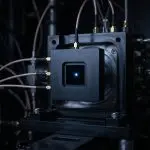
IQM became the first European quantum computing company to go public in July, listing on both The Nasdaq Stock Market and Nasdaq Helsinki, a move signaling growing investor confidence in the sector. Since spinning out of Aalto University and VTT Technical Research Centre of Finland in 2018, IQM has sold more on-premises quantum computers than any other manufacturer.
The company asserts that the recently proposed EU Quantum Act “is the right kind of act,” treating quantum as an industry to be built rather than a technology to be prematurely regulated. IQM believes the framework prioritizes the correct elements for scaling a quantum firm in Europe, including fault-tolerant computing and integration with existing supercomputing infrastructure.
EU Quantum Act Prioritizes Industrialization Over Premature Regulation
The company views the Act’s emphasis on industrialization as a critical advantage for European quantum firms, diverging from approaches that prioritize early-stage technology regulation. The Act’s structure prioritizes elements essential for growth, including infrastructure development, public procurement strategies and workforce training initiatives. This focus on practical implementation, according to IQM, addresses key challenges faced by quantum companies seeking to expand within Europe.
IQM believes the Act’s approach will support a more supportive environment for future quantum businesses and intends to collaborate with the European Commission, Parliament and the Council to ensure the Quantum Act’s successful implementation. Dr. Goetz stated, “We look forward to working with the Commission, Parliament and the Council to make the Quantum Act a success.”
IQM’s Early Lead in European Quantum Computer Sales
IQM Quantum Computers has deployed more on-premises quantum systems than any other manufacturer, a position bolstered by the recently proposed EU Quantum Act. Rather than focusing on regulating immature technology, the proposal establishes a framework designed to support industrial growth. Goetz highlighted the company’s commitment to shaping the future of quantum computing in Europe. The company’s delivery of a greater number of quantum systems than its competitors positions it to contribute meaningfully to this effort and to benefit from the Act’s provisions.
Fault-Tolerant Qubit Goals and Ecosystem Resilience by 2030
The European Quantum Act prioritizes measuring logical performance with a target of approximately 100 error-corrected qubits by 2030, shifting focus from simply increasing raw physical qubit counts. This metric, according to IQM, reflects a commitment to building practical quantum computers capable of running useful workloads rather than pursuing theoretical maximums. The Act’s emphasis on fault tolerance directly addresses a critical hurdle in scaling quantum technology, acknowledging that error correction is paramount for reliable computation.
An anchor-investor vehicle, an instrument able to join secondary rounds or a strengthened Scaleup Europe Fund would allow European investors to stay with the companies they helped build. “These funds must also be able to invest into stock-listed companies, where Europe’s funding ecosystem is thinnest,” IQM asserts, highlighting the need for sustained financial support as companies scale. By rewarding security of supply, interoperability and lifecycle support in procurement processes, the Act aims to create a more resilient and self-sufficient European quantum industry.
Securing Quantum Funding and European Foundry Development
Allowing the European Commission to invest alongside Member States and private capital could provide important support during scaling phases, ensuring European companies remain operational within the region. The effectiveness of this funding hinges on sufficient capitalization and the ability to invest at a scale commensurate with the needs of leading European quantum firms. Increased European capital backing will solidify the long-term presence of these companies on the continent, encouraging innovation and growth.
The plan also acknowledges the importance of fabrication and packaging, referencing the EU’s Chips Act 2.0 for industrial-scale chip manufacturing. IQM notes a current lack of strong industry contributions to quantum chips within Europe, with privately built chip factories like their own remaining relatively rare, the company says. First-of-a-kind eligibility for quantum chips under the Chips Act 2.0 would establish a clear pathway for a European quantum foundry, mirroring the foundry capacity currently under development in the United States.
Source: https://iqm.tech/blog/the-eu-quantum-act-gets-europes-quantum-plan-right-now-lets-make-it-work/

See today’s quantum computing news on Quantum Zeitgeist for the latest breakthroughs in qubits, hardware, algorithms, and industry deals.