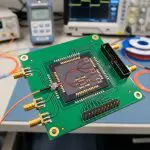
A new approach to detecting alternating current (AC) magnetic fields has been achieved by Ryohei Dokai of Chuo University and colleagues. The team’s continuous-wave optically detected magnetic resonance (CW-ODMR) scheme, utilising nitrogen-vacancy (NV) centres in diamond, overcomes bandwidth limitations previously found in this type of sensor. Theoretical analysis and simulations reveal the potential to detect AC magnetic fields at frequencies up to 100MHz, sharply exceeding the capabilities of conventional CW-ODMR methods and enabling broader applications in high-frequency magnetic field measurement.
Microwave manipulation of diamond defects extends magnetic field detection to 100MHz
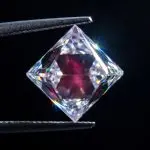
Detecting alternating current (AC) magnetic fields up to 100MHz represents a substantial leap forward, exceeding the few MHz limits of conventional continuous-wave optically detected magnetic resonance (CW-ODMR) techniques. A new scheme utilising microwave-driven dressed states achieved this broadened bandwidth, effectively manipulating the energy levels of nitrogen-vacancy (NV) centres within diamonds. These centres act as nanoscale sensors responsive to magnetic fields, and theoretical analysis alongside numerical simulations confirm the viability of this approach. The nitrogen-vacancy centre arises from a nitrogen atom substituting a carbon atom in the diamond lattice, adjacent to a vacancy, creating a point defect with unique quantum properties. The electronic spin of this defect is highly sensitive to its surrounding magnetic environment, making it an ideal candidate for magnetic field sensing.
This demonstrates a clear pathway to characterise magnetic fields at frequencies previously inaccessible with CW-ODMR, unlocking potential applications in diverse fields like high-frequency materials characterisation and advanced biological imaging, where rapid magnetic field measurements are essential. Detailed numerical simulations, utilising the QuTiP Python library, validated the broadened bandwidth, reaching up to 100MHz and accurately modelling the quantum dynamics of nitrogen-vacancy (NV) centres in diamond. Increasing the control-microwave strength to 200.0MHz broadened the detectable frequency range and shifted resonance frequencies as predicted by theoretical calculations. Dips in the ground-state occupation were observed near 17MHz and 23MHz with a 6.0MHz control field, and analysis also demonstrated a quadratic relationship between signal intensity and magnetic field amplitude, aligning with predictions from Fermi’s golden rule, a principle governing transition probabilities in quantum mechanics. Fermi’s golden rule describes the rate of transitions between quantum states due to a perturbation, in this case, the AC magnetic field. The quadratic relationship confirms that the signal strength is directly proportional to the square of the magnetic field amplitude, a crucial characteristic for accurate field quantification. While these results show the potential for high-frequency AC magnetic field sensing, the simulations assume ideal conditions and do not yet account for the significant challenges of maintaining coherence and signal fidelity in real-world, noisy environments. Maintaining quantum coherence, the preservation of quantum superposition, is particularly susceptible to environmental noise such as temperature fluctuations and electromagnetic interference, which can lead to decoherence and signal degradation. Further research will need to address these challenges through techniques like dynamical decoupling and improved shielding.
Expanding bandwidth unlocks dynamic magnetic field sensing with diamond NV centres
Diamond’s nitrogen-vacancy (NV) centres offer exciting potential as nanoscale magnetic field sensors, promising applications spanning medical imaging to materials science. Realising practical devices, however, requires overcoming the limitations of current techniques, which struggle to detect rapidly changing fields. The expanded 100MHz bandwidth significantly enhances the capability to characterise dynamic magnetic fields, key for advancements in areas like materials science and biological research, by allowing for more precise measurements of fluctuating fields. Conventional CW-ODMR relies on detecting the resonance frequency of the NV centre, which is sensitive to the static component of the magnetic field. However, this method is limited in its ability to resolve rapidly changing fields because the resonance frequency shifts slowly compared to the frequency of the AC field. The microwave-driven dressed states technique overcomes this limitation by creating a superposition of quantum states, effectively broadening the range of frequencies that can be detected.
The simulations explored the impact of varying control-microwave strength on resonance frequencies and signal intensity, revealing a predictable relationship governed by Fermi’s golden rule and providing insights into optimising sensor performance. This work expands the bandwidth of nanoscale magnetic field sensors, utilising nitrogen-vacancy (NV) centres within diamonds. Employing microwave-driven dressed states, researchers have theoretically demonstrated detection of alternating current (AC) magnetic fields up to 100MHz, a significant improvement over previous limitations. This broadened detection range opens new possibilities for applications requiring dynamic field characterisation, such as monitoring rapidly changing phenomena in biological systems or analysing the properties of novel materials under varying magnetic conditions. In materials science, this could facilitate the real-time analysis of magnetic domain dynamics in advanced materials, while in biological imaging, it could enable the tracking of neuronal activity with higher temporal resolution. The technique’s potential extends to non-destructive evaluation of electronic devices, identifying defects and hotspots by mapping high-frequency magnetic field distributions. Furthermore, the ability to detect AC magnetic fields at such high frequencies could contribute to the development of novel magnetic resonance imaging (MRI) techniques with improved sensitivity and resolution. The use of diamond as a sensor material offers advantages such as its chemical inertness, thermal conductivity, and biocompatibility, making it suitable for a wide range of applications. However, challenges remain in fabricating high-quality diamond samples with a sufficient density of NV centres and in integrating these sensors into practical devices.
Researchers demonstrated a new method for detecting alternating current magnetic fields using nitrogen-vacancy centres in diamond. This technique, employing microwave-driven dressed states, successfully broadened the detectable frequency range up to 100MHz, exceeding the limitations of conventional methods. This wider bandwidth allows for the characterisation of rapidly changing magnetic phenomena in areas such as materials science and biological systems. The authors suggest further work is needed to improve diamond sample quality and sensor integration for practical applications.
👉 More information
🗞 Broadband AC Magnetic Field Sensing via Continuous wave optically detected magnetic resonance with NV Centers in diamond
🧠 ArXiv: https://arxiv.org/abs/2606.05928

See today’s quantum computing news on Quantum Zeitgeist for the latest breakthroughs in qubits, hardware, algorithms, and industry deals.