Innovate UK, part of UK Research and Innovation and the UK National Quantum Technologies Programme are hosting an event for businesses, researchers, investors and policymakers. The showcase aims to help promising technologies become investable businesses and forge partnerships for wider adoption, with exhibitors like Siloton demonstrating how chip-based photonics could make retinal disease monitoring more accessible. Organisers state the event will explore how rapidly advancing technologies could deliver the most impact.
Siloton’s Chip-Based Photonics Advances Accessible Healthcare Imaging
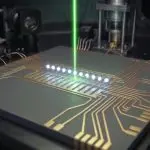
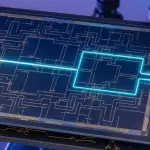
Siloton’s technology shrinks the components of retinal imaging onto a photonic chip measuring less than a pound coin, potentially revolutionizing how and where eye disease is monitored. The company has already completed initial trials with patients, successfully capturing retinal images using a handheld prototype device designed for ease of use. This compact design contrasts with traditional, bulky scanning equipment. Siloton intends its innovation to address a practical healthcare challenge by enabling regular checks without the need for specialist facilities, Delta.g says.
The core of Siloton’s approach lies in compressing optical components onto the chip, a feat that could significantly lower the cost of advanced imaging. The company states that healthcare and life sciences offer opportunities ranging from more sensitive measurements to new approaches to drug discovery, highlighting the broader implications of its work. Delta.g’s parallel development of quantum sensing for subsurface mapping demonstrates a similar trend toward practical application across multiple sectors.
Delta.g’s Quantum Gravity Sensors Map Subsurface Infrastructure
Delta.g’s quantum gravity sensors recently demonstrated the detection of an underground object under outside conditions, a feat that moves the technology closer to real-world deployment. The University of Birmingham spin-out is now refining sensors that measure subtle changes in gravitational fields to reveal subsurface features, offering a non-destructive method for infrastructure assessment. This capability is particularly valuable for construction, transport and utility companies where hidden structures and voids can cause project delays and increased costs.
The technology promises to deliver improved spatial intelligence before excavation begins, allowing teams to assess ground conditions with greater confidence. Delta.g’s sensors are not limited to civil engineering. The company highlights relevance to subsurface data requirements within the defense sector, demonstrating a broadening scope for quantum sensing applications, according to the company. This development illustrates a trend toward practical application of quantum technologies beyond the well-publicized advances in computing and communications.
While quantum computing presents both opportunities and challenges for cybersecurity, Delta.g’s work focuses on a different, immediate need: understanding what lies beneath the surface. The company’s approach builds on fundamental research, but is now geared toward providing a tool for industries facing tangible challenges, and is one example of how quantum technologies could transform a range of sectors including infrastructure.
ORCA Computing Integrates Quantum Systems with AI Workflows
ORCA Computing’s systems now operate within Digital Realty’s Innovation Lab in London, establishing a testbed for hybrid quantum-classical computing workflows. This integration moves beyond theoretical exploration, allowing organizations to assess how quantum resources can augment existing high-performance computing infrastructure. The company’s approach deliberately avoids a complete replacement of conventional systems, instead focusing on identifying specific areas where quantum processing can enhance broader computational tasks. This strategy is particularly relevant for businesses evaluating practical pathways to adopt quantum technology.
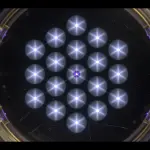
Originating from research at the University of Oxford, ORCA Computing is applying its photonic quantum computers to generative AI and life sciences, including investigations into protein and peptide design. This focus demonstrates a shift toward targeted applications, moving beyond the broad promise of quantum computing to address specific challenges in complex fields.
The company’s work highlights a growing recognition that quantum systems may not solve all computational problems, but can offer substantial benefits when integrated into existing workflows, the company says. Beyond computing, Delta.g’s quantum sensing technology is finding relevance in the defense sector, providing subsurface data capabilities.
Telecoms businesses are also exploring quantum technologies for secure communications, precise timing and network synchronisation, capabilities that could bolster the resilience of critical infrastructure. Visitors to the UK National Quantum Technologies Showcase can explore these developments and discuss how emerging capabilities relate to their organization’s security needs, supporting connections between technology developers, investors and potential end-users.

See today’s quantum computing news on Quantum Zeitgeist for the latest breakthroughs in qubits, hardware, algorithms, and industry deals.