Researchers led by Yue Luo of the University of Electronic Science and Technology of China have transmitted entangled quantum keys and classical data simultaneously over an 18-kilometer hollow-core fiber link. The demonstration achieves a theoretical data capacity of 2.3 terabits per second alongside quantum key distribution. During 24 hours of continuous operation, the system maintained an average secret key rate of 10.56 kilobits per second, indicating stable performance for future quantum networks.
Hollow-Core Fiber Enables 18km Entanglement-Based Quantum Key Distribution
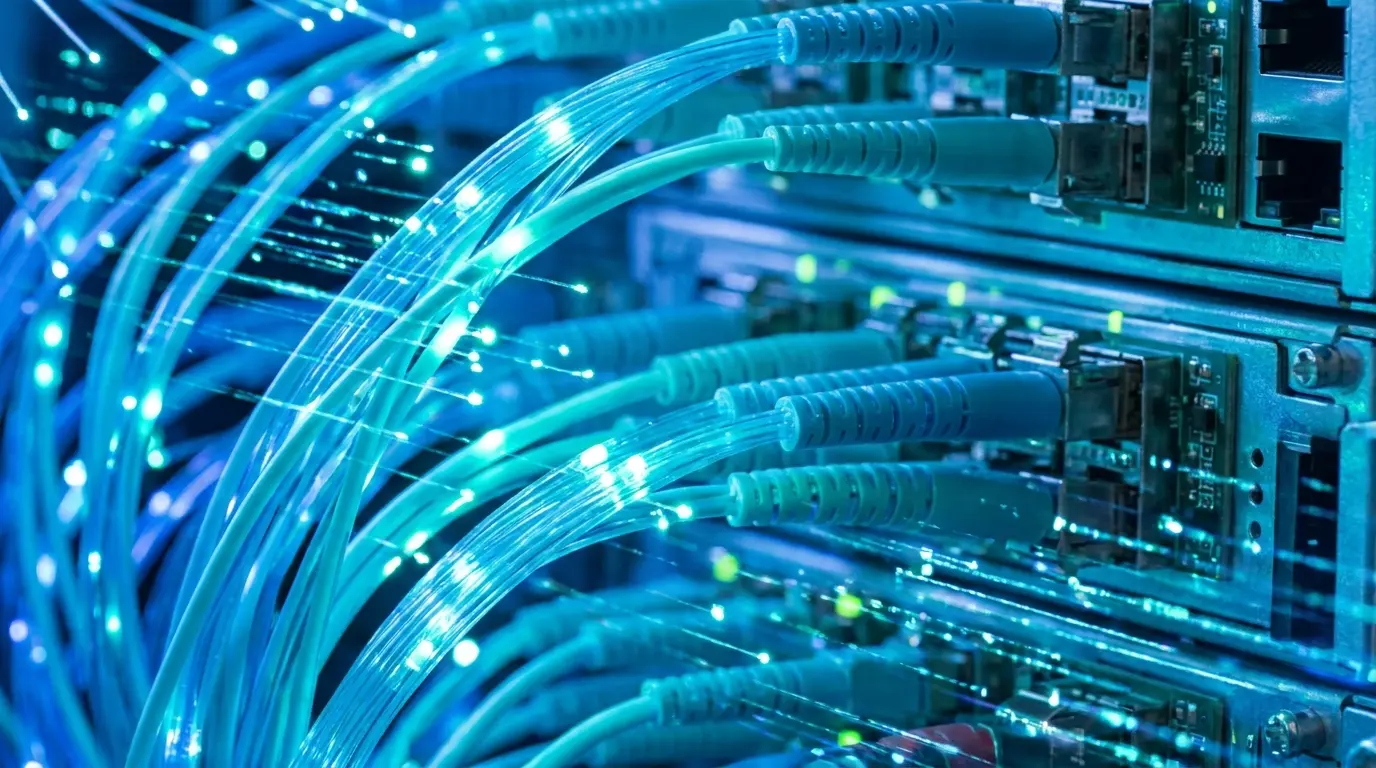
This achievement bypasses limitations inherent in traditional silica-based fibers, which introduce substantial noise that degrades quantum signals over distance. Researchers overcame these challenges by using hollow-core fiber, a technology that guides light primarily through air, minimizing nonlinear effects and preserving the delicate quantum states necessary for secure key exchange.
Pure silica core fibers inherently limit performance due to Raman scattering and four-wave mixing noise, but hollow-core fiber’s ultra-low nonlinearity significantly suppresses these detrimental effects. This allows for the coexistence of high-bandwidth classical communication and secure quantum transmissions within the same infrastructure, a critical step for integrating quantum technologies into existing networks.
The China Mobile Research Institute provided the hollow-core fibers used in the experiment, demonstrating a collaborative effort between academic and industry partners. Maintaining a consistent key rate over a full day confirms the robustness of the setup and its potential for real-world deployment, where uninterrupted operation is essential. Theoretical analysis suggests even greater performance is achievable, predicting secret key rates exceeding 135 kilobits per second over distances beyond 200 kilometers with improved low-loss hollow-core fibers.
The experimental setup employed time-encoded high-dimensional quantum key distribution, transmitting signals at 0 dBm of bidirectional received power. Funding for the project came from multiple sources, including the National Natural Science Foundation of China (Nos. 62405046, 62475039), the Quantum Science and Technology-National Science and Technology Major Project (Nos. 2024ZD0300800, 2021ZD0300701), and the Tianfu Jiangxi Laboratory (No. TFJX-ZD-2025-005).
The implications of this work extend beyond simply increasing the distance of quantum communication. Using existing fiber infrastructure is a significant advantage, reducing the cost and complexity of deploying quantum networks. “We’re sharing this article early to provide faster access to peer-reviewed, accepted research,” the publishers noted, indicating the importance of rapid dissemination of these findings.
The demonstrated compatibility of quantum and classical signals within the same fiber opens up possibilities for hybrid networks, where secure quantum communication can be smoothly integrated with high-bandwidth classical data transmission. The research team acknowledges the contributions of China Mobile Research Institute for providing the hollow-core fibers, which were an important component of the successful demonstration.


See today’s quantum computing news on Quantum Zeitgeist for the latest breakthroughs in qubits, hardware, algorithms, and industry deals.